





501–600 of 1,541
Current Filter
Blast Munition
Use the rapid expansion of gases released by a detonating high explosive compound inside the munition to generate explosive power. Blast munitions are often considered general-purpose munitions and large examples can have powerful and widespread effects on targets such as structures and personnel.

Analyst Note
29 July 2025
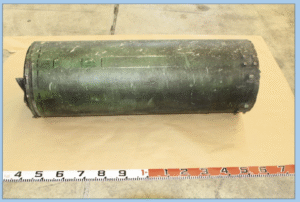
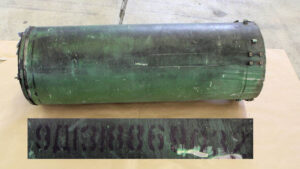
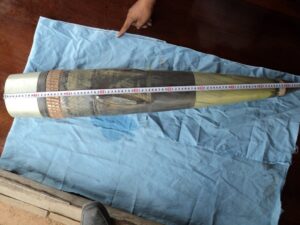
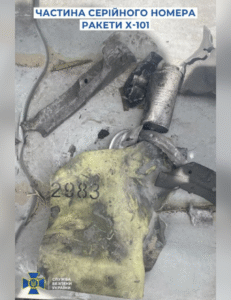
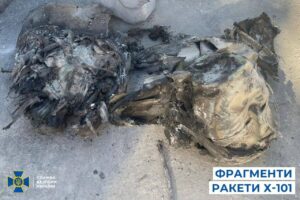
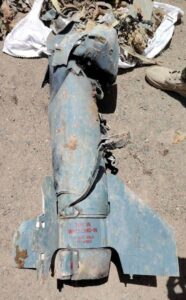
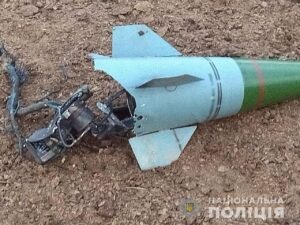
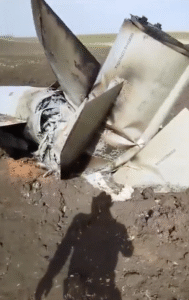
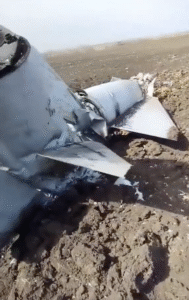
This image shows remnants of a Russian Kh-101 air-launched cruise missile. The remnant on the right is the rearmost tail section of the missile. (ARES)
Analyst Note
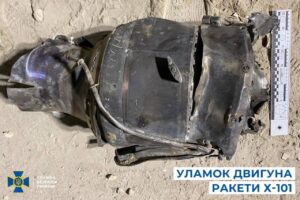
15 September 2025
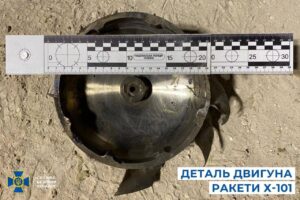
This image shows a remnant of the TRDD-50A(M) (ТРДД-50А(M)) turbojet engine, which powers Kh-101 and Kh-59M missiles. Other models of Russian cruise missiles are known to use other variants of the TRDD-50. (ARES)
Analyst Note
5 October 2025
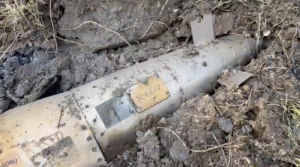
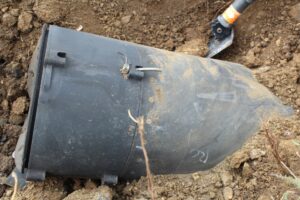
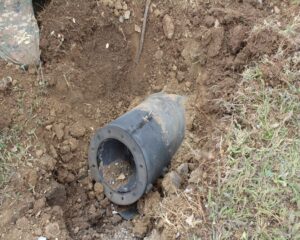
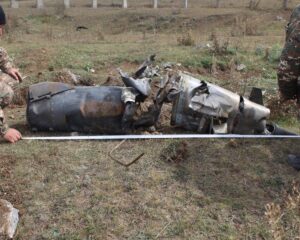
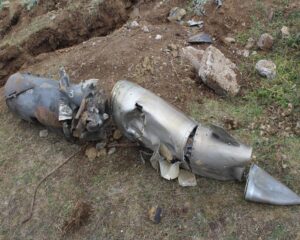
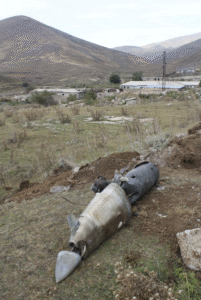
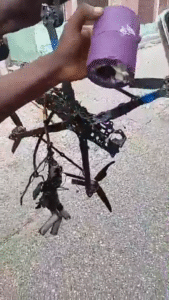
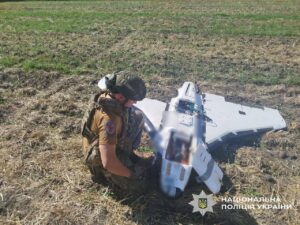
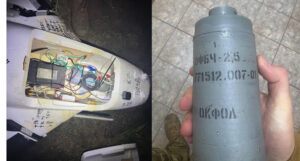
The image shows a one-way-attack (OWA) UAV that appears to have crashed, but failed to function. It consists of an FPV chassis, as well as some of the essential components required for flight and the explosive charge (purple container). The initiator and other parts relevant to both flight and the munition’s function are not visible. This appears to be craft-produced ‘sacrificial’ UAV. (ARES)



Analyst Note
29 September 2025
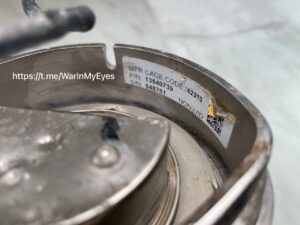
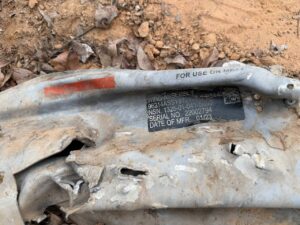
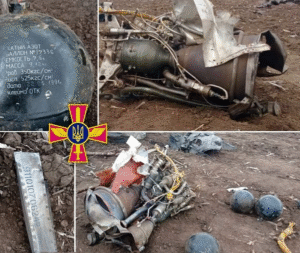
This munition remnant is marked with a manufacturer’s CAGE Code (“MFR CAGE CODE: 62313”) which indicates it was produced by Lockheed Martin. Lockheed Martin is the primary contractor that makes GMLRS missiles. (ARES)

Analyst Note
29 September 2025
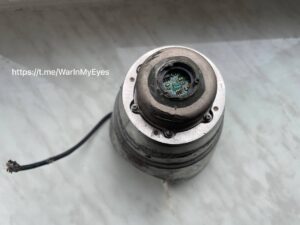
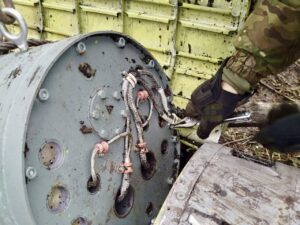
This remnant shows a munition component marked with the CAGE Code for a sub-contractor who produced part of a larger munition. “64344” is the code for Unique Electronics Inc., a known sub-contractor working on Lockheed Martin’s GMLRS contract. One of the parts they make is the “CABLE ASSEMBLY W459“, as seen in this image. (ARES)



Analyst Note
15 September 2025
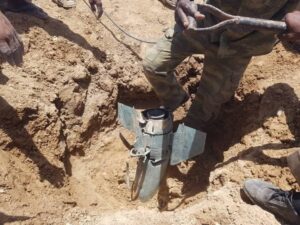
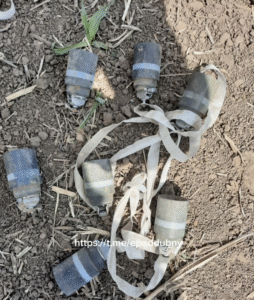
This image shows the three lenses that form the new version of the Kh-101 Digital Scene Matching Area Correlator (DSMAC) system. (The older version only had a single lens.) DSMAC systems take digital images of the ground as the missile passes overhead, and then compare those images to pre-captured images stored in the onboard memory. The DSMAC corrects the flight path as needed based on differences between the two sets of images. (ARES)


Analyst Note
15 September 2025
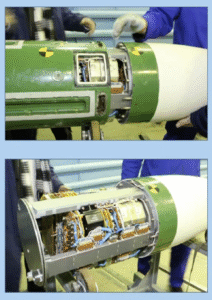
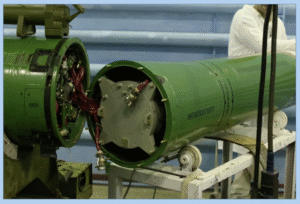
This image shows the second warhead present in some variants of the Kh-101 cruise missile. The inclusion of this additional warhead requires a smaller fuel tank in the missile, offering increased explosive weight in exchange for a reduced maximum range. (ARES)
Analyst Note
19 September 2025
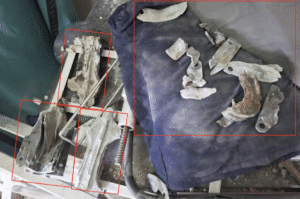
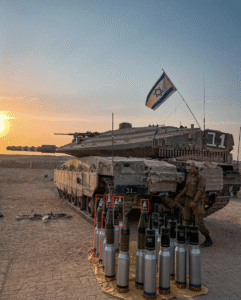
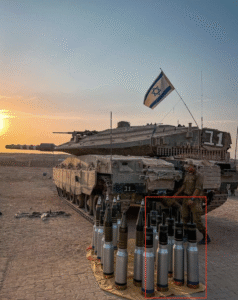
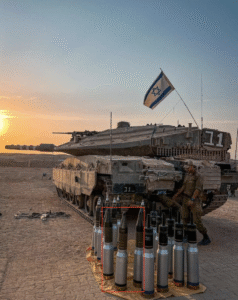
This image shows parts from at least three fin-stabilised tank gun projectiles, including the tail assemblies and several folding fins. These are components that often survive relatively intact following the functioning of such munitions. The specific morphology of the remnants pictured is consistent with Israeli 120 mm tank gun projectiles. Contextual information suggests that the remnants are most likely to be from M339 high explosive ‘multi-purpose’ projectiles. (ARES)
Analyst Note
15 September 2025
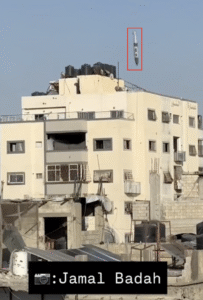
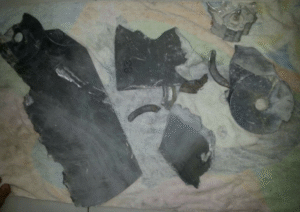
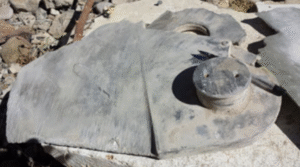
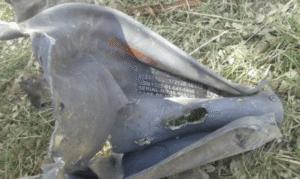
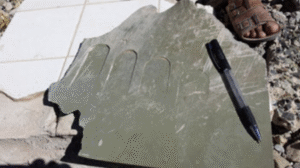
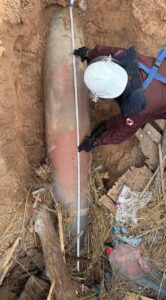
This image shows a remnant of a control fin from a Paveway III bomb guidance kit that is compatible with 2,000-pound-class air-delivered bombs. In U.S. service, this combination receives designations in the GBU-24 series. Based off this remnant alone, it cannot be determined which model of air-delivered bomb was paired with this particular guidance kit. (ARES)
Analyst Note
15 September 2025
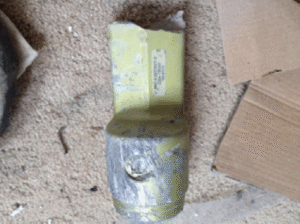
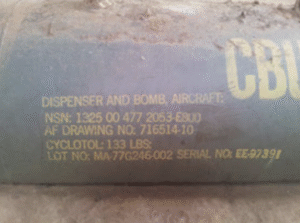
This image shows markings on an SUU-30H/B dispenser which comprises part of a CBU-52B/B Cluster Bomb Unit, including a National Stock Number (“NSN 1325 00 477 2053-E800”), design reference (“AF DRAWING NO: 716514-10”), total explosive weight of the submunitions (“CYCLOTOL: 133 LBS:”), lot number (“LOT NO: MA-77G246-002”), and serial number (“SERIAL NO: EE-97391”). This lot number indicates that this CBU-52B/B was manufactured at the Milan Army Ammunition Plant in the U.S. in July 1977. (ARES)
Analyst Note
15 September 2025
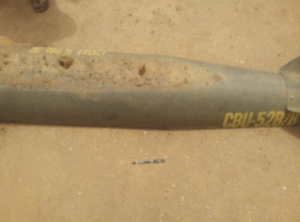
This image shows part of an SUU-30H/B dispenser (cargo munition) that comprises part of the CBU-52B/B ‘Cluster Bomb Unit’. A CBU-52B/B comprises a SUU-30H/B dispenser that is loaded with 217 BLU-61A/B anti-personnel submunitions. (ARES)
Analyst Note
15 September 2025
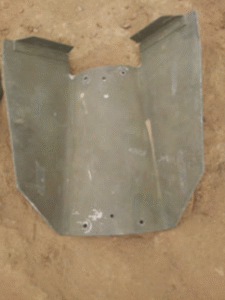
This image shows one of two tail fin sections that are attached to an SUU-30H/B air-delivered dispenser (cargo munition). Similar tail fins are used in other variants of the SUU-30 series dispensers. The SUU-30H/B can be used in various ‘Cluster Bomb Units’ including variants of the CBU-52, CBU-58, and CBU-71 munitions. (ARES)
Analyst Note
15 September 2025
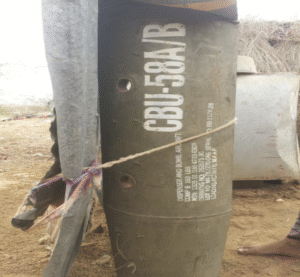
This image shows a remnant of an SUU-30H/B air-delivered dispenser (cargo munition), that comprised a CBU-58A/B ‘Cluster Bomb Unit’ (CBU). The CBU-58A/B carries 650 BLU-63A/B anti-personnel submunitions, that have a total explosive weight of 163 lbs (~74 kg) of COMP B explosive; this is reflected in the visible markings. (ARES)
Analyst Note
15 September 2025
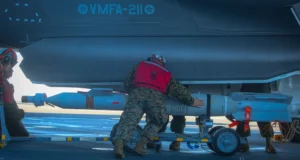
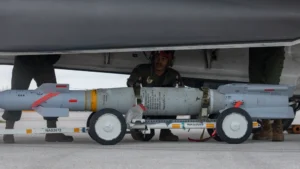
This image shows a GBU-12 series guided bomb being loaded onto a F-35B belonging to Marine Fighter Attack Squadron 211. Two of the control fins have not yet been installed in the Paveway’s guidance control section. (ARES)
Analyst Note
15 September 2025
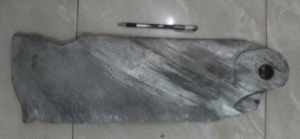
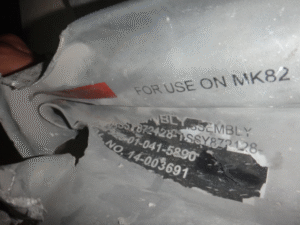
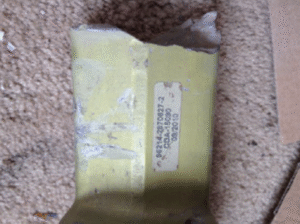
This image shows a remnant of a control actuator shaft from a Paveway guidance kit control section, found after a strike in Yemen in 2015. Markings giving the CAGE code for Raytheon (“96214”) and the part number (“2870627-2”) are both visible. The complete remnant can be seen in related entry 1559. (ARES)
Analyst Note
15 September 2025
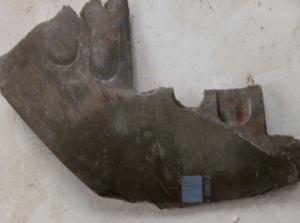
This image shows a remnant of the control fin of a GBU-24 (as seen partially marked), the designation for the combination of a Paveway III guidance kit paired with a 2,000-pound-class air-delivered bomb. This remnant is not enough to determine which model of bomb the kit was originally paired with. (ARES)
Analyst Note
15 September 2025
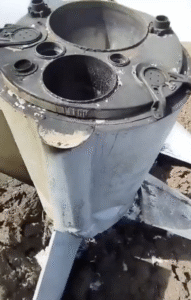
This image shows a BLU-111 500-pound-class bomb paired with a Paveway II guidance kit, and an MXU-650 series airfoil group, or tail kit. This combination is designated the GBU-12 series in U.S. service. (ARES)
Analyst Note
16 September 2025
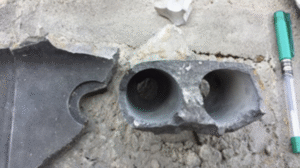
This image shows remnants of an MXU-series airfoil group, or tail section, that is paired with Paveway-series bomb guidance kits. The remnant on the right is one of two retractor mechanisms that are present inside the MXU-series airfoil group. (ARES)
Analyst Note
15 September 2025
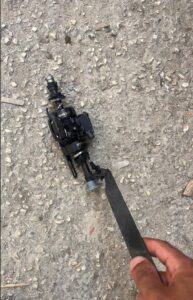
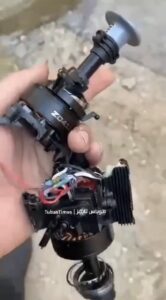
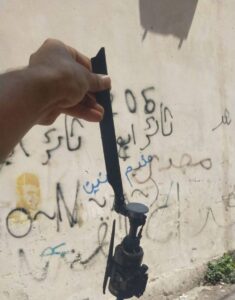
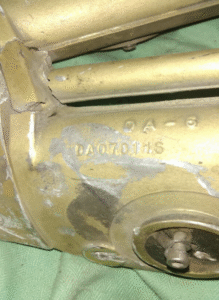
This image shows a close up view of an actuator assembly from an AGM-114 ‘Hellfire’ series missile. This assembly is what actuates the control fins, and the attachment point for one of the control fins is visible at the bottom right of the image. This assembly belongs to the control section, which is the rearmost section of the missile. (ARES)
Analyst Note
15 September 2025
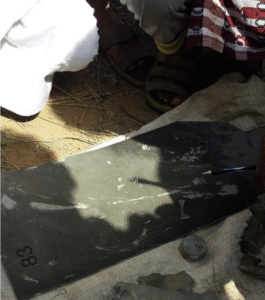
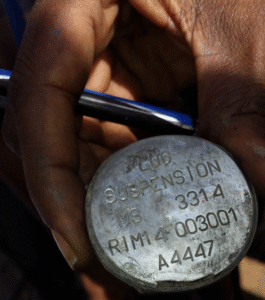
This image shows the bottom of an MS 3314 suspension lug, which is installed on the MK 81 250-pound-class, MK 82 500-pound-class, and MK 83 1,000-pound-class air-delivered bombs. The remnants of the guidance kit in the related entry indicate that, in this case, the lug was fitted to a MK 83 1,000-pound-class bomb. “A4447” is the CAGE code for the manufacturer of the suspension lug, RWM Italia. (ARES)
Analyst Note
15 September 2025
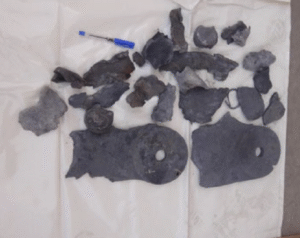
This image shows various remnants of an air-delivered bomb and a Paveway guidance kit. The blue pen provides a scale indicator, which is necessary to identify which variant of aerofoil (‘airfoil’) group the tail fins belonged to. In this case, they are most likely from an MXU-650-series airfoil group, which are paired with MK-82 500-pound-class bombs. (ARES)

Analyst Note
24 August 2025
This image shows a remnant of the Mado MD550 engine which is used to power the Shahed-136 series one-way attack drone. (ARES)

Analyst Note
15 September 2025
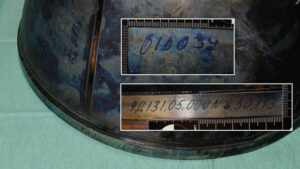
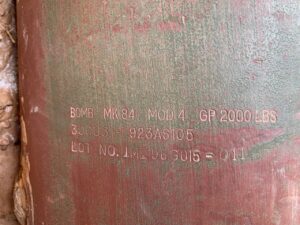
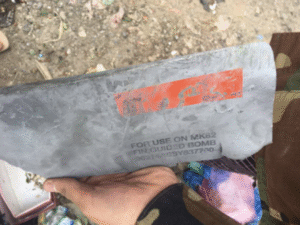
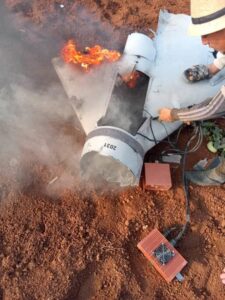
This image shows some of the markings on a MK 84 2000-pound-class air-delivered bomb, including model designation (“BOMB MK 84 MOD 4”), weight class (“2000 LBS”), part number (“PART NO 30…03 923AS105”), and production lot (“LOT NO GDT 17 …00…”). Many countries produce MK 80-series bombs, so markings such as lot numbers can determine the country of production. “GDT 17” in the lot number indicates that this munition was produced by General Dynamics Ordnance and Tactical Systems, an American company, in 2017. The Israeli Air Force announced they carried out the specific strike associated with this image, which indicates that this specific bomb was transferred to the Israeli Air Force. (ARES)
Analyst Note
15 September 2025
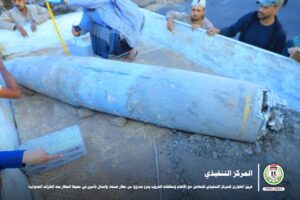
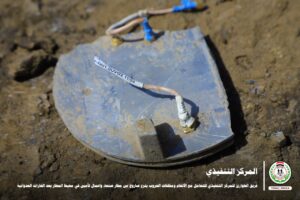
This image shows a remnant of a JDAM tail kit that was paired with a MK 84 2,000-pound-class air-delivered bomb. The CAGE code (“OUVG2”) for Aeroantenna Technology, an American manufacturer of GPS components for guidance systems, is visible on the wiring. (ARES)

Analyst Note
15 September 2025
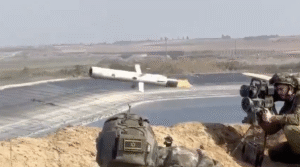
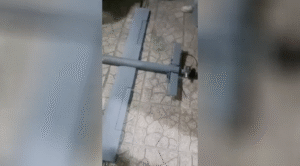
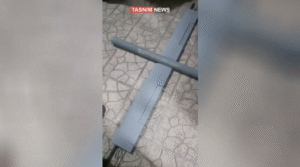
This still taken from a video released by Iranian state media, shows a one-way-attack UAV purportedly manufactured by Israeli forces operating inside Iran. This UAV was found alongside manufacturing equipment, and additional UAV components, strongly suggesting that it was manufactured or assembled inside Iranian borders. (ARES)