Where the munition is launched from and what it targets
Domain (7)
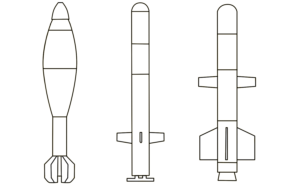
The type of fins visible on the munition
Fins Characteristic (6)
The nominal diameter of a projectile. For most modern munitions, this is expressed in millimetres (e.g. 82 mm mortar projectile), but older artillery gun projectiles may be described in inches.
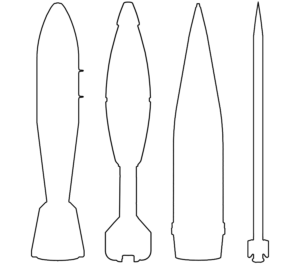
Munitions incapable of altering their flight path once fired, instead following a relatively predictable trajectory (typically a ballistic trajectory). Unguided munitions are generally less precise, and cheaper, than guided alternatives.
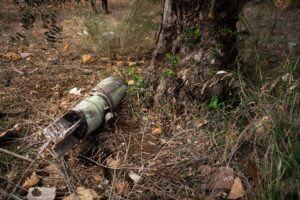
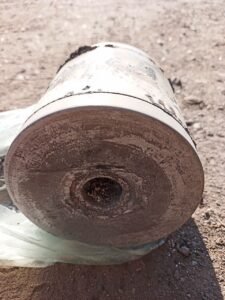
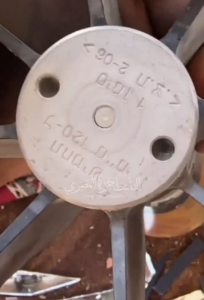
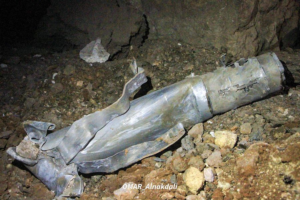
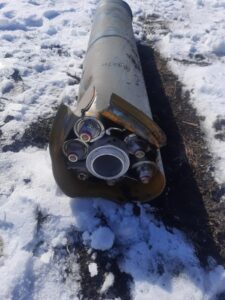
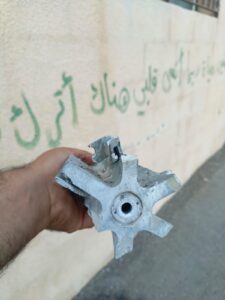
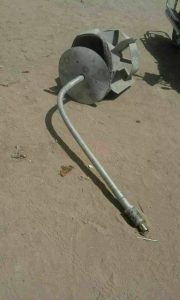
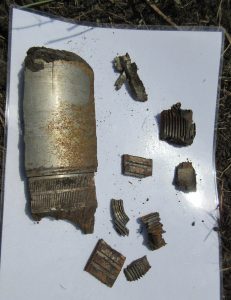
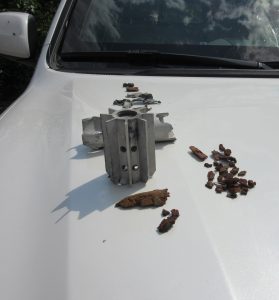
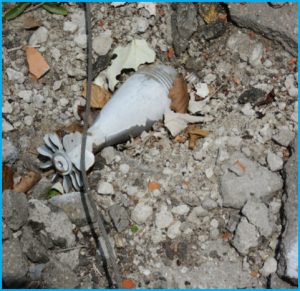
In this image, part of the distinctive internal 'X-rib' arrangement is visible protruding from the base of an M825-series white phosphorus smoke projectile. This is a useful diagnostic feature that can be used to distinguish remnants of these munitions from those of similar projectiles (such as those using a hexachloroethane/zinc smoke composition) if markings are not visible (ARES)
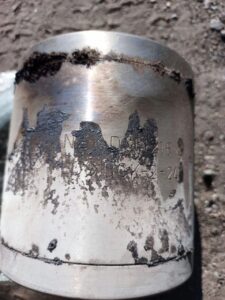
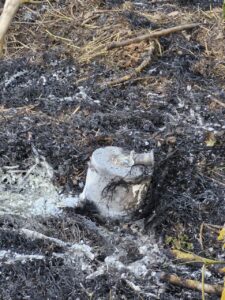
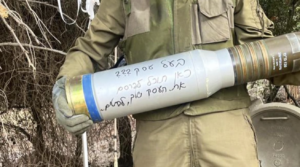
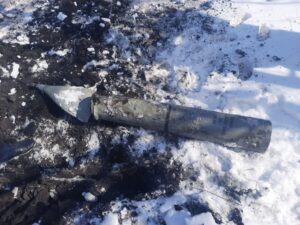
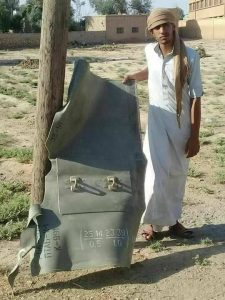
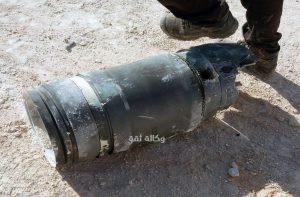
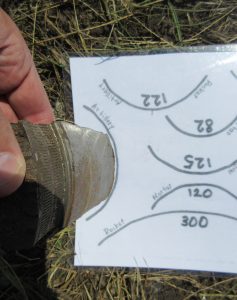
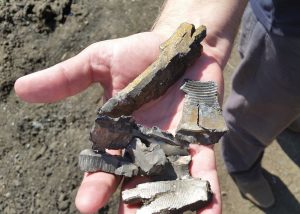
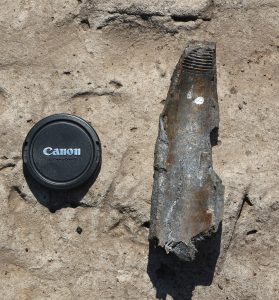
The remnants shown in these linked images have been falsely identified in Russian sources as chemical munitions. This image clearly exhibits the marking “NBK DM 1216”—the ‘NBK’ standing for the German Nebelkörper (‘smoke element’)—identifying this as one of four DM 1216 hexachloroethane/zinc (HC) smoke elements dispensed by the German DM 105 155 mm artillery gun projectile. Video of the incident shows all four elements being ejected from the base of the projectile in flight. (ARES)
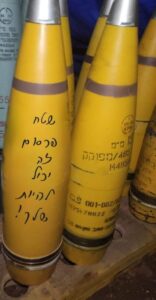
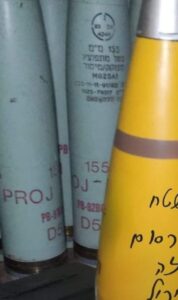
Israeli illumination munitions—often finished in a distinctive yellow—are sometimes mistaken for high explosive munitions by observers more familiar with the NATO or U.S. marking systems. This image shows an M485-pattern illumination projectile, a base-eject type that uses a parachute-retarded canister containing a powerful candle to illuminate the battlefield.
The M825A1 155 mm smoke projectile makes use of white phosphorus (WP) to generate a brilliant white smoke. Whilst WP does have incendiary effects, the method of dispersal in the case of the M825A1 is optimised for screening and marking purposes. (ARES)
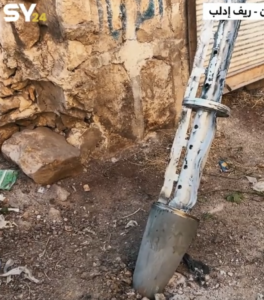
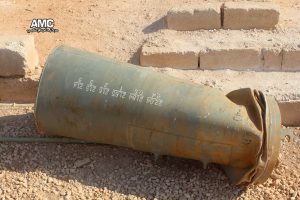
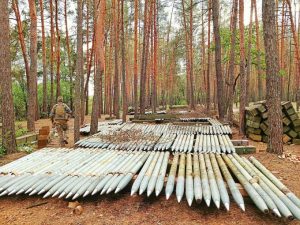
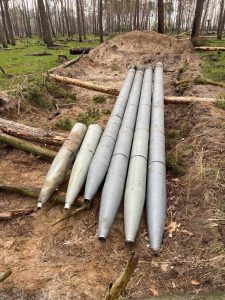
This image depicts either a 9M27K or 9M27K1 cargo rocket (cluster munition). The 9M27K carries the 9N210 high explosive fragmentation (HE-FRAG) submunition, whilst the 9M27K1 carries the 9N235 HE-FRAG submunition (ARES).
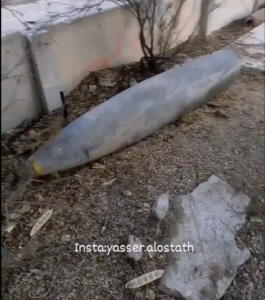
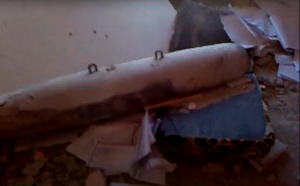
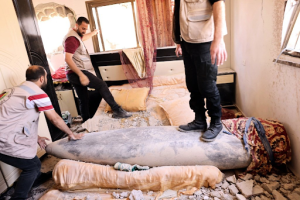
This image depicts an M117-series unguided aerial bomb. Belonging to a class of weapons referred to as ‘demolition bombs’—which use Tritonal or similar explosive compounds to generate a more powerful blast effect than TNT or Composition B—the M117 is an American design which dates to the Korean War era and is rarely seen in service with modern armed forces. (ARES)
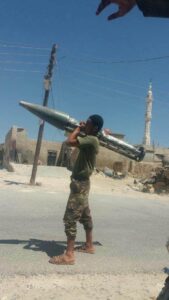
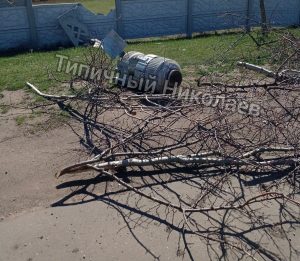
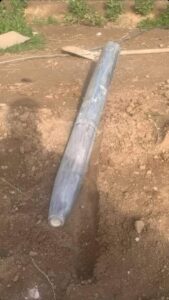
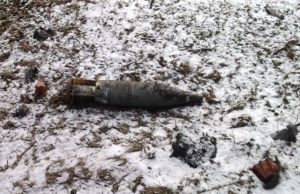
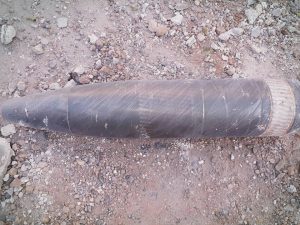
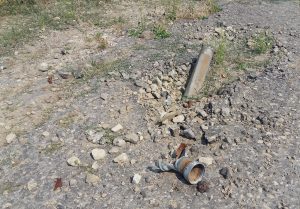
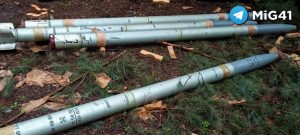
Contextual information suggests that this is likely a 9M22S unguided incendiary rocket (see External Research section), but this cannot be confirmed on the basis of this image alone. (ARES)
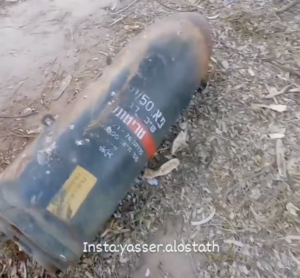
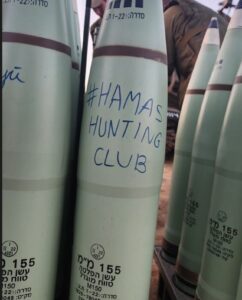
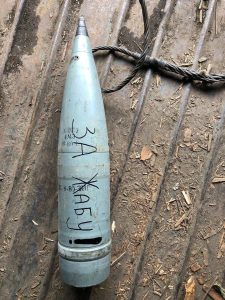
Some artillery projectiles, such as this M150 type, use a hexachloroethane-based composition (HC) to generate smoke for screening or marking purposes. In many armed forces, HC smoke munitions have partially replaced those relying on white phosphorus for similar effects. (ARES)
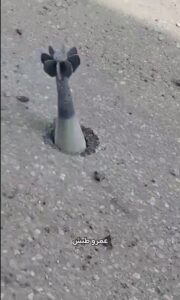
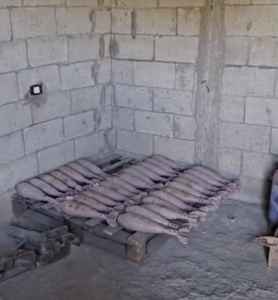
107mm spin-stabilized rockets of this design are often utilized by non-state actors in an indirect fire role. Like the original Chinese models that they are copied from, they do not require more than a simple electric power source and a rudimentary launch platform to achieve an acceptable level of accuracy. (ARES)
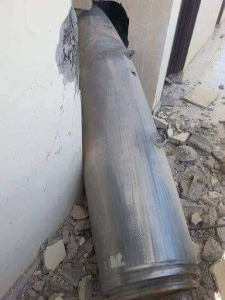
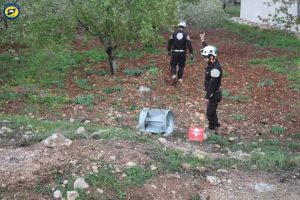
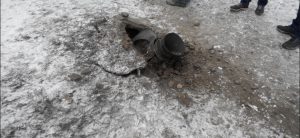
The image is of "a high-velocity shell fired from the main armament of a battle tank," Desmond Travers, former director of the Institute for International Criminal Investigations, told Airwars and AFP. "The calibre appears to be 120 mm, and the shell is fin-stabilised. The maximum effective range is five kilometers, but a skilled tank crew member should be able to hit a target the size of a car." (Airwars)
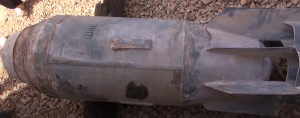
The M-54 ‘high-drag’ series of Soviet/Russian air-delivered bombs can be distinguished by two key identification features: 1.) the ballistic ring located in the forward portion of the bomb (missing in this example); and 2.) the presence of two or four rectangular, longitudinal ‘levelling bars’ (two can be seen in this example). (ARES)
Russian air-delivered cluster bombs, such as this one, are often named using a designation that is a compound of the names of the cargo (carrier) bomb and the submunition it carries. For example, this RBK-500 unguided, air-delivered cluster bomb carries 268 PTAB-1M HEAT submunitions, and is thus designated the 'RBK-500 PTAB-1M'. (ARES)
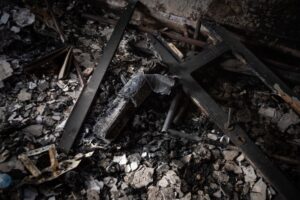
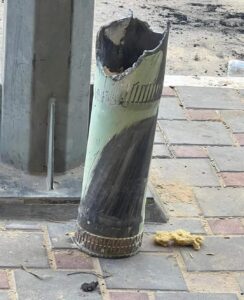
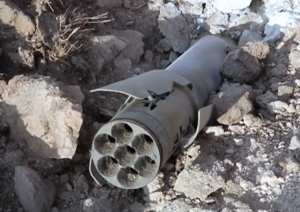
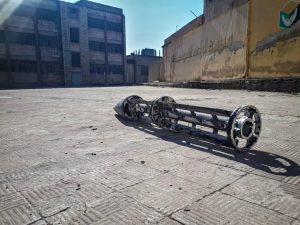
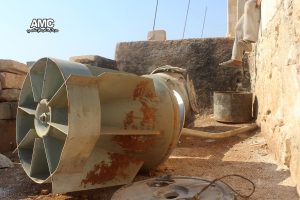
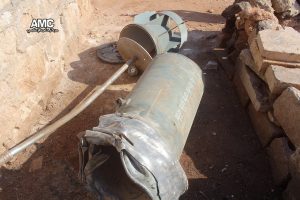
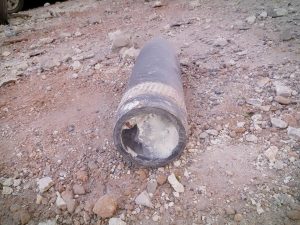
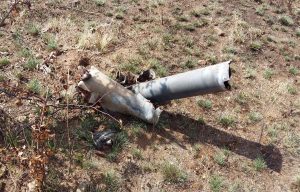
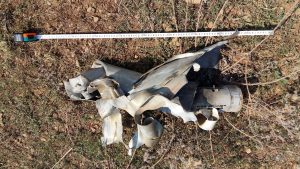
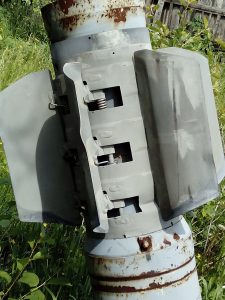
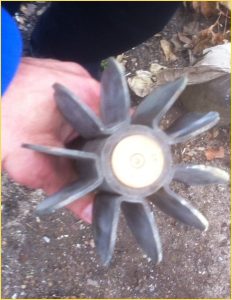
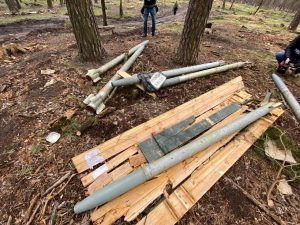
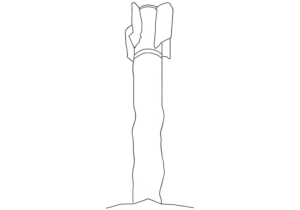
Cargo rockets often use an internal frame to manage the correct carriage and expulsion of submunitions. These internal frames frequently survive largely intact after the munition has functioned, and may be diagnostic in identifying a munition by type, series, or model. (ARES)
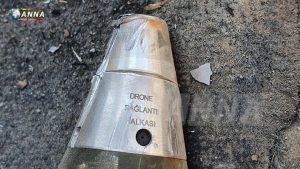
Although this munition started out life as a mortar projectile of the M492-pattern, it has been modified to be dropped from an unmanned aerial vehicle (UAV) and, in its present state, could not be fired from a conventional mortar. As such, it is correctly classified here as an air-delivered bomb. (ARES)
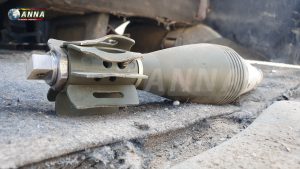
The fin assembly in the image bears a strong resemblance to those of other munitions employed in the same incident that have been identified as M49A2 mortar projectiles modified to be delivered by UAV. (ARES)
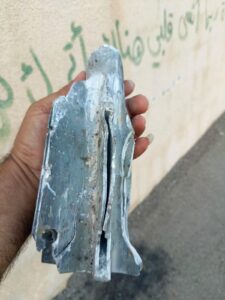
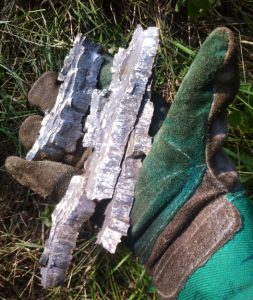
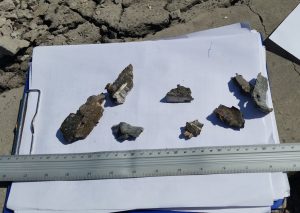
The large fragments in this image are typical of 'natural' fragmentation resulting from the rupturing of a thick-walled munition (in this case, an artillery projectile) by the functioning of its explosive payload. (ARES)
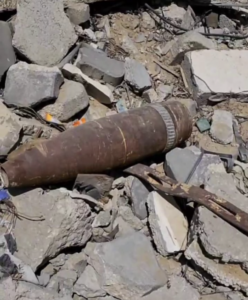
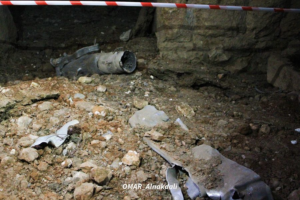
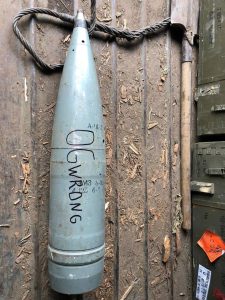
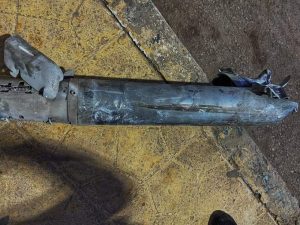
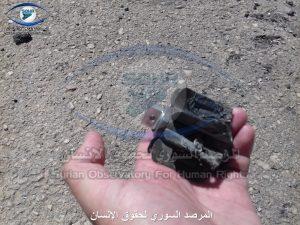
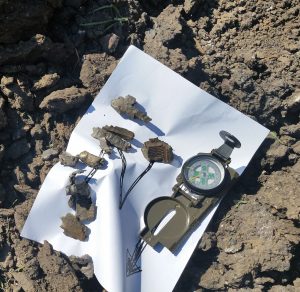
The munition remnants pictured here are likely to be from either a Russian OG-9 or a Bulgarian RHEF-9MA/GHEF-9MA recoilless gun projectile. However, based on the available information, positive identification cannot be not be made. (ARES)




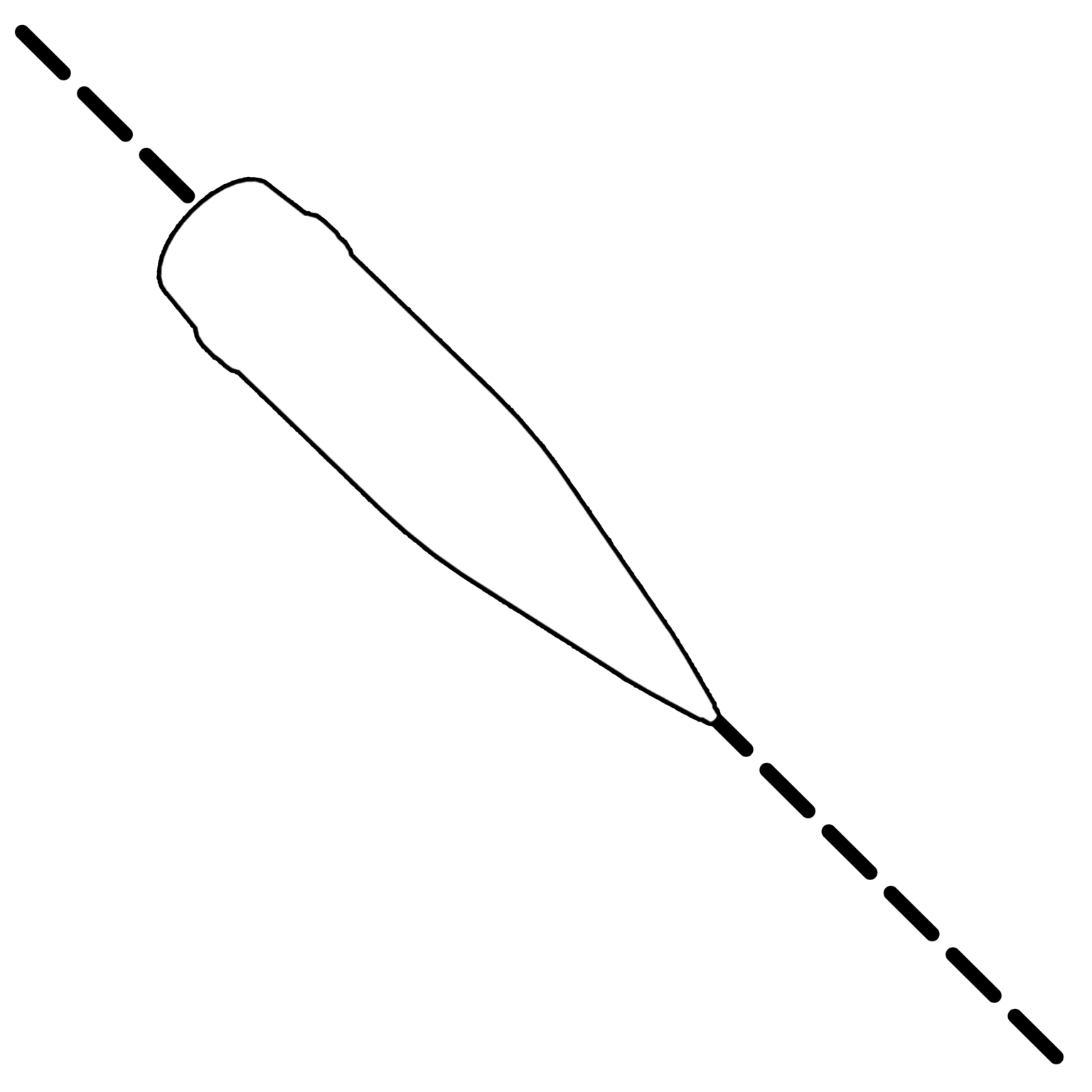 Munitions incapable of altering their flight path once fired