



1–100 of 216
Current Filter
Rocket or Missile
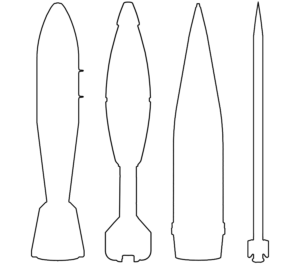
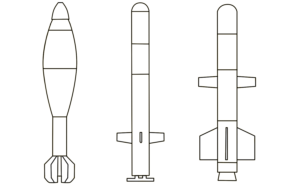
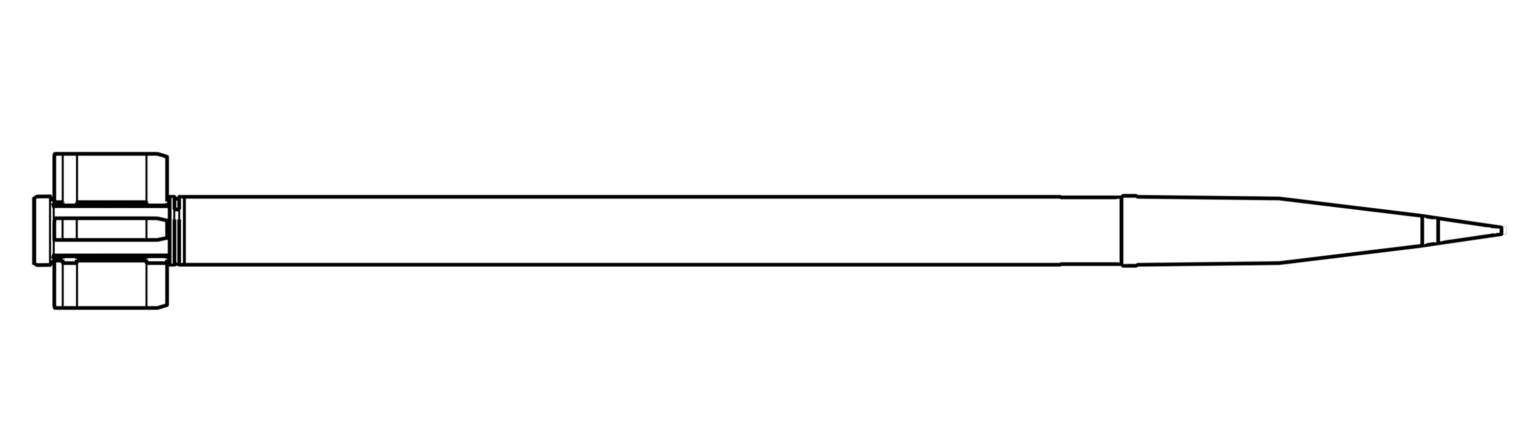
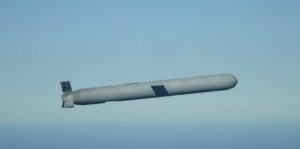
Rockets and missiles are two closely related types of powered munitions which utilise an internal propulsion method, typically a rocket motor, to maintain their rate of travel after launch. Rockets and missiles are typically relatively long and thin—with lengths ranging from 50 centimetres to 6.5 metres. Rockets are unguided those fitted with guidance systems are usually referred to as missiles. Missiles sometimes use propulsion methods other than rocket motors, such as turbojets. The effective range of rockets varies from as little as one kilometre to more than 40 kilometres, while missiles typically have a longer range — some more than 250 kilometres.
Read more →

Analyst Note
15 August 2026
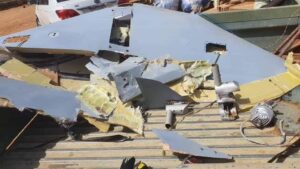
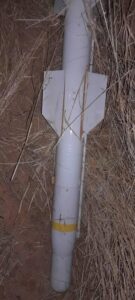
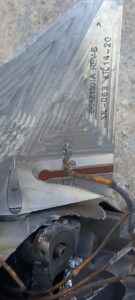
This image shows remnants of a Guided Advanced Tactical Rocket (GATR) alongside the remnants of a Hydra-70 series rocket. Developed and produced by Elbit Systems of Israel, GATR adds advanced capabilities, including guidance, to ‘dumb’ Hydra-70 rockets, in similar fashion to the U.S. APKWS system. GATR replaces the fins typically found in Hydra-70 series rockets with those of a new design. (ARES)

Analyst Note
15 August 2026
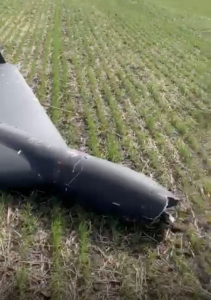
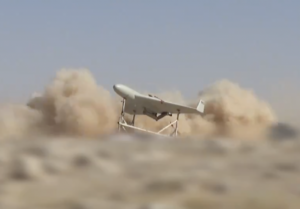
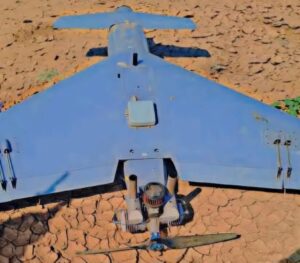
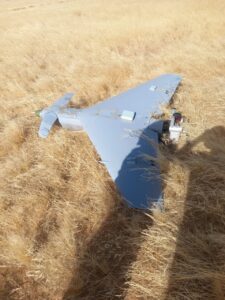
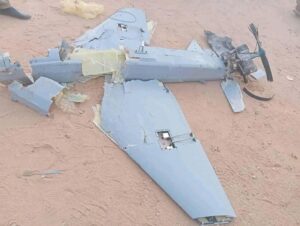
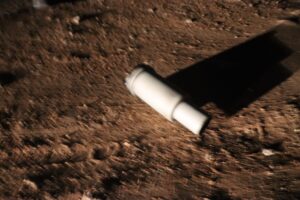
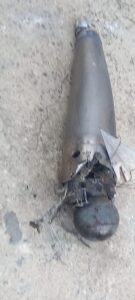
This image shows an unknown model of one-way attack (OWA) UAV believed to be produced by the UAE, and employed by the Rapid Support Forces (RSF) in Sudan. Unlike TMID-0014 and TMID-0015, this UAV uses a 82 mm mortar projectile fitted in the nose, rather than a Modamer warhead. (ARES)

Analyst Note
18 August 2026
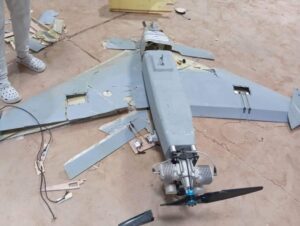
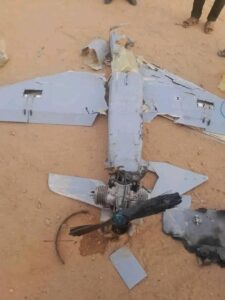
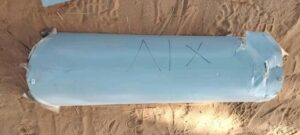
The 81 mm mortar projectile which serves as the warhead for the TMID-0014 is partially visible protruding from the nose of this example. (ARES)

Analyst Note
15 August 2026
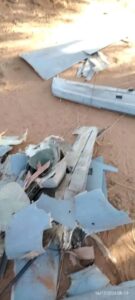
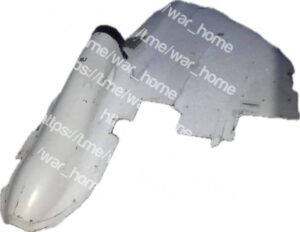
This image shows the body panel of the UAV which covers the compartment inside which the Modamer warhead is fitted. (ARES)
Analyst Note
15 August 2026
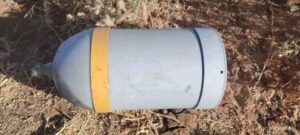
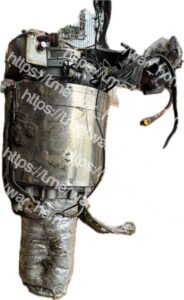
The fuze installed in this Modamer warhead appears to be the Serbian UT M18, which is commonly installed in the “120mm TB” thermobaric air-delivered bomb. The 120mm TB resembles a mortar projectile (see OSMP 1803 & 1812), but is commonly dropped from UAVs. Both the 120mm TB and the UT M18 fuze are known to have been purchased by the armed forces of the UAE, and shipments marked for delivery to the UAE have been documented in Sudan. (ARES)

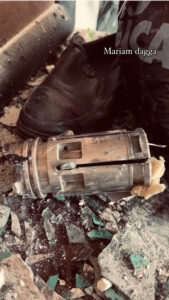

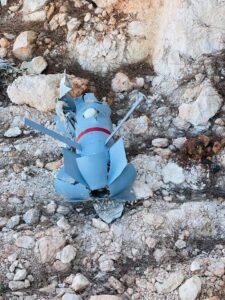
Analyst Note
28 April 2026
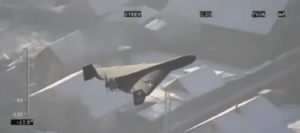
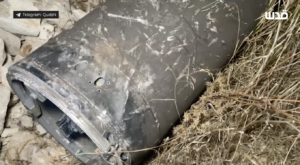
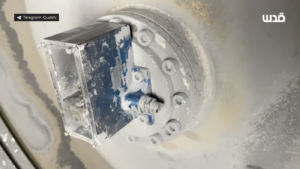
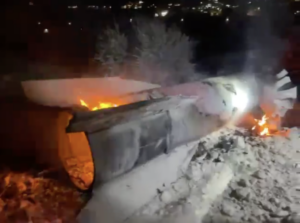
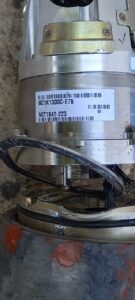
This munition, believed to be of Israeli origin, has been documented at a number of strike sites in Lebanon, Gaza, and Iran. Although distinctive remnants permit its tentative identification, the lack of a confirmed model name means this munition has been assigned a Temporary Munitions Identifier (TMID) by ARES. This appears in the Tentative Model field of the OSMP so that all records of this munition in the database can be linked under one temporary name. (ARES)
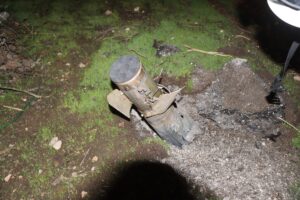
Analyst Note
2 March 2026
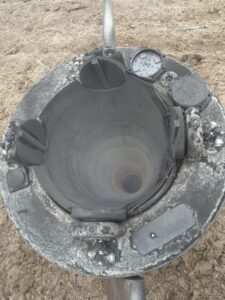
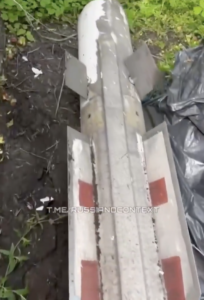
Considered with additional contextual materials, it is assessed that this image shows the rocket motor section from a 122 mm incendiary rocket, specifically the 9M22S or 9M28S models. Both rockets carry the same warhead, but use rocket motors of different lengths; not enough of this motor is visible to positively identify the model. (ARES)
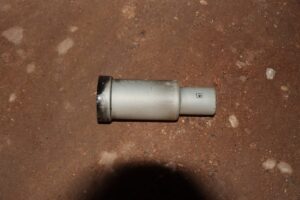
Analyst Note
2 March 2026
This image shows a stepped component positioned at the front of the warheads carried by 122mm 9M22S and 9M28S incendiary rockets. This structure helps to push the ML-5 incendiary elements out of the rear of warhead once the fuze in the nose functions. It is a relatively distinctive component, and commonly found in the vicinity of where the incendiary elements fall. (ARES)

Analyst Note
2 March 2026
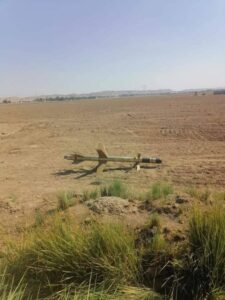
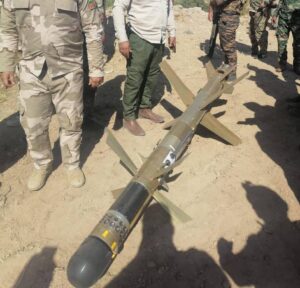
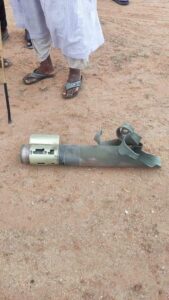
This image shows the remnants of a PAC-3 Cost Reduction Initiative (CRI) missile. The PAC-3 family of missiles are hit-to-kill interceptors that defend against incoming ballistic missiles, cruise missiles, aircraft, and other targets primarily by using kinetic impact. However, it is important to note that these missiles contain a high explosive fragmentation (HE-FRAG) “lethality enhancer” warhead. These warheads are much smaller than what would normally be expected on a surface-to-air missile of this size, but still present a hazard if it fails to function as designed. (ARES)








Collection
Ізраїль і Газа 2023 – 2026
7 жовтня 2023 року бойовики ХАМАС прорвали міцно укріплений кордон між Ізраїлем і Сектором Газа, атакувавши численні міста і села. За повідомленнями, в Ізраїлі загинуло понад 1000 осіб, а понад 250 було взято в заручники і перевезено до Гази
Analyst Note
31 December 2025
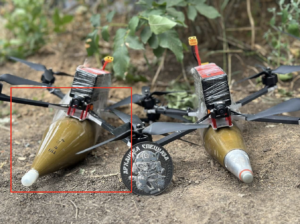
The munition indicated is a one-way-attack (OWA) UAV fitted with a PG-7-series high explosive anti-tank (HEAT) warhead. Not enough of the warhead is visible to provide a positive ID on which model of PG-7-series projectile it was harvested from. (ARES)
Analyst Note
28 November 2025
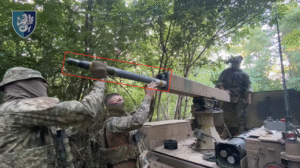
This image shows a Hydra-70 rocket fitted with an Advanced Precision Kill Weapon System (APKWS) guidance kit, converting it into a guided missile. In this case, the missile features an M151 high explosive (HE) warhead fitted with either an M427 or M423 point-detonating (PD) fuze. The rocket motor model cannot be determined from this source alone, but it is most likely to be a MK 66-series motor. The launcher appears to be a LAND-LGR4 model produced by Arnold Defense. (ARES)
Analyst Note
28 November 2025
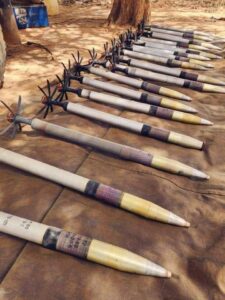
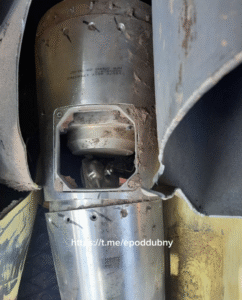
This munition remnant is marked with a manufacturer’s CAGE Code (“MFR-05DN8”) which indicates it was produced by Klune Industries. Klune Industries is a sub-contractor on the GMLRS contract. (ARES)

Analyst Note
21 November 2025
This munition remnant is marked with a manufacturer’s CAGE Code (“MFR-62313”) which indicates it was produced by Lockheed Martin. Lockheed Martin is the primary contractor that makes GMLRS missiles. (ARES)
Analyst Note
28 November 2025
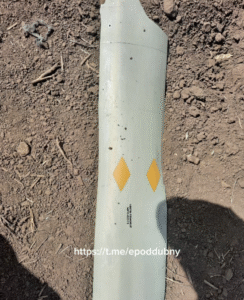
This image shows a remnant from an American M30 Guided Multiple Launch Rocket System(GMLRS) missile, which carries M77/M101 submunitions. The yellow diamond markings indicate a payload of explosive submunitions. (ARES)
Analyst Note
28 November 2025
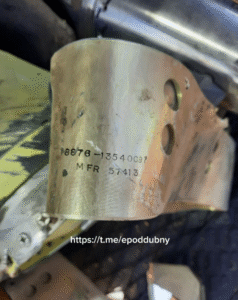
This munition remnant is marked with a manufacturer’s CAGE Code (“MFR-57413”) which indicates it was produced by the Maine Machine Products Company, a sub-contractor on the GMLRS contract. (ARES)
Analyst Note
28 November 2025
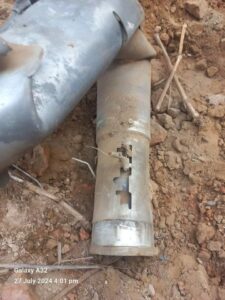
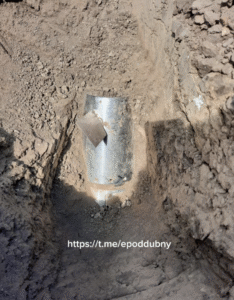
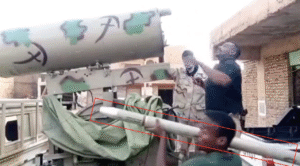
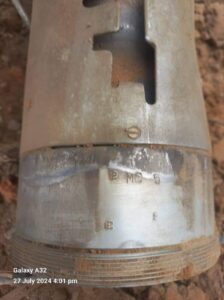
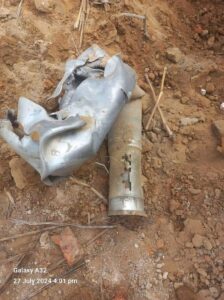
This images appears to show the remnants of a 122 mm rocket. It is unclear what the country of origin is, but it is most likely a 9M22-series or Type 81-series rocket. (ARES)



Analyst Note
29 July 2025
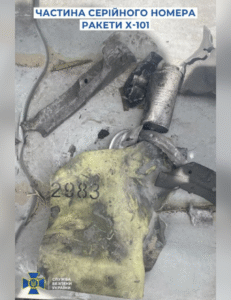
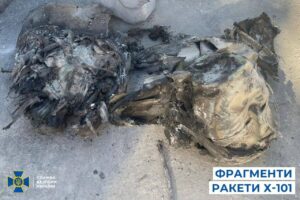
This image shows remnants of a Russian Kh-101 air-launched cruise missile. The remnant on the right is the rearmost tail section of the missile. (ARES)

Analyst Note
15 September 2025
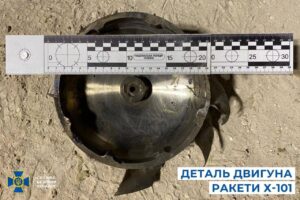
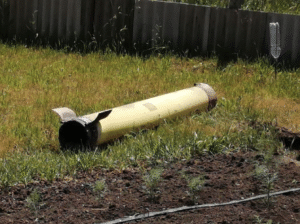
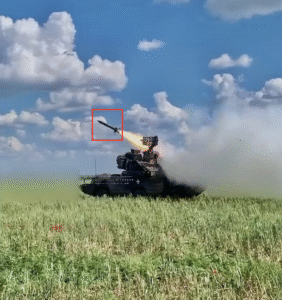
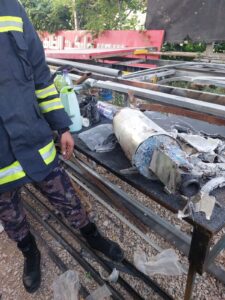
This image shows a remnant of the TRDD-50A(M) (ТРДД-50А(M)) turbojet engine, which powers Kh-101 and Kh-59M missiles. Other models of Russian cruise missiles are known to use other variants of the TRDD-50. (ARES)



Analyst Note
15 September 2025
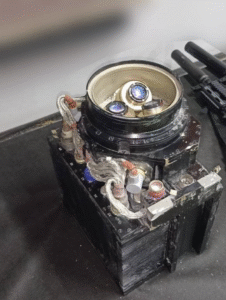
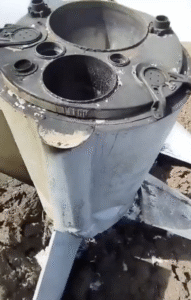
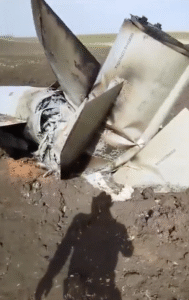
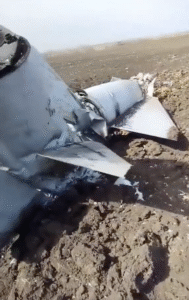
This image shows the three lenses that form the new version of the Kh-101 Digital Scene Matching Area Correlator (DSMAC) system. (The older version only had a single lens.) DSMAC systems take digital images of the ground as the missile passes overhead, and then compare those images to pre-captured images stored in the onboard memory. The DSMAC corrects the flight path as needed based on differences between the two sets of images. (ARES)

Analyst Note
3 June 2025
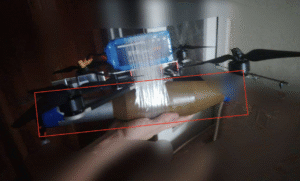
The munition in this image has been integrated into a commercial off-the-shelf (COTS) small UAV. This UAV (‘drone’) adds powered and guided delivery and converts the munition into a guided missile—regardless of the original, intended delivery method. (ARES)
Analyst Note
21 April 2026
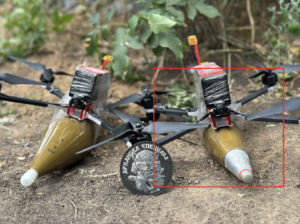
The warhead of the OWA UAV indicated in this image cannot be positively identified from this photograph alone. It appears to be the warhead section of either an OG-9 series or OG-15 series high explosive fragmentation (HE-FRAG) projectile, with a GO-2 or similar impact fuze fitted in the nose. (ARES)
Analyst Note
27 May 2025
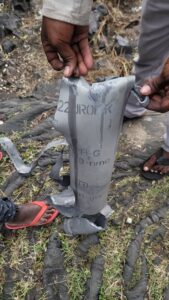
The JROF and JROF-K are Czech derivatives of the Soviet 122 mm ‘Grad’ series of surface-to-surface rockets. The JROF-K is the shorter, reduced-range variant, broadly analogous to the Soviet 9M22M. (ARES)


Analyst Note
26 April 2025
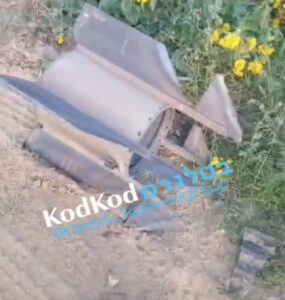
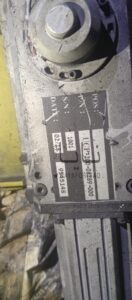
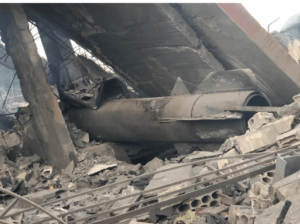
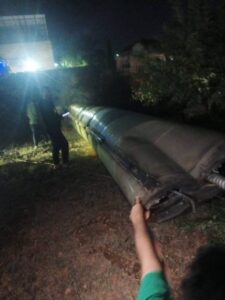
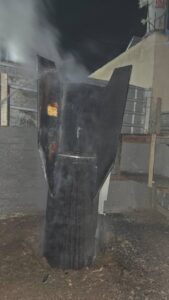
This image shows the rear fin section that is attached to a M-302/Khaibar-1/Fadi series rockets to add guidance capabilities. This rear fin section is installed, along with a forward control section between the warhead and the rocket motor. The guided munition, now classified as a missile, is referred to as a Nasr-1/Nasr-2. A similar, but larger, rear fin section is fitted to Zelzal rockets to convert them to guided munitions. (ARES).
Analyst Note
9 January 2025
This image shows the rocket motor of a Kheibar Shekan or Fattah-1 medium-range ballistic missile (MRBM). The Fattah-1 was publicly unveiled by Iran in June 2023, with very few images surfacing since that time. Due to the lack of available reference material, differentially identifying the Kheibar Shekan and Fattah-1 is difficult. The missile components displayed at unveilings and public displays are also often different from those used in production models. (ARES).


Analyst Note
27 April 2026
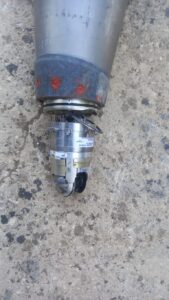
Pictured is the Stunner’s dual electro-optical/infrared nose sensors which, while in flight, identify and avoid decoys; identify the target; and guides the kinetic warhead on the final phase of its journey into the target. The sensors are housed in the unique ‘dolphin head’-shape of the missile, featuring a clear tip. The electro-optical sensor acquires the target during daylight operations, while the infrared sensor acquires the target in low-light conditions. The ground-based Battle Management and Control (BMC) system identifies the target’s flight path, calculates the point of interception, and transmits this information to the Stunner by encrypted datalink. The missiles utilise a vertical launch system to allow for a complete 360° response area. (ARES)


Analyst Note
13 March 2025
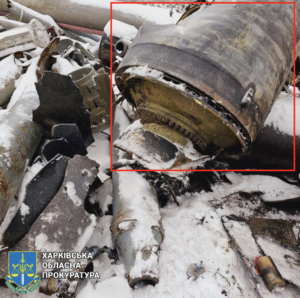
This image shows a remnant of the aft motor section, which includes the venturi nozzle, of a North Korean KN-23/KN-24/Hwasong-11 series missile. The KN-23/KN-24/Hwasong-11 has a generally similar appearance to the Russian 9M7 ‘Iskander’ series of ballistic missiles, but has differences in performance and in some aspects of the construction. (ARES)