



Do not approach munitions
under any circumstances
Country or territory where the image was reported

Reported Location (53)

Year the image is reported to have been taken

Year (22)

2026
2025
Classification groups of key explosive munitions used in conflicts

Munition Category (8)

The impact or effect the munition is intended to have

Functional use (10)

The specific model of munition pictured

Tentative Model (278)

Search

The external organisation that documented the munition

Research Organisation (6)

Colour of the munition pictured

Base Colour (12)

Colour of all, or some, of the markings on the munition

Marking Colour (11)

Language or script of the marking on a munition

Marking Script (10)

Condition of the munition pictured

Condition (6)

Key features defining the operation mechanisms of a projectile

Mechanical Feature (10)

Whether a munition is guided or unguided

Guidance (2)

Where the munition is launched from and what it targets

Domain (7)

The type of fins visible on the munition

Fins Characteristic (6)

The nominal diameter of a projectile. For most modern munitions, this is expressed in millimetres (e.g. 82 mm mortar projectile), but older artillery gun projectiles may be described in inches.

Calibre (77)

Weight class of the aerial bomb pictured

Weight Class (14)

501–594 of 594
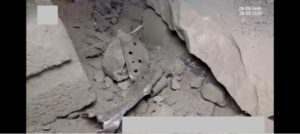
OSMP1246
Analyst Note 27 May 2025
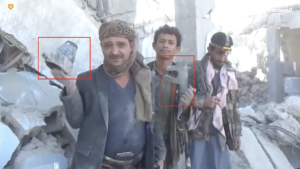
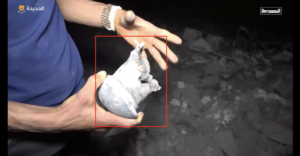
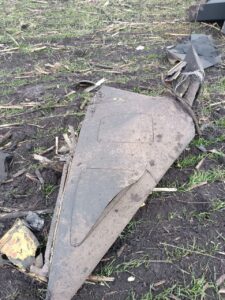
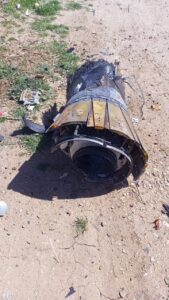
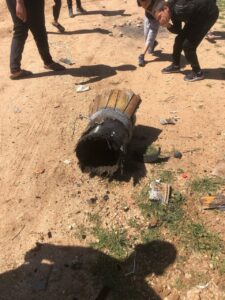
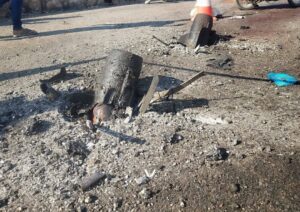
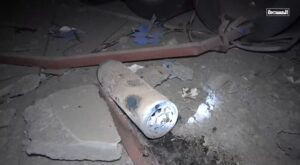
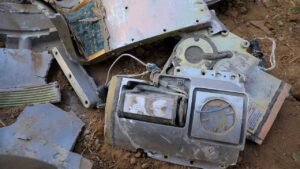
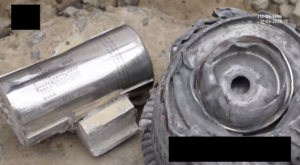
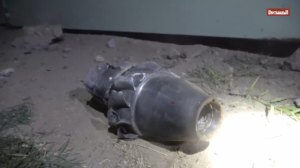
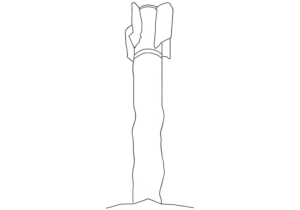
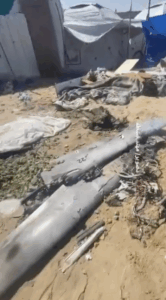
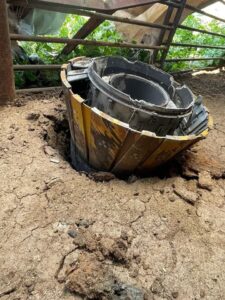
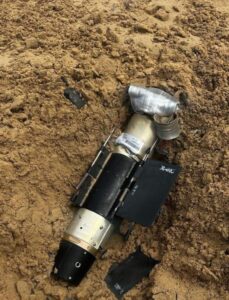
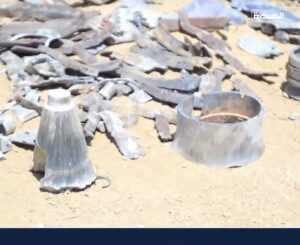
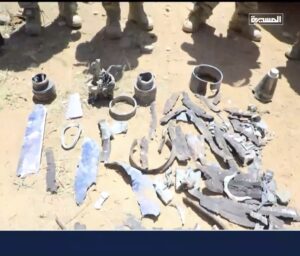
This image shows the flare from a Terminal High Altitude Area Defense (THAAD) system's ‘Talon’ kinetic interceptor missile. The flare is located at the aft end of the missile's booster engine. The ‘petals’ of the flare are initially flush, and are actuated into the deployed position, seen here, as part of the missile‘s functioning. (ARES)
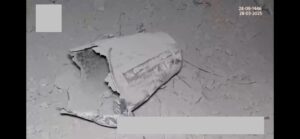
OSMP1238
Analyst Note 30 April 2025
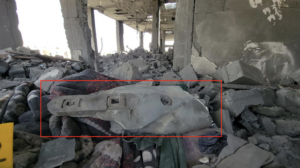
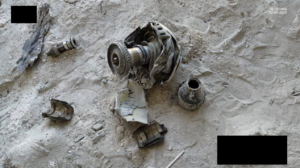
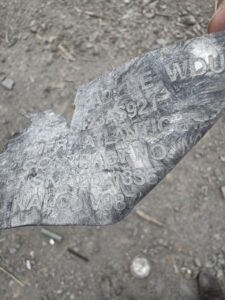
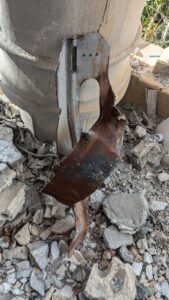
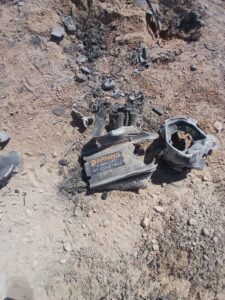
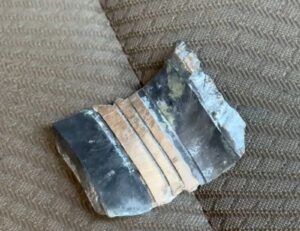
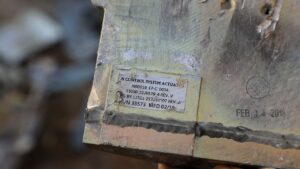
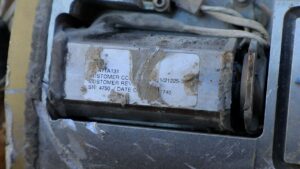
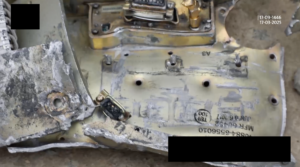
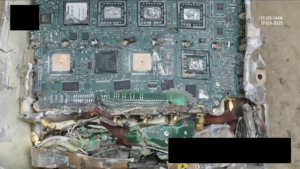
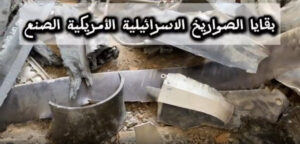
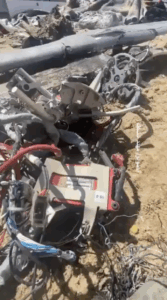
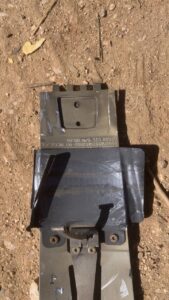
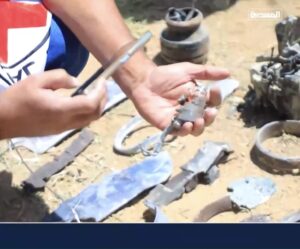
This image shows a fragment of the “inner petal assembly” of a Terminal High Altitude Area Defense (THAAD) system’s ‘Talon’ interceptor missile. The part number for the assembly (“23917ASSY1A62803-101 REV.E / E”), Commercial and Government Entity (CAGE) code (“07554”), manufacturer abbreviation (“CTL”), and serial number (“S/N DDLKD”) are visible. This CAGE code and manufacturer abbreviation are associated with CTL Aerospace Inc, a subcontractor for Lockheed Martin, the manufacturer of the THAAD system. It is not uncommon for complex munitions to be made by several different manufacturers, and thus multiple CAGE codes may be present as a result of the various subcontractors. (ARES)
OSMP1121
Analyst Note 11 May 2025
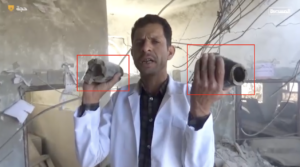
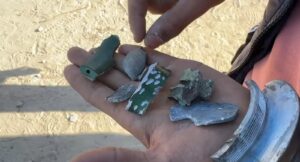
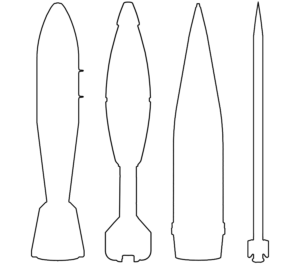
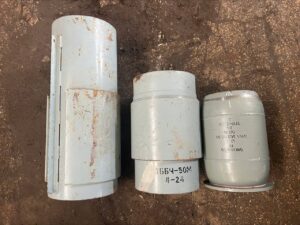
This image shows three different warheads developed by Russia for the Shahed-136/Geran-2 one-way attack (OWA) unmanned aerial vehicle (UAV), each of which differ from the original warhead designed by Iran for the Shahed-136. Left: A thermobaric explosive warhead; Middle: TBBCh-50M, a thermobaric explosive warhead; Right: OFZBCh-50, a high explosive warhead with an incendiary effect. Each of these warheads is also fitted with a fragmentation liner to increase the fragmentation effect generated when the warhead detonates. Some of the fragmentation liners may contain zirconium, a metal which is ignited when the warhead detonates, providing an additional incendiary effect. (ARES)
OSMP1350
Analyst Note 2 May 2025
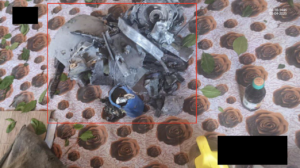
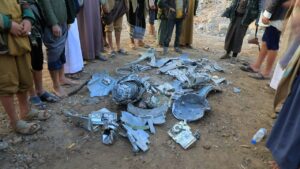
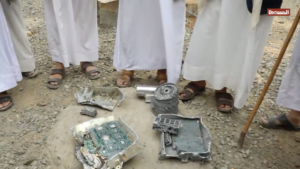
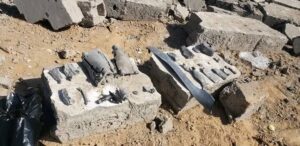
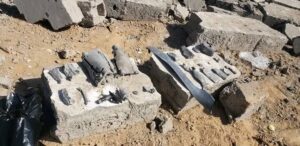
This image shows various remnants from GBU-39 air-delivered bombs, including two fuze wells. Each GBU-39 has only a single fuze well, indicating that this picture shows the remnants of at least two different GBU-39 bombs. (ARES)

Collection

US munitions used in Yemen 2025

Verified images of U.S. munitions during the Trump administration’s bombing campaign against the Iranian-backed Houthi militant and political group

View this collection
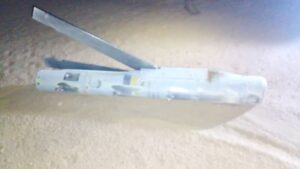
OSMP1302
Analyst Note 30 April 2025
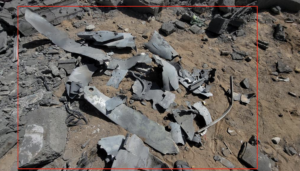
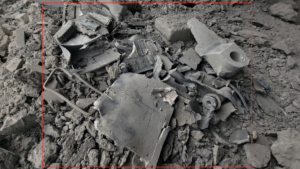
This image and the related entries show fragments of an AGM-84 Standoff Land Attack Missile-Expanded Response (SLAM-ER) series missile. AGM-84 SLAM-ER missiles are AGM-84E Standoff Land Attack Missiles (SLAM) that incorporate certain upgrades, including wings to increase the missile's range. The AGM-84 series include the anti-ship ‘Harpoon’ variants, from which the SLAM and SLAM-ER series are derived. As a result, many remnants will be similar or identical between variants. The wing remnant here is diagnostic, however. (ARES)
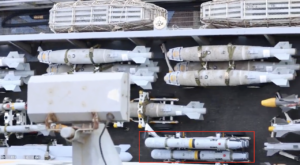
OSMP1252
Analyst Note 18 July 2025
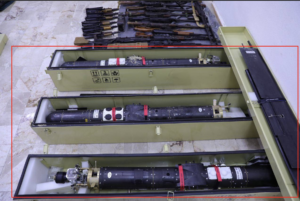
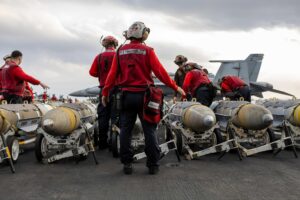
This image shows several GBU-53/B bombs photographed from above while on a munitions transport cart. GBU-53/B bombs are transported and loaded onto the aircraft with the wing assembly on the bottom. When the GBU-53/B is released from the aircraft, the bomb rotates, with the wing assembly side orienting as the top as the bomb glides to its target. (ARES)
OSMP1248
Analyst Note 31 March 2025
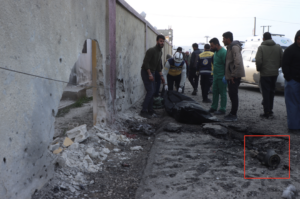
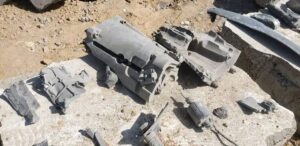
This image shows a fragment of a RGM/UGM-109 Tomahawk Land Attack Missile (TLAM) series missile's WDU-36/B warhead. The WDU-36/B warhead is a penetrator warhead for the TLAM, and is one of several available warhead options for TLAM series missiles. The complete "WDU" designation isn't visible, but the part number (3123AS921) is associated with the WDU-36/B. (ARES)
OSMP1214
Analyst Note 20 March 2025
This image shows a fragment of an Israeli 120 mm tank gun projectile, with its distinctive obturating band configuration. The additional remnants shown in the related OSMP entry permit distinguishing this projectile from other potential Israeli models, identifying it as the M339 tank gun projectile. (ARES)
OSMP1190
Analyst Note 19 March 2025
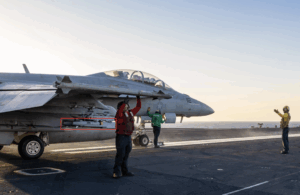
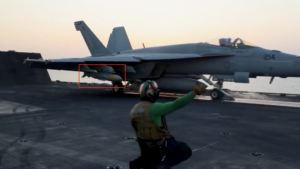
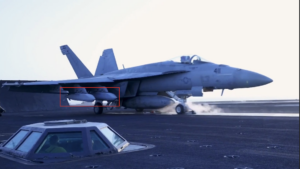
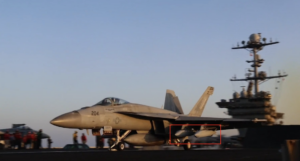
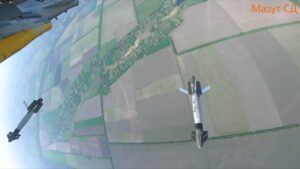
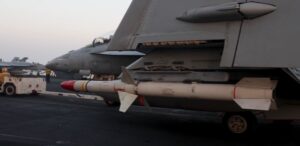
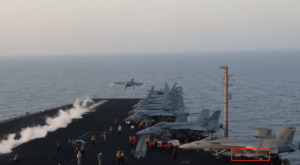
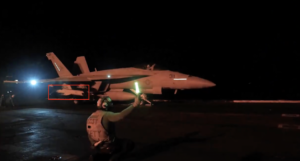
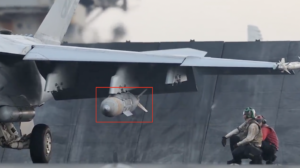
This image shows an American F/A-18 fighter aircraft armed with two AGM-154 Joint Standoff Weapon (JSOW) air-delivered bombs taking off to conduct strikes against Houthi forces in Yemen. The F/A-18 likely has two more AGM-154-series munitions carried on the opposite side of the aircraft, for a total of four bombs. The JSOW has multiple variants which are fitted with different warheads, including a submunition payload (AGM-154A and AGM-154B models), BLU-111 500-pound bomb (AGM-154A-1), and a Bomb Royal Ordnance Augmented Charge (BROACH) multi-stage penetrator warhead (AGM-154C or AGM-154C-1). All variants are externally identical without markings, with the exception that the AGM-154C and C-1 have a small reflective window on the bottom of the nose for the terminal infrared (IR) seeker. The munitions in the image are most likely AGM-154A-1 or AGM-154C-series bombs, due to the lack of reported submunitions following the strikes. (ARES)
OSMP1207
Analyst Note 19 March 2025
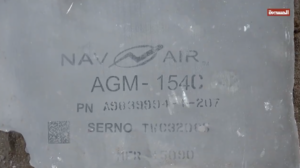
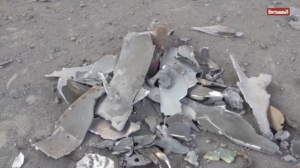
This image shows an unexploded WDU-45/B, the second stage or penetrator warhead (also called a ‘follow-through’ warhead), of the Bomb Royal Ordnance Augmented Charge (BROACH) multi-stage warhead system used in the AGM-154C variant of the Joint Standoff Weapon (JSOW) air-delivered bomb. The first stage is a shaped-charge warhead designed help the second stage penetrate hardened targets before detonating. The Shadow/SCALP-EG missile also uses a multi-stage BROACH system, but with larger warheads. (ARES)
OSMP1126
Analyst Note 24 February 2025
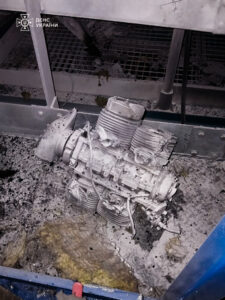
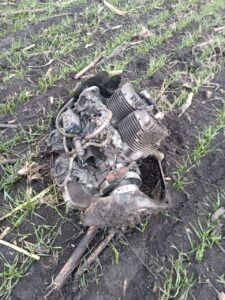
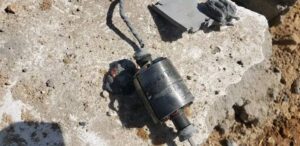
Depicted here is the MD-550 motor of a Shahed-136/Geran-2. This image was presented by Ukrainian President Zelenskyy as a fragment of the drone that reportedly hit the Chernobyl Nuclear Power Plant’s New Safe Confinement shelter. (ARES)
OSMP1063
Analyst Note 30 January 2025
The Armement Air-Sol Modulaire (AASM; ‘Modular Air-to-Ground Armament’) family of French bolt-on guidance kits are fitted to air-delivered bombs of various sizes in a similar fashion to American JDAM kits. In some marketing materials, the acronym HAMMER is used, standing for ‘Highly Agile Modular Munition Extended Range’. This refers, in part, to the rocket boosters fitted to munitions in the family to extend their effective range. (ARES)
OSMP1062
Analyst Note 30 January 2025
In this photo, a Ukrainian Sukhoi Su-25 ground-attack aircraft from the 299th Tactical Aviation Brigade, with the bort number ‘Blue 28’, is seen carrying an AASM-250 guided air-delivered bomb under its left wing. Available imagery shows that the AASM-250 has also been fitted to Mikoyan MiG-29 fighter aircraft, and can likely be carried by the Sukhoi Su-27 as well. (ARES)
OSMP1058
Analyst Note 16 January 2025
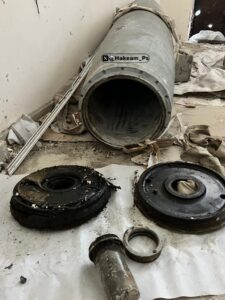
This image shows a MK 84 2,000-pound bomb that has had its fuze and baseplate removed in order to access the explosive filler. The fuze, fuze retaining ring, and baseplate can be seen on the white sheet. The explosive material used to fill the bomb has been removed, possibly to be repurposed in improvised explosive devices or craft-produced munitions. Unexploded ordnance is often ‘harvested’ for these purposes. (ARES)

Collection

Ukraine and Russia 2022–2026

On February 24, 2022, Russia launched a full-scale invasion of Ukraine, involving military forces aimed at capturing most major cities, including the capital, Kyiv. It became the largest conflict in Europe since World War II, and about a quarter of Ukraine’s territory came under Russian control. But Russian troops were eventually pushed back from Kyiv. […]
View this collection

Collection

Israel and Gaza 2023 – 2026

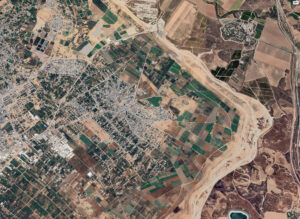
On 7 October 2023, Hamas militants breached the heavily-fortified border separating Israel and the Gaza Strip, attacking numerous towns and villages. More than 1,000 people in Israel were reported killed, with more than 250 taken hostage and moved to Gaza. In response, Israel has launched one of its largest military operations of recent decades, seeking […]

View this collection