The external organisation that documented the munition
Research Organisation (6)
Colour of the munition pictured
Base Colour (12)
Colour of all, or some, of the markings on the munition
Marking Colour (11)
Language or script of the marking on a munition
Marking Script (10)
Condition of the munition pictured
Condition (6)
Key features defining the operation mechanisms of a projectile
Mechanical Feature (10)
Whether a munition is guided or unguided
Guidance (2)
Where the munition is launched from and what it targets
Domain (7)
The type of fins visible on the munition
Fins Characteristic (6)
The nominal diameter of a projectile. For most modern munitions, this is expressed in millimetres (e.g. 82 mm mortar projectile), but older artillery gun projectiles may be described in inches.
Carrier munitions which contain and dispense submunitions (smaller munitions, sometimes called ‘'bomblets’'). Cluster munitions generally scatter their payload over a wide area, either to increase hit probability or for area-denial purposes. They can take the form of multiple munition categories. Some submunitions - especially older models, or those stored or employed incorrectly - can have a high dud rate, resulting in an enduring explosive hazard. More than 100 states have signed an international convention banning the use of cluster munitions - but not Russia, the United States, China, or Israel.
Current Filter
Fragmentation Munition
Fragmentation munitions use the detonation of an explosive to propel small fragments of material (‘fragmentation’) from the body of the munition at high velocity. A fragmentation munition typically affects a wider area than a simple blast munition of the same size, and is effective against personnel and unarmoured vehicles. Fragmentation is the primary mechanism of lethality for many common explosive munitions, but these munitions almost invariably also affect their environment through blast and other mechanisms (e.g., a high explosive fragmentation munition).
Current Filter
Ukraine
A large eastern European country that faced a full-scale Russian invasion in February 2022. Since then the Ukrainian military has fought a major war with Russian forces, with tens of thousands believed to have been killed.
Current Filter
Russia
A large country in Eastern Europe and North Asia. The Russian military began a full-scale invasion of Ukraine in 2022 and has since been engaged in heavy combat with the Ukrainian Armed Forces. Russia was also directly involved in Syria between 2015 and 2024, militarily aiding the country's former President Bashar al-Assad.
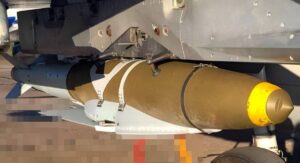
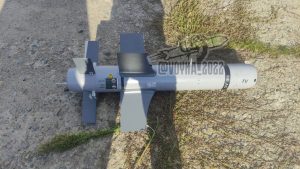
The Joint Direct Attack Munition – Extended Range (JDAM-ER) marries the JDAM guidance kit to a ‘glide bomb’ wing kit developed by the Australian Defence Force, offering a munition with at least three times the range of a standard GBU-38 500-pound-class guided aerial bomb. (ARES)
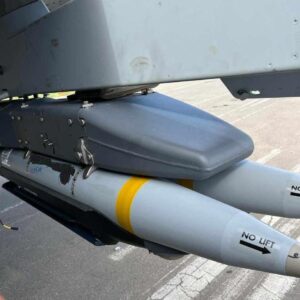
In this image, two GBU-39 Small Diameter Bombs are attached to a BRU-61/A bomb rack. The Ukrainian Air Force adapted this American-designed bomb rack to fit their Soviet-designed Mikoyan MiG-29 fighter aircraft. The BRU-61/A can carry up to four GBU-39 air-delivered bombs. (ARES)
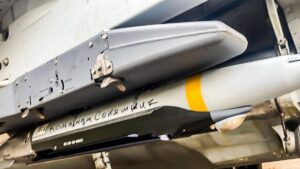
The various Iranian Qaem-series guided air-delivered bombs can be difficult to differentiate from one another. In this case, the wing (forward fin) assembly distinguishes this Qaem-5 from the visually similar Qaem-1. Note also that the name 'Qaem' has applied by Iran to other, unrelated munitions. (ARES)
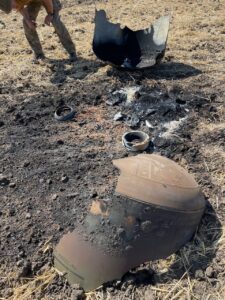
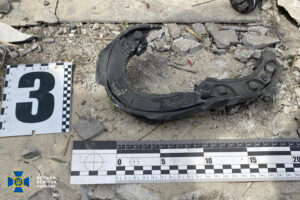
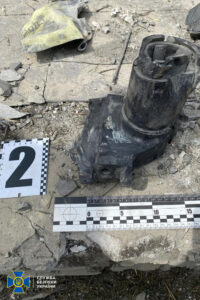
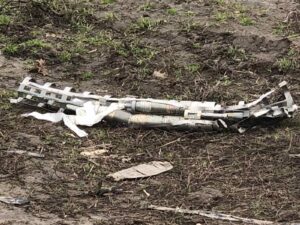
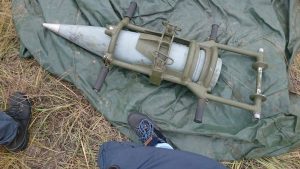
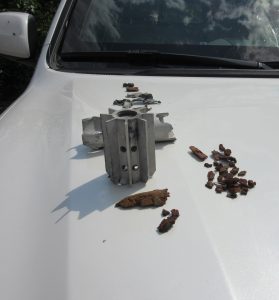
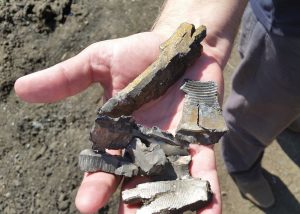
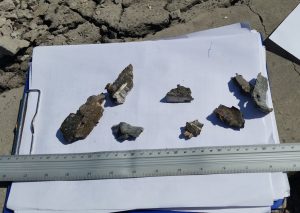
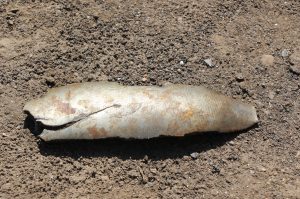
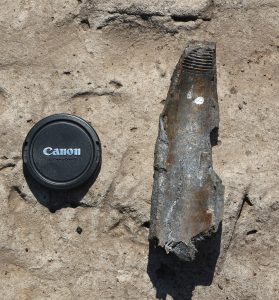
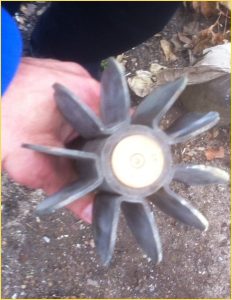
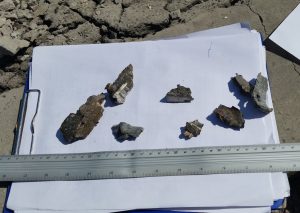
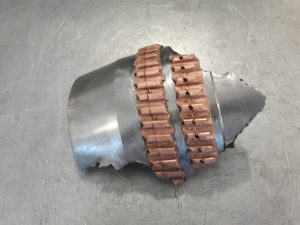
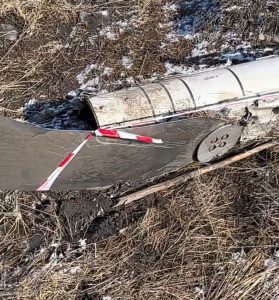
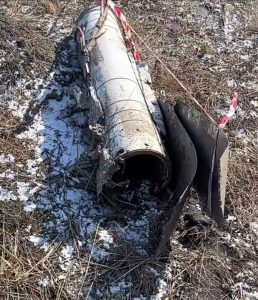
The munition remnants pictured here are likely to be from either a Russian OG-9 or a Bulgarian RHEF-9MA/GHEF-9MA recoilless gun projectile. However, based on the available information, positive identification cannot be not be made. (ARES)
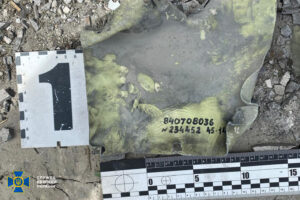
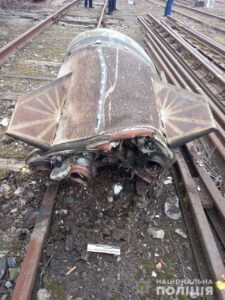
Like the more common 9M22S rocket, the 9M28S carries the 9N510 warhead, which dispenses 180 individual incendiary elements composed of a magnesium alloy shell filled with a thermite-like incendiary composition. (ARES)
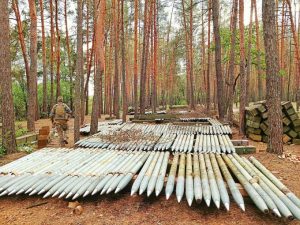
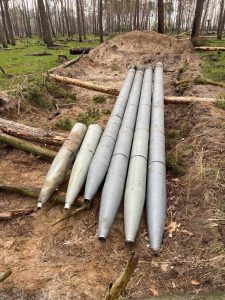
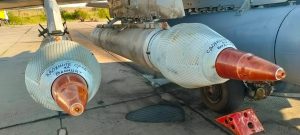
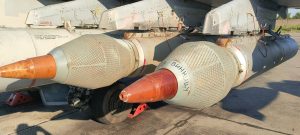
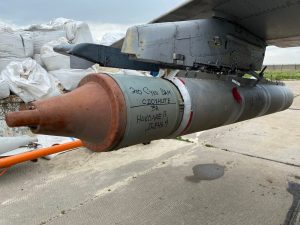
These S-25-O air-to-surface rockets are each loaded into a single-barrelled O-25 rocket launcher (sometimes called a 'launch tube' or 'rocket pod') that is affixed to an aircraft hardpoint. The over-calibre high explosive fragmentation warhead (of 420 mm in diameter) protrudes from the front of the tube. (ARES)
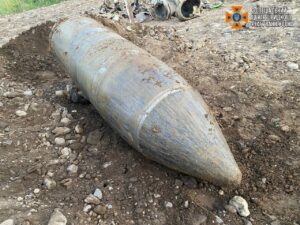
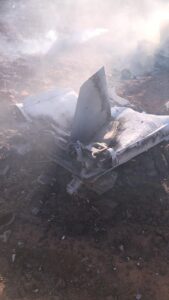
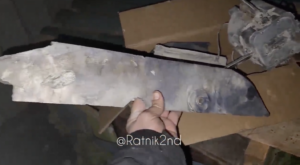
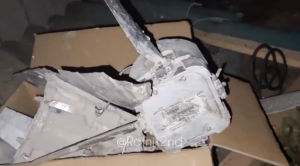
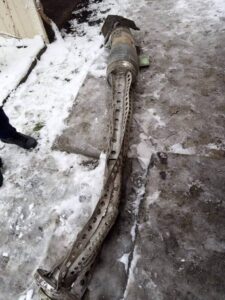
As a result of the rapid introduction of new models and variants during ongoing conflicts, sometimes a munition is issued with a provisional designation, or with no designation at all. In other cases, the designation is not yet known to researchers. (ARES)
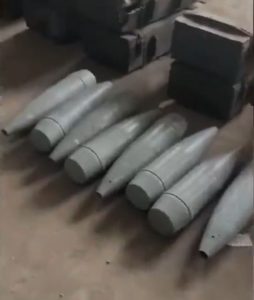
Whilst most mortars are smoothbore guns, some have a rifled bore. These M1101 120 mm mortar projectiles feature a 'pre-rifled' driving band—that is, a driving band with grooves cut at the factory to fit the mortar's rifling. (ARES)