101–200 of 374
Current Filter
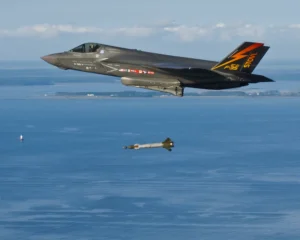
Air-Delivered Bomb
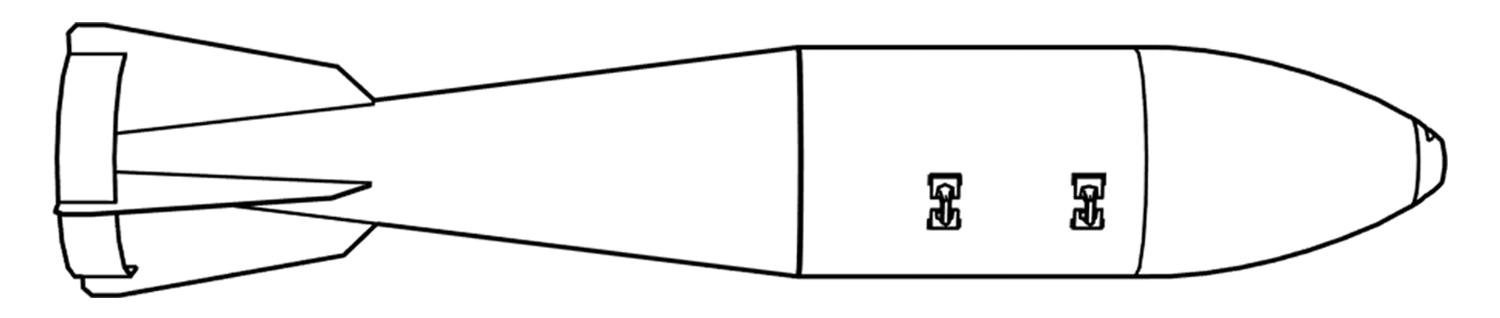
Unpowered munitions dropped from an aerial vehicle, such as a plane or drone. They can be either guided or unguided and range in weight from only a few kilograms to more than 2,000 kilograms — roughly the weight of a car. Heavier air-delivered bombs are among the most destructive munitions in military arsenals.

Read more →
Analyst Note:
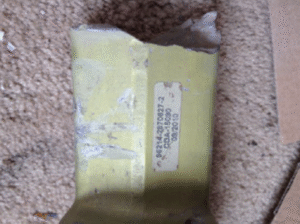
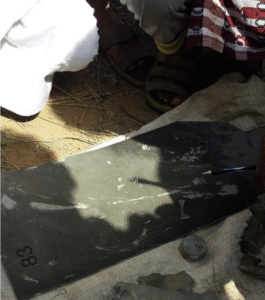
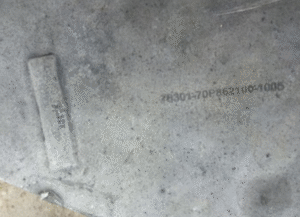
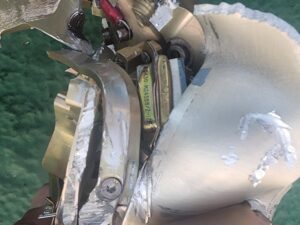
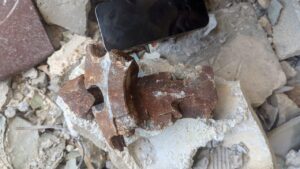
This image shows one of the actuated fins of a Joint Direct Attack Munition (JDAM) tail kit. The manufacturer CAGE code (“76301”) and the part number (“70P862100-1005”) are visible. This CAGE code corresponds to Boeing, the manufacturer of the JDAM guidance kit, while the part number corresponds to a fin of a JDAM kit compatible with MK-84 and BLU-109 2,000-pound-class air-delivered bombs. (ARES).
Analyst Note:
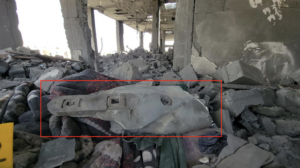
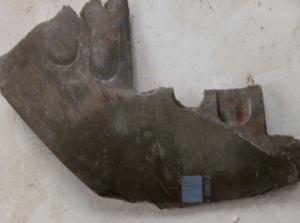
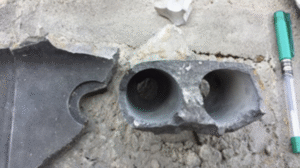
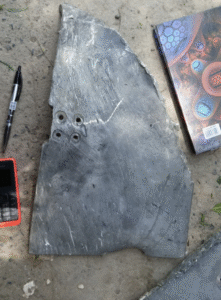
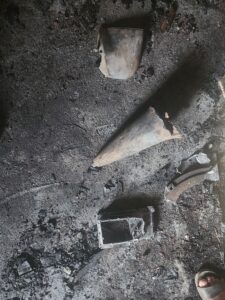
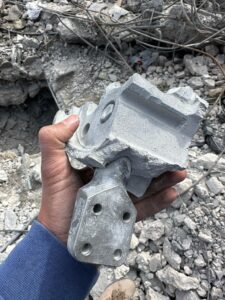
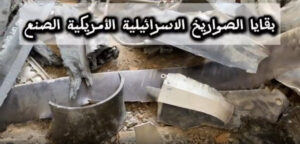
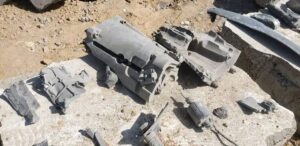
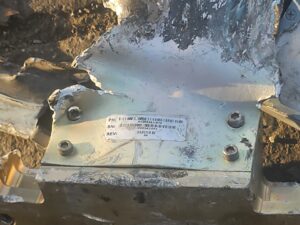
This image shows a remnant of the tail actuation section of a SPICE 250 guided bomb. The control fins are normally attached to this section, and the attachment point for one control fin is visible. (ARES)
Analyst Note:
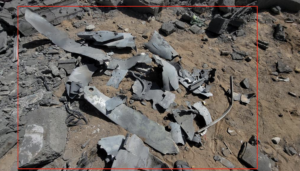
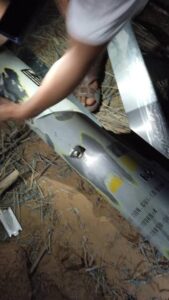
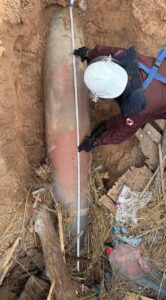
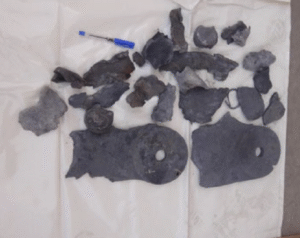
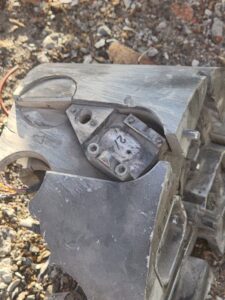
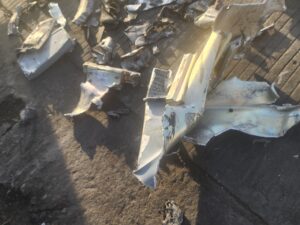
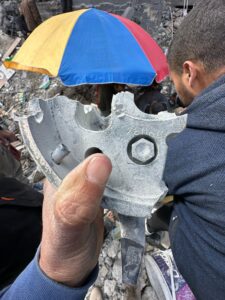
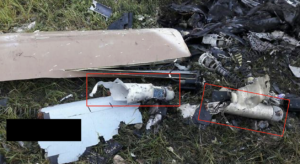
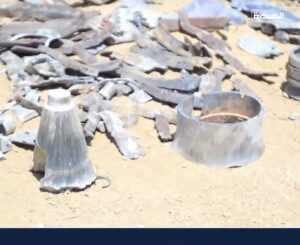
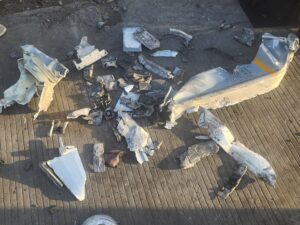
This image shows a variety of remnants from an Israeli SPICE 250 guided bomb. One of the bomb’s four control fins is visible at the bottom-left of the image. (ARES)
Analyst Note:
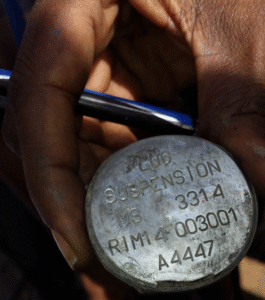
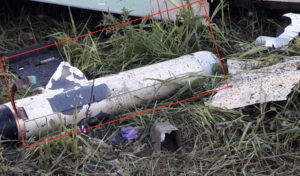
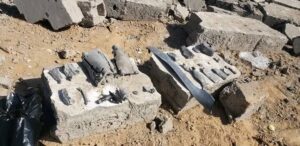
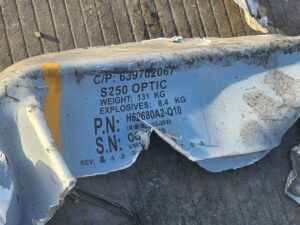
This image shows a remnant of the outer casing of the “S250 OPTIC” or SPICE 250 guided bomb, with the markings relatively intact. The markings on this remnant show that, while classified as a 250-pound bomb, the actual weight of this SPICE 250 variant is 288 pounds (131 kg) with only 18.5 pounds (8.4 kg) of explosive material. (ARES)
Collection
Iran-Israel conflict June 2025
Dozens of verified images of munitions used by Iran and Israel during the June 2025 Israel-Iran conflict
Analyst Note:
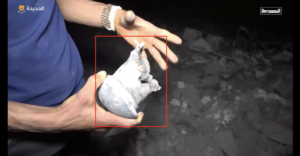
This image shows a Mikholit that was ejected from the weapons pod of an Israeli Hermes 900 drone that was downed in Iran. This Hermes 900 drone had two weapons pod, each capable of carrying 4 Mikholit bombs. (ARES)
Analyst Note:
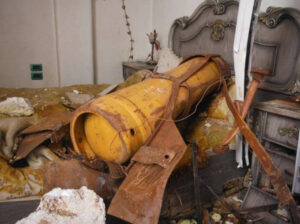
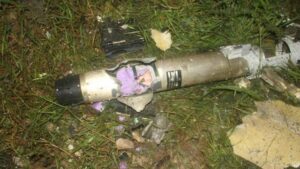
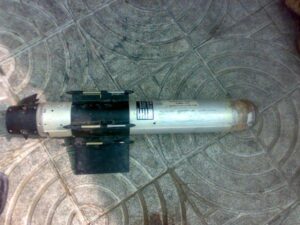
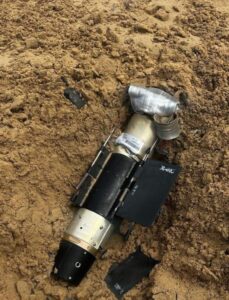
This image shows one of the two improvised air-delivered munitions (IADMs) containing a chemical payload used in an attack by the Syrian Arab Air Force on 7 April 2018 in Douma, Syria. This image shows how the IADM comprises a cradle surrounding an industrial gas cylinder. These cradles typically incorporate fins, wheels, and lifting lugs. The fins and the wheels of the cradle can be seen in this image (ARES)
Analyst Note:
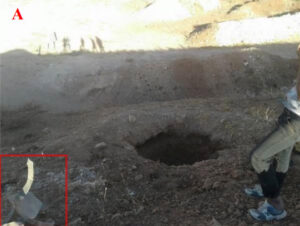
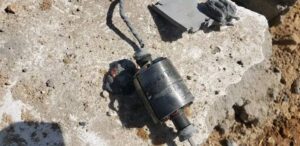
This image shows an impact crater, as well as remnants of the frame or ‘cradle’ (red box) that was fitted to the gas cylinder. Cradles associated with this type of Syrian Government chemical munition typically feature fins to help orient the cylinder as it falls, and features to assist with loading the cylinders into aircraft for deployment, such as wheels and lifting lugs. (ARES)
Analyst Note:
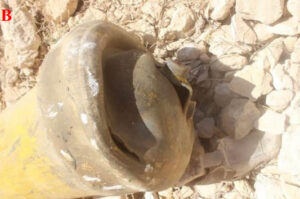
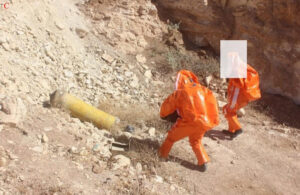
This image shows an industrial gas cylinder that was reportedly dropped by a helicopter over Kafr Zeita on 1 October 2016. The gas cylinder ruptured on impact with the ground, dispersing its payload of chlorine gas. (ARES)
Analyst Note:
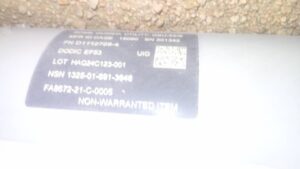
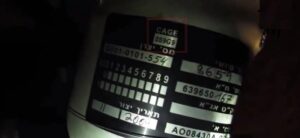
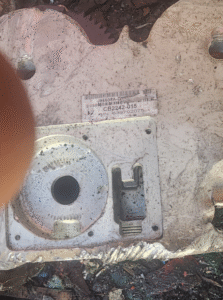
The Commercial and Government Entity (CAGE) code marked on this data plate (“0S9G9”) is a now-obsolete code assigned to Israel Aerospace Industries (IAI), the manufacturer of the Mikholit air-delivered bomb. (ARES)
Analyst Note:
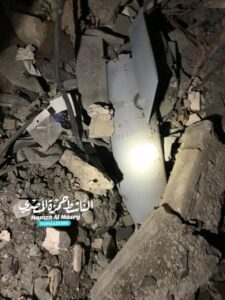
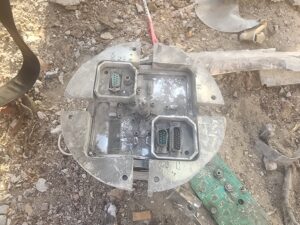
This image shows the guidance control unit from an Israeli 'Chameleon 3’ bomb guidance kit. This kit appears similar to those in the Israeli Lizard series of guidance kits, which are derived from the American-designed Paveway kit series. (ARES).
Analyst Note:
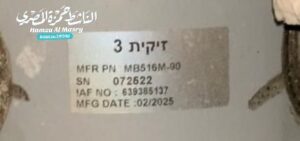
This is the data plate fitted to an Israeli Air Force bomb guidance kit. It reads “3 זִקִית” (‘Zikit 3’, or ‘Chameleon 3’ in English). As of May 2025, there is no public information available about this model of bomb guidance kit, but it appears to be a derivative or variant of the Israeli Lizard series, which are derived from the American Paveway bomb guidance kit. (ARES)
Analyst Note:
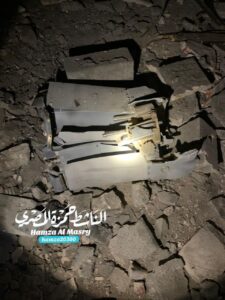
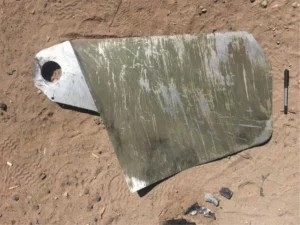
This image shows the damaged aerofoil group, or ‘tail kit’, found with a Chameleon 3 bomb guidance kit. The exact model of aerofoil group is unknown, but in US service similar component groups are given a designation in the ‘MXU-xxx’ range, and are interchangeable with different variants of the Paveway bomb guidance kit (within bomb weight classes). (ARES).
Analyst Note:
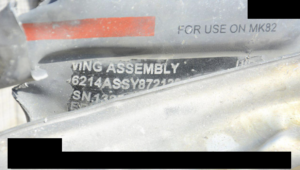
Although Human Rights Watch reported that they found manufacturing markings on a guidance fin assembly indicating that this MXU-series aerofoil group was paired with a Paveway III guidance kit, this cannot be determined by this wing remnant from the aerofoil group alone. (ARES)
Analyst Note:
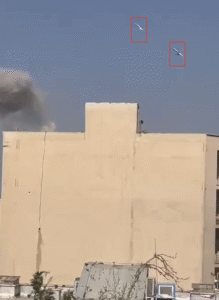
This image shows fragments of a BLU-109C/B 2,000-pound penetrator bomb. The remnant with visible threads is part of the aft closure ring attached to the base of the bomb. This features nine vent holes as an ‘insensitive munition’ (IM) safety feature. Three of the threaded vent holes are visible on this fragment. (ARES)
Analyst Note:
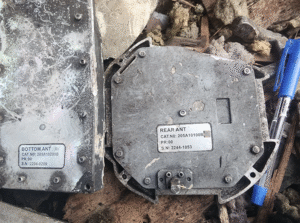
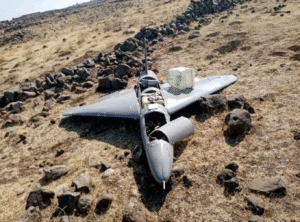
This image shows a remnant of the tail actuator subsystem of a Joint Direct Attack Munition (JDAM) bomb guidance kit. The size of this JDAM kit indicates that it is one of the kits compatible with 2,000-pound-class bombs, either the MK-84 or BLU-109. (ARES)
Analyst Note:
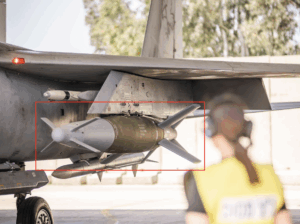
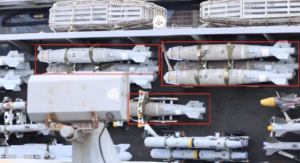
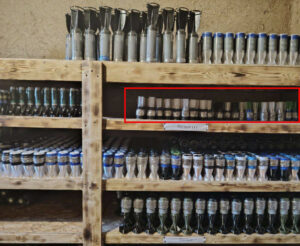
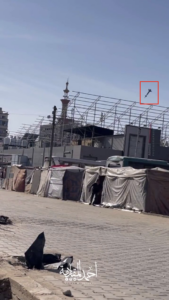
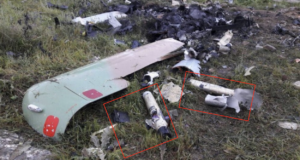
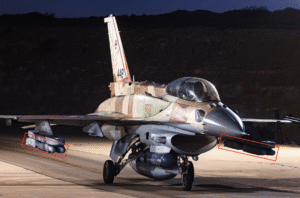
This image shows a variety of small air-delivered munitions that have been developed specifically for deployment via UAV. Some of these appear to be original designs, whilst others have been made by modifying existing munitions. This entry reflects those munitions outlined with the red box, but all of the munitions are generally of similar in size and format, and all have tailfin assemblies intended to orient the munition as it falls, just like more traditional air-delivered bombs. (ARES)
Analyst Note:
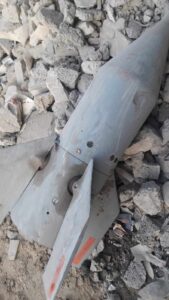
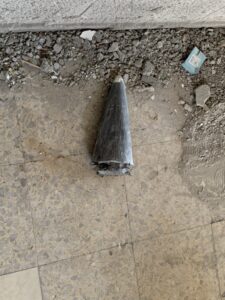
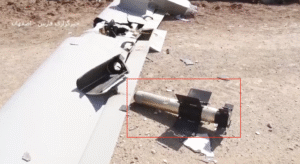
This image shows the nosecone from an Israeli SPICE 250 air-delivered bomb. Whilst generally similar in appearance to the nosecone of the GBU-39, the SPICE 250 nosecone is longer and narrower. (ARES)
Analyst Note:
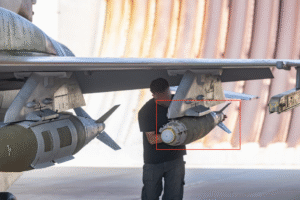
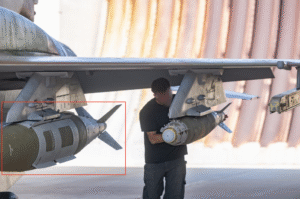
This image shows a Mikholit glide bomb, with its warhead removed (green cylinder on the left side of the box). The fins that spring outward when deploye have been taped down. This Mikholit was reportedly recovered by the Israeli Defense Forces (IDF) from Hamas, who had captured the bomb after it failed to function when originally deployed by the IDF. (ARES)
Analyst Note:
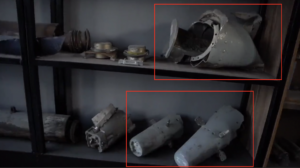
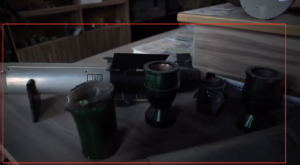
This image shows two Mikholit air-delivered bombs (‘glide bombs’), and four Mikholit warheads. There are at least two different variants of warheads available for the Mikholit glide bomb. The green cylinder on the left is a blast (high explosive) warhead, whilst the other three warheads are shaped charge warheads which incorporate additional fragmentation. Blast warheads of this type have also been seen with red markings, while the shaped charge warheads have been seen with yellow markings. (ARES)
Analyst Note:
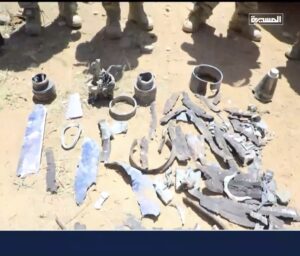
This image shows various remnants from GBU-39 air-delivered bombs, including two fuze wells. Each GBU-39 has only a single fuze well, indicating that this picture shows the remnants of at least two different GBU-39 bombs. (ARES)
Analyst Note:
This image shows a MXU-735 solid nose plug that can be installed in the nose fuze well of a MK 80-series aerial bomb in place of a fuze. (ARES)
Analyst Note:
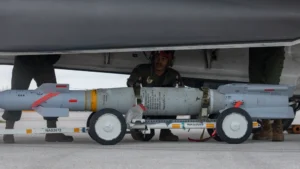
This image shows several GBU-53/B bombs photographed from above while on a munitions transport cart. GBU-53/B bombs are transported and loaded onto the aircraft with the wing assembly on the bottom. When the GBU-53/B is released from the aircraft, the bomb rotates, with the wing assembly side orienting as the top as the bomb glides to its target. (ARES)
Analyst Note:
This image shows a strake from a Joint Direct Attack Munition (JDAM) guidance kit (KMU-557/558) as fitted to 2,000-pound BLU-109-series penetrator bombs. (ARES)
Analyst Note:
This image shows two MAM-L guided air-delivered bombs affixed to the wing of a Bayraktar TB2 drone. The MAM-L and TB2 are both produced in Türkiye by Roketsan and Baykar respectively. The MAM-L can have one of three different warheads: blast fragmentation, anti-tank, or thermobaric. The warhead section of each MAM-L in this image has “YIPE/BF” visible. ‘YIPE’ is the abbreviation of the warhead type in Turkish: Yüksek Infilaklı Parçacık Etkili (‘high explosive fragmentation’, in English). The ‘BF’ also indicates that these MAM-L munitions are of the blast-fragmentation variant. The warhead of a MAM-L cannot be determined from an external assessment without viewing markings such as these (or a clear view of the data plate, which can be seen on the aft portion of the MAM-L). (ARES)
Analyst Note:
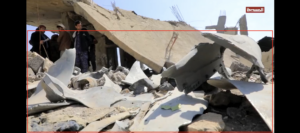
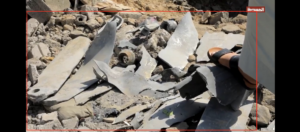
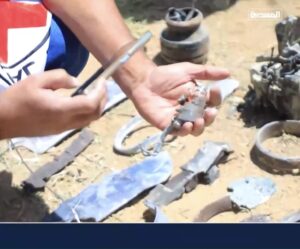
This image shows several remnants of a MAM-L bomb that are typically found after functioning. The actuated fins, as well as the fixed fins, are visible, along with various components of the control section that actuate the fins. The actuated fins attach to the control section, at the rear of the bomb, while the fixed fins attach to the middle of the bomb body. (ARES)