The external organisation that documented the munition
Research Organisation (6)
Colour of the munition pictured
Base Colour (12)
Colour of all, or some, of the markings on the munition
Marking Colour (11)
Language or script of the marking on a munition
Marking Script (10)
Condition of the munition pictured
Condition (6)
Key features defining the operation mechanisms of a projectile
Mechanical Feature (10)
Whether a munition is guided or unguided
Guidance (2)
Where the munition is launched from and what it targets
Domain (7)
The type of fins visible on the munition
Fins Characteristic (6)
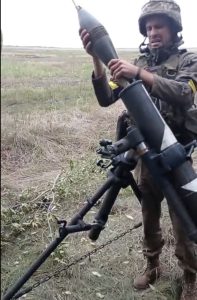
The nominal diameter of a projectile. For most modern munitions, this is expressed in millimetres (e.g. 82 mm mortar projectile), but older artillery gun projectiles may be described in inches.
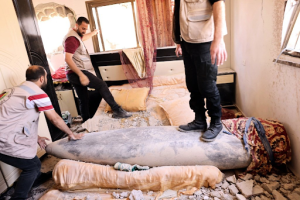
Use the rapid expansion of gases released by a detonating high explosive compound inside the munition to generate explosive power. Blast munitions are often considered general-purpose munitions and large examples can have powerful and widespread effects on targets such as structures and personnel.
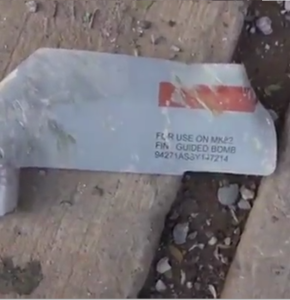
This component is one of four pneumatically controlled canards from the guidance section of a Paveway II precision guided munition (PGM) conversion kit. When a Paveway II conversion kit is fitted to a MK 82 series unguided air-delivered bomb (note markings), the munition receives a GBU-12 series designation. (ARES)
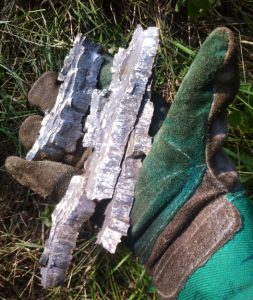
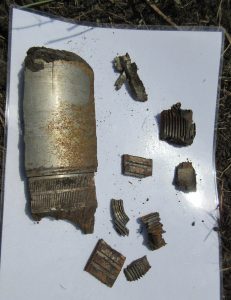
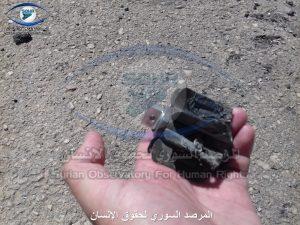
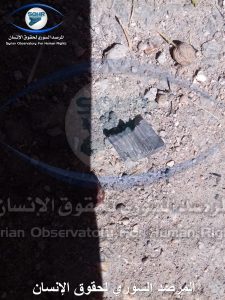
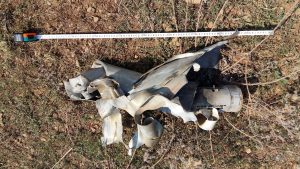
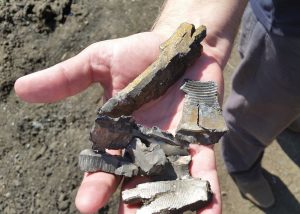
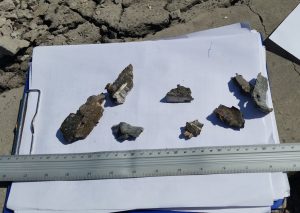
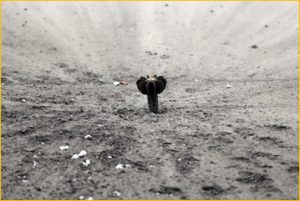
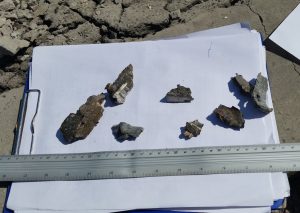
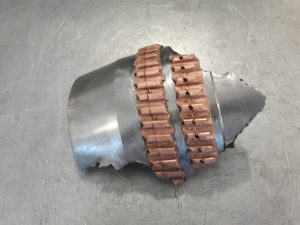
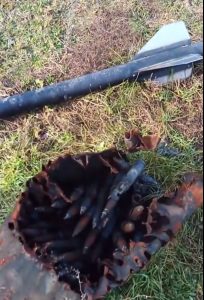
The large fragments in this image are typical of 'natural' fragmentation resulting from the rupturing of a thick-walled munition (in this case, an artillery projectile) by the functioning of its explosive payload. (ARES)
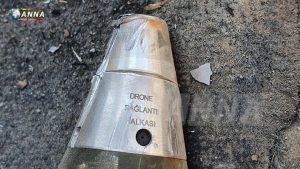
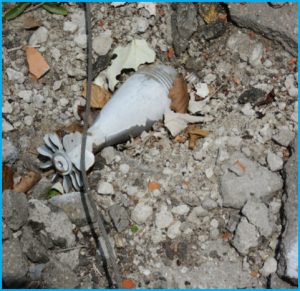
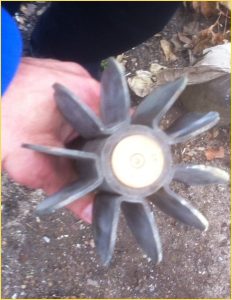
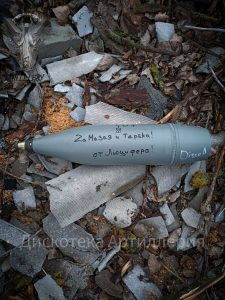
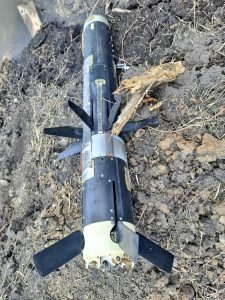
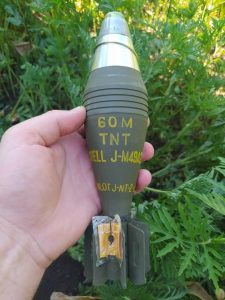
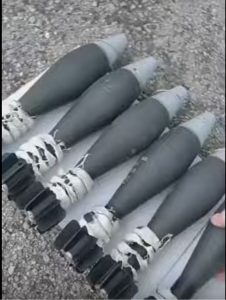
Although this munition started out life as a mortar projectile of the M492-pattern, it has been modified to be dropped from an unmanned aerial vehicle (UAV) and, in its present state, could not be fired from a conventional mortar. As such, it is correctly classified here as an air-delivered bomb. (ARES)
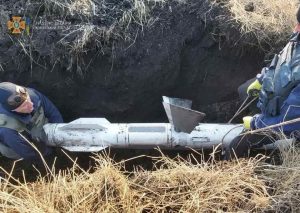
The fin assembly in the image bears a strong resemblance to those of other munitions employed in the same incident that have been identified as M49A2 mortar projectiles modified to be delivered by UAV. (ARES)
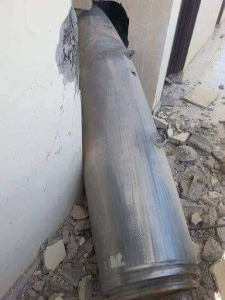
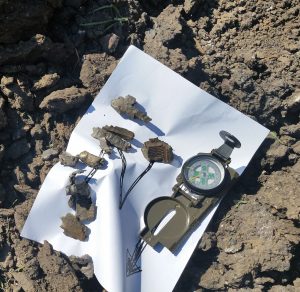
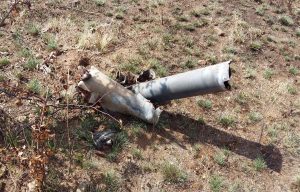
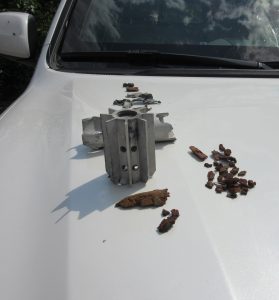
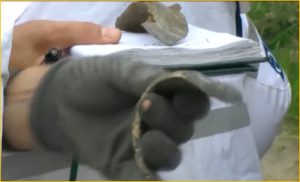
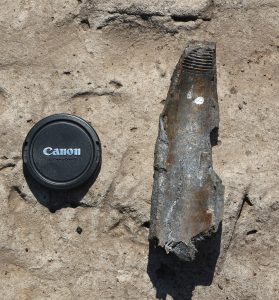
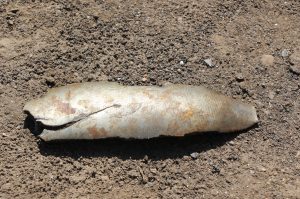
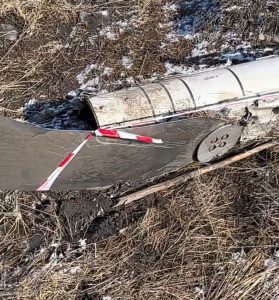
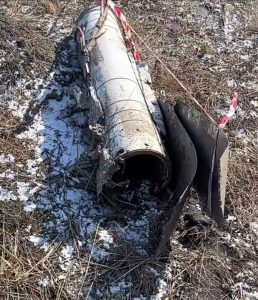
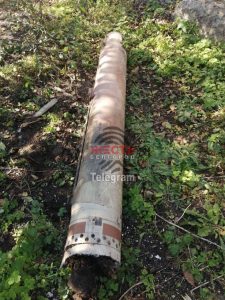
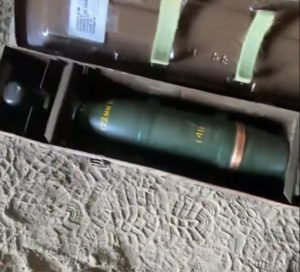
The munition remnants pictured here are likely to be from either a Russian OG-9 or a Bulgarian RHEF-9MA/GHEF-9MA recoilless gun projectile. However, based on the available information, positive identification cannot be not be made. (ARES)
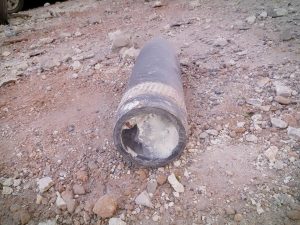
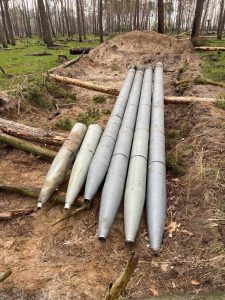
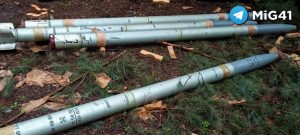
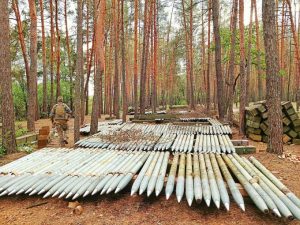
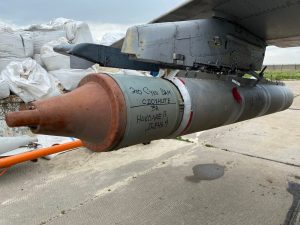
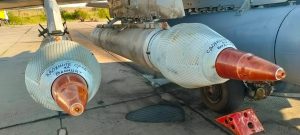
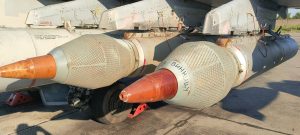
These S-25-O air-to-surface rockets are each loaded into a single-barrelled O-25 rocket launcher (sometimes called a 'launch tube' or 'rocket pod') that is affixed to an aircraft hardpoint. The over-calibre high explosive fragmentation warhead (of 420 mm in diameter) protrudes from the front of the tube. (ARES)
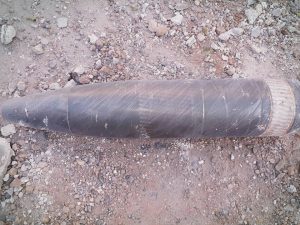
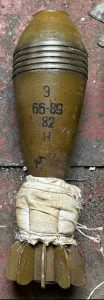
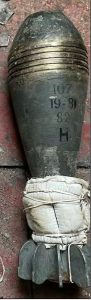
As a result of the rapid introduction of new models and variants during ongoing conflicts, sometimes a munition is issued with a provisional designation, or with no designation at all. In other cases, the designation is not yet known to researchers. (ARES)
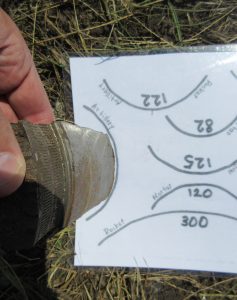
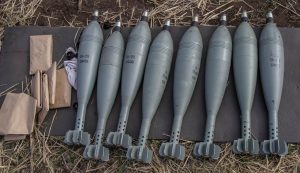
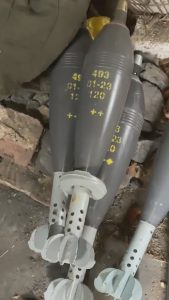
Whilst most mortars are smoothbore guns, some have a rifled bore. These M1101 120 mm mortar projectiles feature a 'pre-rifled' driving band—that is, a driving band with grooves cut at the factory to fit the mortar's rifling. (ARES)
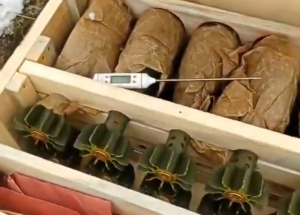
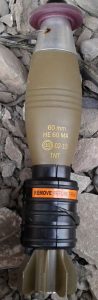
The plum-coloured plastic ring at the nose of this mortar projectile (placed over its fuze) and the black plastic propellant cover (placed over its tail) are both fitted for transport and storage, before the projectile is loaded into a cardboard tube, and then packed into an outer crate. The propellant cover obscures the perforated cylindrical tail assembly in this image. (ARES)
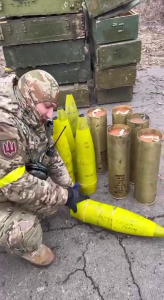
This image depicts a Ukrainian-made version of the Soviet-era OF-25 152 mm artillery projectile, the designation of which is not publicly known at this time (May 2024). The yellow base colour was commonly found in batches produced by Ukroboronprom in late 2022. Later batches returned to a grey base colour. (ARES)