



40 results
Current Filter
Israel
A country in the Middle East with the region's most advanced military capabilities. Israel has fought multiple wars with the Hamas militant group, which controlled Gaza until late 2023.
Current Filter
Rocket or Missile
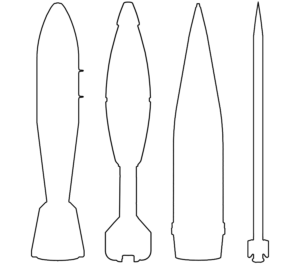
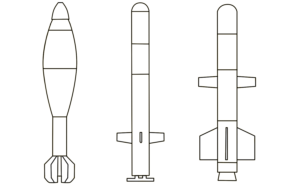
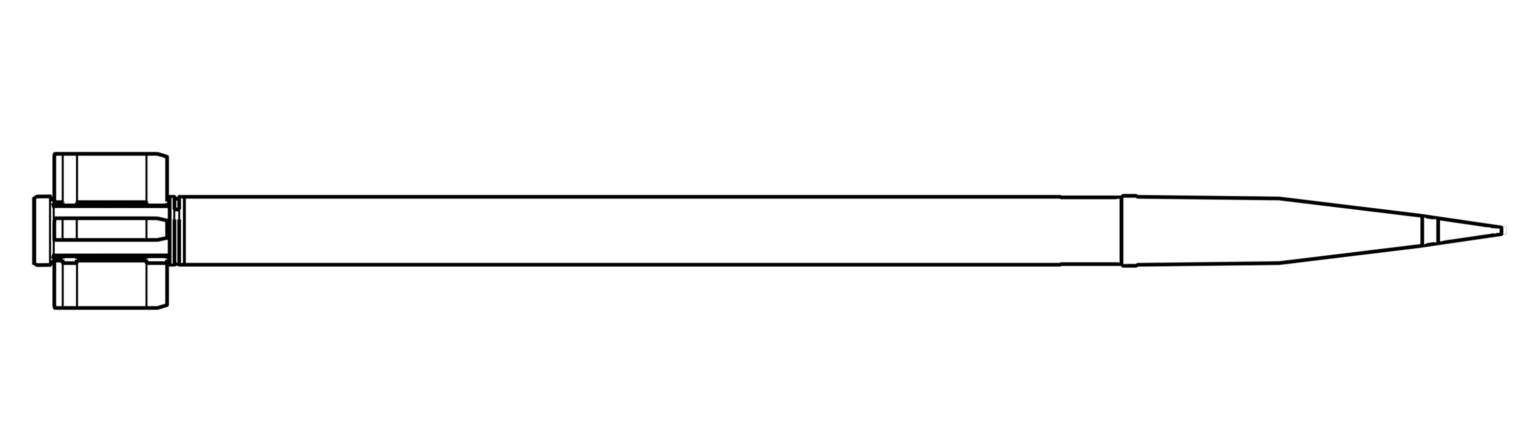
Rockets and missiles are two closely related types of powered munitions which utilise an internal propulsion method, typically a rocket motor, to maintain their rate of travel after launch. Rockets and missiles are typically relatively long and thin—with lengths ranging from 50 centimetres to 6.5 metres. Rockets are unguided those fitted with guidance systems are usually referred to as missiles. Missiles sometimes use propulsion methods other than rocket motors, such as turbojets. The effective range of rockets varies from as little as one kilometre to more than 40 kilometres, while missiles typically have a longer range — some more than 250 kilometres.
Read more →
Collection
Iran-Israel conflict June 2025
Dozens of verified images of munitions used by Iran and Israel during the June 2025 Israel-Iran conflict

Analyst Note:
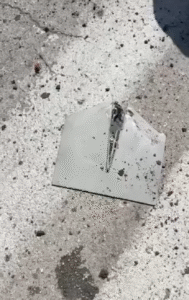
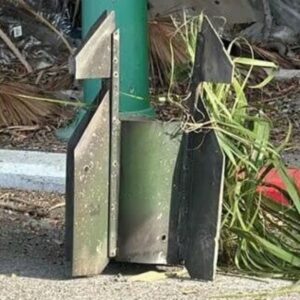
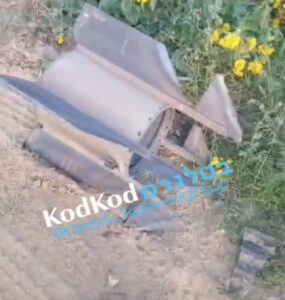
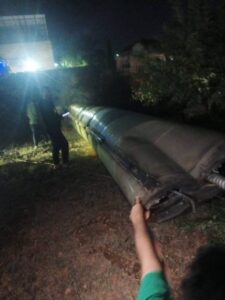
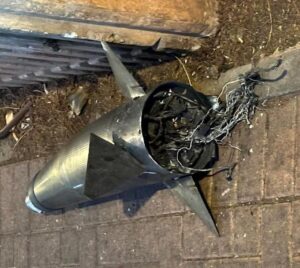
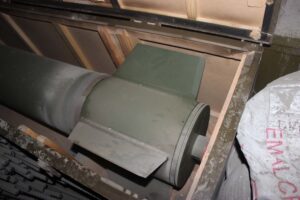
This image shows the rear fin section that is attached to a M-302/Khaibar-1/Fadi series rockets to add guidance capabilities. This rear fin section is installed, along with a forward control section between the warhead and the rocket motor. The guided munition, now classified as a missile, is referred to as a Nasr-1/Nasr-2. A similar, but larger, rear fin section is fitted to Zelzal rockets to convert them to guided munitions. (ARES).
Analyst Note:
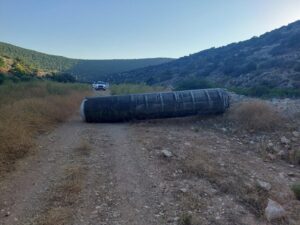
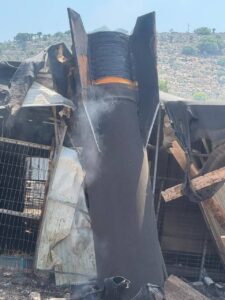
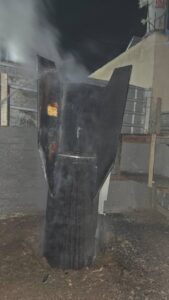
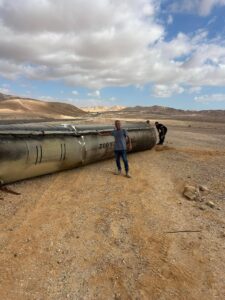
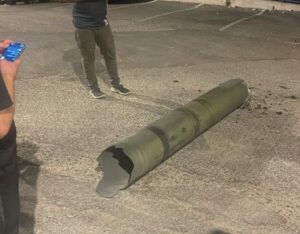
This image shows the rocket motor of a Kheibar Shekan or Fattah-1 medium-range ballistic missile (MRBM). The Fattah-1 was publicly unveiled by Iran in June 2023, with very few images surfacing since that time. Due to the lack of available reference material, differentially identifying the Kheibar Shekan and Fattah-1 is difficult. The missile components displayed at unveilings and public displays are also often different from those used in production models. (ARES).
Analyst Note:
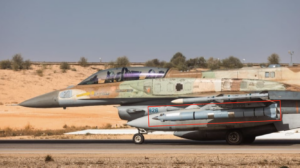
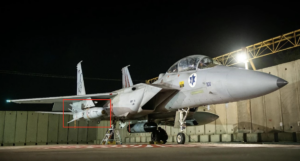
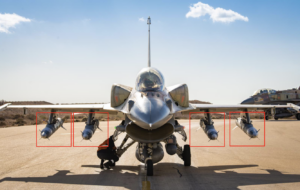
This image shows an Israeli Air Force F-16 carrying four Rampage air-to-ground missiles. The Rampage is a 580 kg (1,278 lb) missile with GPS and INS guidance. It carries a multi-purpose warhead that is designed for engaging a range of targets in the open as well as offering some degree of penetration. (ARES)
Analyst Note:
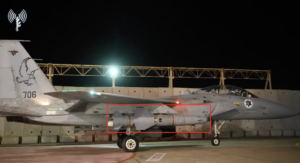
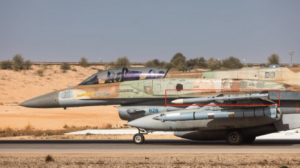
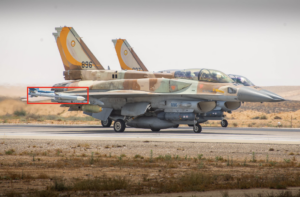
This F-16I fighter aircraft from the Israeli Air Force is carrying a CATM-120 inert missile simulant (indicated). These devices are used for training purposes, being designed to replicate the weight and centre of gravity of a live munition. They lack any means of propulsion and are not released from the aircraft. The CATM-120 can be differentiated from the AIM-120 missile series by the presence of only blue bands on the missile, denoting both an inert rocket motor and an inert payload. A ‘live’ AIM-120 will have two brown bands on the rear section of the missile (the rocket motor), and a yellow band on the forward, or warhead, section. An AIM-120 with an inert warhead, but a live rocket motor, will have a blue band on the warhead and two brown bands on the rocket motor. (ARES)
Analyst Note:
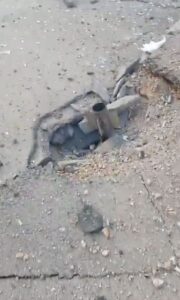
This F-16I fighter aircraft from 107 Squadron Israeli Air Force is carrying a CATM-120 inert missile simulant (indicated). These devices are used for training purposes, being designed to replicate the weight and centre of gravity of a live munition. They lack any means of propulsion and are not released from the aircraft. The CATM-120 can be differentiated from the AIM-120 missile series by the presence of only blue bands on the missile, denoting both an inert rocket motor and an inert payload. A ‘live’ AIM-120 will have two brown bands on the rear section of the missile (the rocket motor), and a yellow band on the forward, or warhead, section. An AIM-120 with an inert warhead, but a live rocket motor, will have a blue band on the warhead and two brown bands on the rocket motor. (ARES)
Analyst Note:
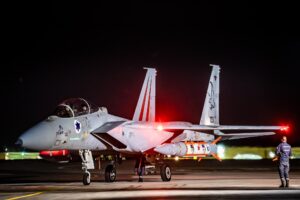
This Blue Sparrow-series air-launched ballistic missile is being carried by an F-15C fighter aircraft from 106 Squadron Israeli Air Force. The missile is marked with the logos of three organisations involved in its development—the U.S. Missile Defense Agency, the Directorate of Defence Research & Development, and the Israel Missile Defense Organization—and the Blue Sparrow programme logo of the manufacturer (Rafael Advanced Defense Systems). The booster section also features bright-orange fins and markings consistent with its use as a target missile, here modified to accept a high explosive warhead. (ARES)


Analyst Note:
The Stunner missile is the surface-to-air interceptor missile fired by the David’s Sling weapon system to defeat short-range ballistic missiles, cruise missiles, drones, and rockets. The Stunner does not carry an explosive warhead, instead relying on kinetic impact (also called the ‘hit-to-kill’ principle) to intercept ballistic missiles and other targets. (ARES)
Analyst Note:
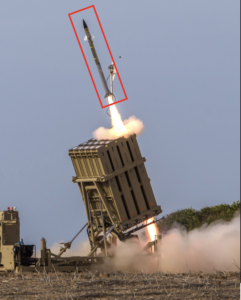
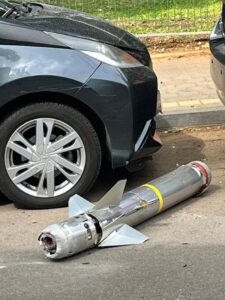
This image shows most of the forward half of a Tamir surface-to-air missile, including the guidance section and warhead, as fired by launchers in the Iron Dome system. These interceptor missiles are fast and manoeuvrable with a relatively small explosive payload. Their construction and low yield means that remnants are often recovered largely intact. (ARES)

Analyst Note:
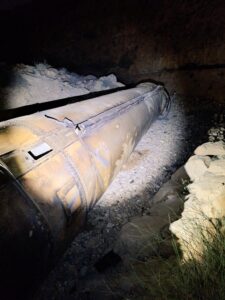
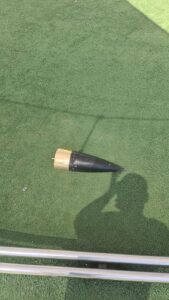
This image shows the nosecone from an Israeli Tamir surface-to-air missile. This component is often found as a remnant after the functioning of the missile. (ARES)

Analyst Note:
In this image, four AGM-114 Hellfire-series missiles can be seen fitted to an M299-series missile launcher, itself attached to the stub wings of this Israeli AH-64 Apache helicopter. In theory, the Apache could be armed with up to sixteen Hellfire missiles, but fewer are carried in practice to allow for other weapons and sensor payloads (ARES).
Analyst Note:
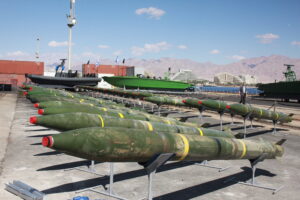
‘Khaibar-1’ is a designation given to a series of 302 mm rockets produced in Syria, possibly derived from the Chinese WS-1/WS-1B. The Khaibar-1 is also referred to as the M-302 or M302. (ARES)
Analyst Note:
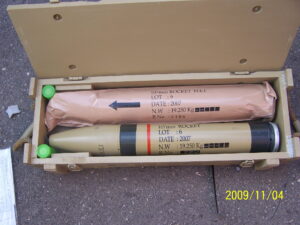
This Iranian copy of the Chinese Type 63 107 mm rocket is marked with a red stripe and text to indicate it is of the high explosive incendiary (“H.E.I”) type. Markings also show that it was produced in 2007. (ARES)
Analyst Note:
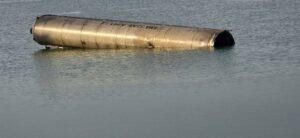
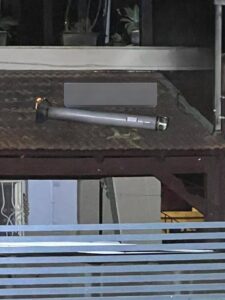
The Tamir Interceptor is the missile fired from Israel’s Iron Dome defence system to intercept incoming rockets, missiles, projectiles, and unmanned aerial vehicles (‘drones’). The Tamir uses a warhead with a relatively small explosive yield, which typically results in the guidance section, nosecone, and (spent) rocket motor falling to the ground relatively intact after functioning. (ARES)