
Do not approach munitions
under any circumstances
Country or territory where the image was reported

Reported Location (52)

A large Farsi-speaking country in the Middle East which has seen a number of conflicts in recent decades.
Iran
Year the image is reported to have been taken

Year (21)

2026
Classification groups of key explosive munitions used in conflicts

Munition Category (8)

The impact or effect the munition is intended to have

Functional use (10)

The specific model of munition pictured

Tentative Model (353)

Search

The external organisation that documented the munition

Research Organisation (6)

Colour of the munition pictured

Base Colour (12)

Colour of all, or some, of the markings on the munition

Marking Colour (11)

Language or script of the marking on a munition

Marking Script (10)

Condition of the munition pictured

Condition (6)

Key features defining the operation mechanisms of a projectile

Mechanical Feature (10)

Whether a munition is guided or unguided

Guidance (2)

Where the munition is launched from and what it targets

Domain (7)

The type of fins visible on the munition

Fins Characteristic (6)

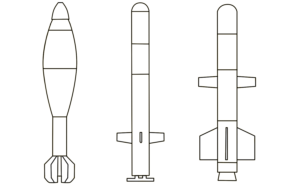
Fin wingspan is more than double the diameter of the munition’s body

Wide Fins
The nominal diameter of a projectile. For most modern munitions, this is expressed in millimetres (e.g. 82 mm mortar projectile), but older artillery gun projectiles may be described in inches.

Calibre (76)

Weight class of the aerial bomb pictured

Weight Class (14)

1–20 of 20

Current Filter

Wide Fins
A fin wingspan that is more than double the diameter of the munition’s body.

Current Filter

Iran
A large Farsi-speaking country in the Middle East which has seen a number of conflicts in recent decades. Following the 1979 revolution, Iran became an Islamic republic. Since then Iran has militarily supported various allies and proxies across the region, including Hezbollah in Lebanon. In 2025 the country fought a twelve-day war with Israel, with Iran's nuclear and ballistic missile programs heavily damaged - as well as the first large-scale American strikes inside Iran.
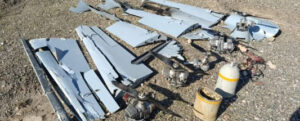
OSMP2387
Analyst Note:
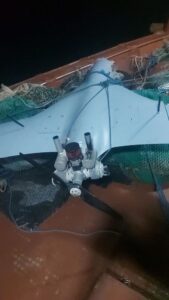
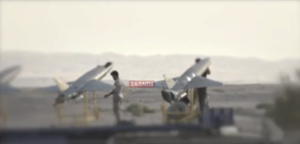
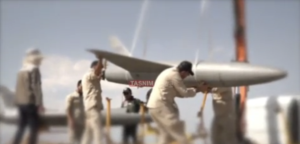
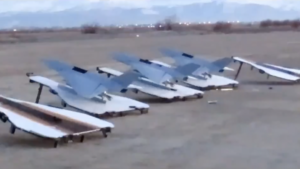
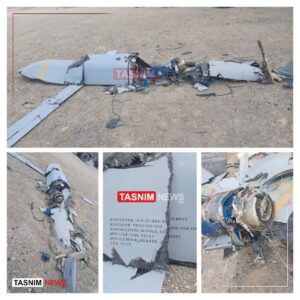
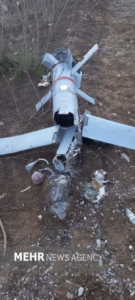
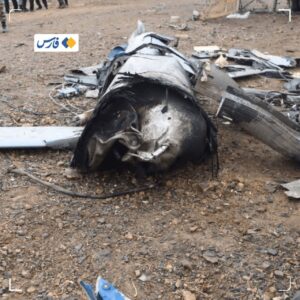
This image shows remnants of several one-way attack UAVs, as well as two unfunctioned Modamer warheads. Modamer warheads are blast/fragmentation warheads with an overall weight of 34.5 kg (76 lb). The Modamer warhead designs are produced by Halcon, a subsidiary of Edge Group, which is owned by the Emirati state. (ARES)
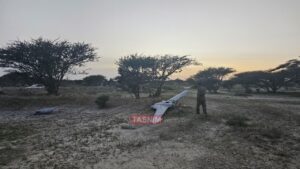
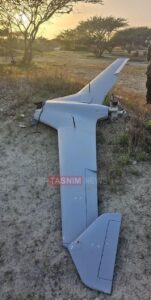
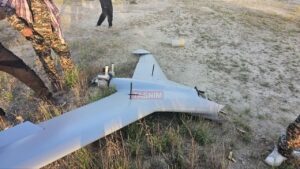
OSMP2389
Analyst Note:
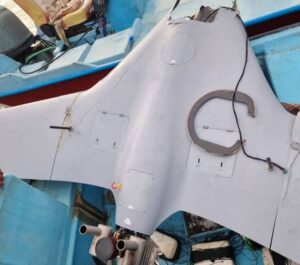
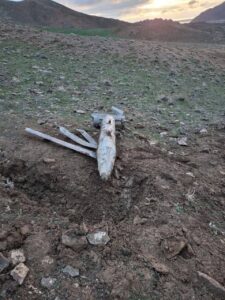
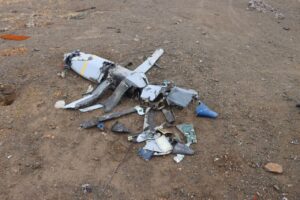
This image shows an unknown model of one-way attack (OWA) UAV believed to be produced and employed by the United Arab Emirates (UAE). ARES has assigned a temporary munitions identifier (TMID) of TMID-0015 to this munition. The UAV’s nose and a Modamer warhead can be seen, detached, to the left of the main body. (ARES)
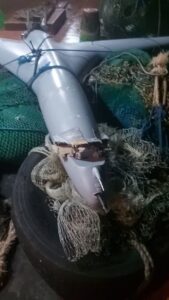
OSMP2261
Analyst Note:
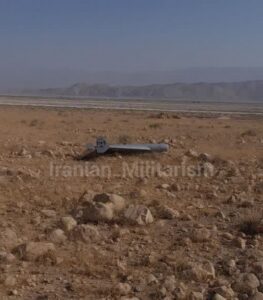
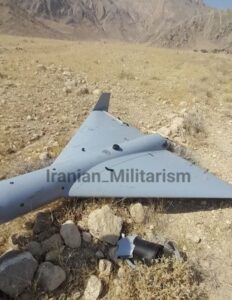
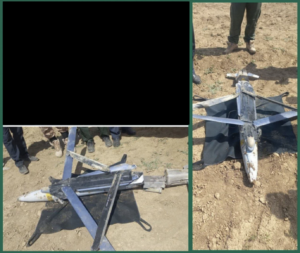
These images show a relatively intact GBU-39/B air-delivered bomb, with the distinctive Diamond Back Wing Assembly still mounted to the bomb body. Whilst the source claims that the U.S. feared this bomb would be exploited for its technology, the GBU-39/B has been in widespread use since its introduction in 2006, including in Gaza, Lebanon, Syria and Yemen. Similar glide bombs have been designed and produced by other nations. (ARES)