The impact or effect the munition is intended to have
Functional use (10)
The specific model of munition pictured
Tentative Model (293)
Search
The external organisation that documented the munition
Research Organisation (6)
Colour of the munition pictured
Base Colour (12)
Colour of all, or some, of the markings on the munition
Marking Colour (11)
Language or script of the marking on a munition
Marking Script (10)
Condition of the munition pictured
Condition (6)
Key features defining the operation mechanisms of a projectile
Mechanical Feature (10)
Whether a munition is guided or unguided
Guidance (2)
Where the munition is launched from and what it targets
Domain (7)
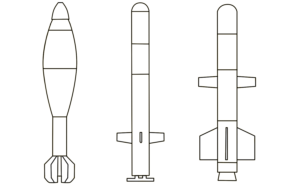
The type of fins visible on the munition
Fins Characteristic (6)
The nominal diameter of a projectile. For most modern munitions, this is expressed in millimetres (e.g. 82 mm mortar projectile), but older artillery gun projectiles may be described in inches.
A large eastern European country that faced a full-scale Russian invasion in February 2022. Since then the Ukrainian military has fought a major war with Russian forces, with tens of thousands believed to have been killed.
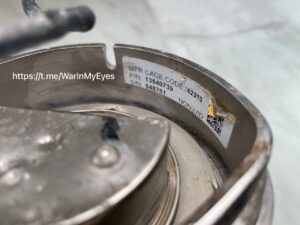
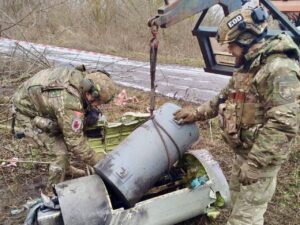
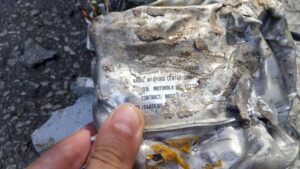
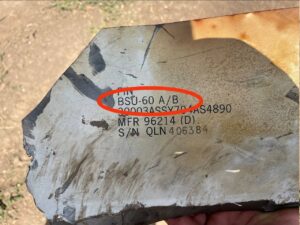
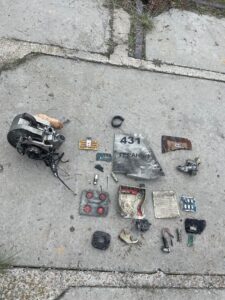
This munition remnant is marked with a manufacturer’s CAGE Code (“MFR CAGE CODE: 62313”) which indicates it was produced by Lockheed Martin. Lockheed Martin is the primary contractor that makes GMLRS missiles. (ARES)
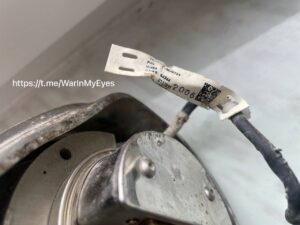
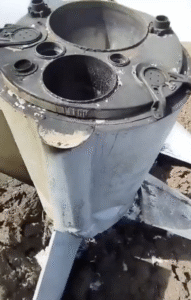
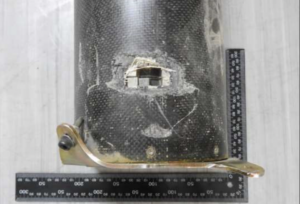
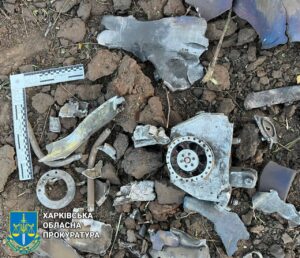
This remnant shows a munition component marked with the CAGE Code for a sub-contractor who produced part of a larger munition. “64344” is the code for Unique Electronics Inc., a known sub-contractor working on Lockheed Martin’s GMLRS contract. One of the parts they make is the “CABLE ASSEMBLY W459“, as seen in this image. (ARES)
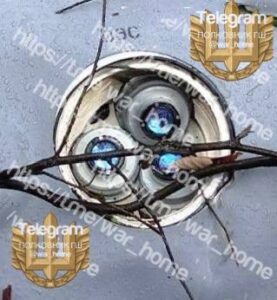
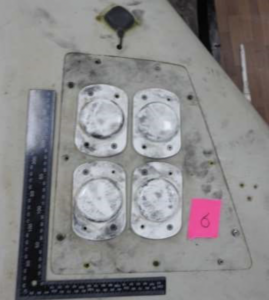
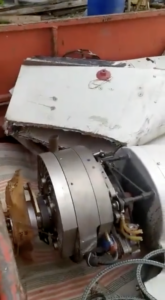
This image shows the three lenses that form the new version of the Kh-101 Digital Scene Matching Area Correlator (DSMAC) system. (The older version only had a single lens.) DSMAC systems take digital images of the ground as the missile passes overhead, and then compare those images to pre-captured images stored in the onboard memory. The DSMAC corrects the flight path as needed based on differences between the two sets of images. (ARES)
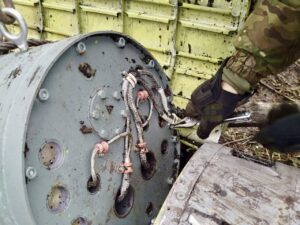
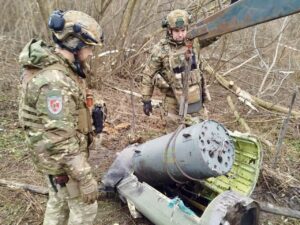
This image shows the second warhead present in some variants of the Kh-101 cruise missile. The inclusion of this additional warhead requires a smaller fuel tank in the missile, offering increased explosive weight in exchange for a reduced maximum range. (ARES)
This image shows part of a Russian Kh-59MK2 missile that is fitted with a cluster munition warhead. Some of the grey spherical submunitions are visible, both inside and outside the warhead. (ARES)
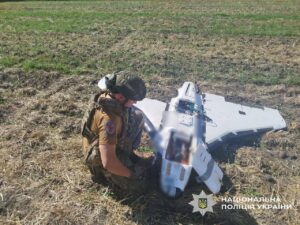
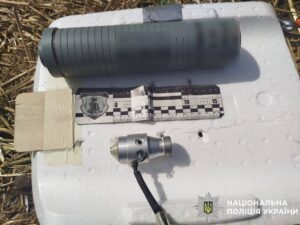
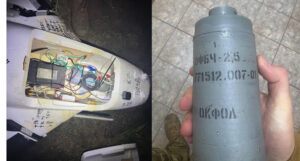
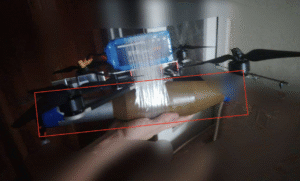
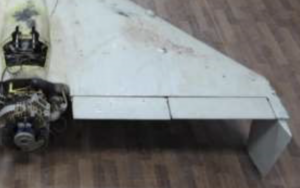
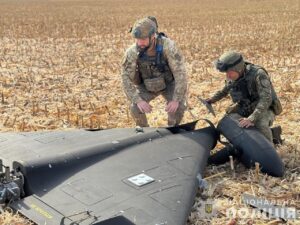
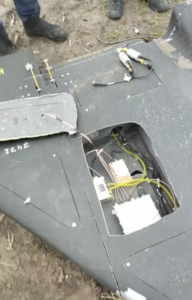
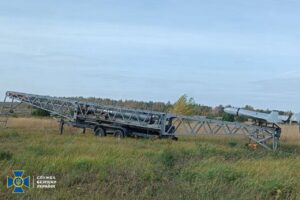
The munition in this image has been integrated into a commercial off-the-shelf (COTS) small UAV. This UAV (‘drone’) adds powered and guided delivery and converts the munition into a guided missile—regardless of the original, intended delivery method. (ARES)
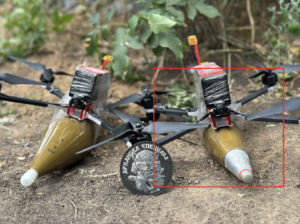
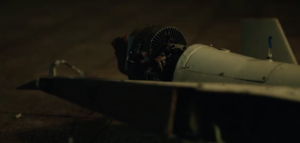
The warhead of the OWA UAV indicated in this image cannot be positively identified from this photograph alone. It appears to be the warhead section of either an OG-9 series or OG-15 series high explosive fragmentation (HE-FRAG) projectile, with a GO-2 or similar impact fuze fitted in the nose. (ARES)
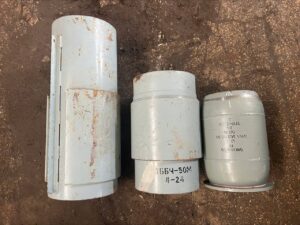
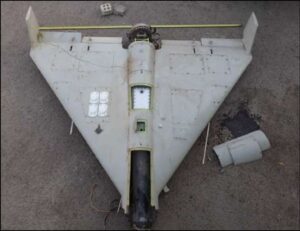
This image shows three different warheads developed by Russia for the Shahed-136/Geran-2 one-way attack (OWA) unmanned aerial vehicle (UAV), each of which differ from the original warhead designed by Iran for the Shahed-136. Left: A thermobaric explosive warhead; Middle: TBBCh-50M, a thermobaric explosive warhead; Right: OFZBCh-50, a high explosive warhead with an incendiary effect. Each of these warheads is also fitted with a fragmentation liner to increase the fragmentation effect generated when the warhead detonates. Some of the fragmentation liners may contain zirconium, a metal which is ignited when the warhead detonates, providing an additional incendiary effect. (ARES)
This image shows the copper cone of the shaped charge located at the front of the warhead fitted to a Shahed-131. The Ukrainian armed forces have recorded that the cone measures 111 mm in diameter and 162 mm in depth. The warhead is lined with cubic pre-formed fragments of 7 mm in diameter. The explosive content of the warhead is estimated to be between 10 and 15 kg. (ARES)
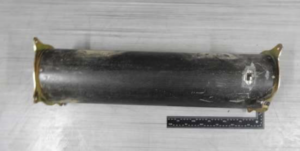
This image shows a remnant of the aft motor section, which includes the venturi nozzle, of a North Korean KN-23/KN-24/Hwasong-11 series missile. The KN-23/KN-24/Hwasong-11 has a generally similar appearance to the Russian 9M7 ‘Iskander’ series of ballistic missiles, but has differences in performance and in some aspects of the construction. (ARES)
This image shows the BSF-50, one of several warheads developed by Russia for the Shahed-136/Geran-2 to replace the original Shahed-136 warhead designed by Iran. The BSF-50 is a high explosive warhead with a fragmentation effect. (ARES)
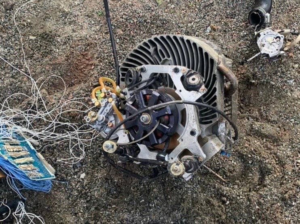
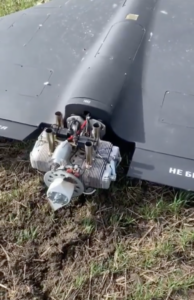
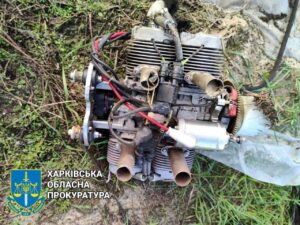
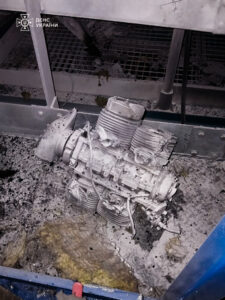
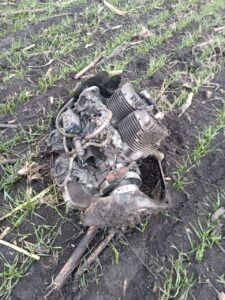
Depicted here is the MD-550 motor of a Shahed-136/Geran-2. This image was presented by Ukrainian President Zelenskyy as a fragment of the drone that reportedly hit the Chernobyl Nuclear Power Plant’s New Safe Confinement shelter. (ARES)
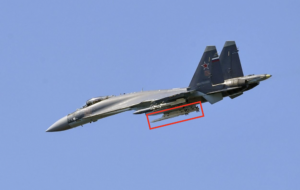
Two R-77 air-to-air missiles (NATO reporting name: AA-12 Adder) are carried in this photograph by a Russian Aerospace Forces Sukhoi Su-35 fighter aircraft. Key markings, including the aircraft’s bort number (a coloured numeral that acts as a unit or base identifier), have been digitally obscured. (ARES)