Classification groups of key explosive munitions used in conflicts
Munition Category (8)
The impact or effect the munition is intended to have
Functional use (10)
The specific model of munition pictured
Tentative Model (293)
Search
The external organisation that documented the munition
Research Organisation (6)
Colour of the munition pictured
Base Colour (12)
Colour of all, or some, of the markings on the munition
Marking Colour (11)
Language or script of the marking on a munition
Marking Script (10)
Condition of the munition pictured
Condition (6)
Key features defining the operation mechanisms of a projectile
Mechanical Feature (10)
Whether a munition is guided or unguided
Guidance (2)
Where the munition is launched from and what it targets
Domain (7)
The type of fins visible on the munition
Fins Characteristic (6)
The nominal diameter of a projectile. For most modern munitions, this is expressed in millimetres (e.g. 82 mm mortar projectile), but older artillery gun projectiles may be described in inches.
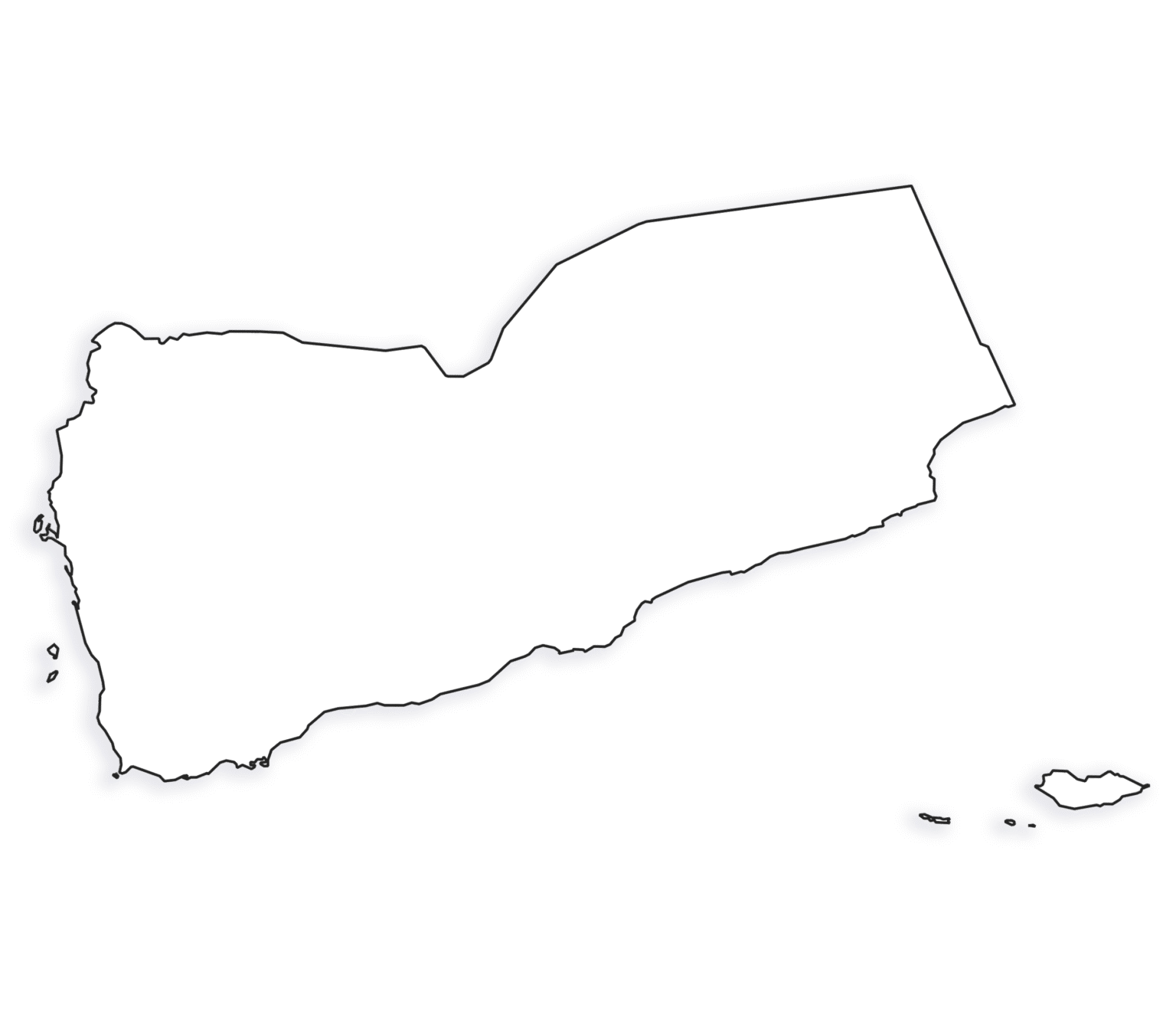
An Arabic-speaking country in the south of the Arabian Peninsula that has seen conflict since 2011 protests morphed into a civil war. In 2015, a Saudi Arabian-led coalition began a seven year bombing campaign against the Iran-backed Houthi group, which controls the capital Sanaa. In 2023, the Houthis began firing at ships in the Red Sea, saying it was in 'solidarity' with Gaza. Following this, the US and UK began bombing the Houthis.
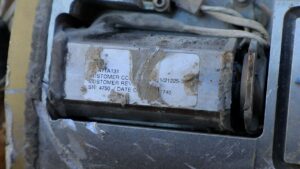
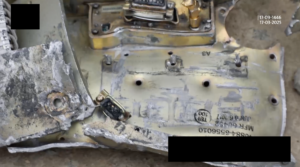
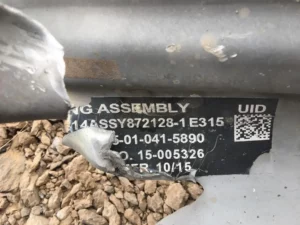
This image shows a fragment of the wing assembly of a Paveway bomb guidance kit. The data plate, though damaged, provides additional information about the munition. A partial Commercial and Government Entity code (CAGE; “ …14”), manufacturing part number (MFG SKU; “872127-1”), National Stock Number (NSN; “...5-01-141-5890”), serial number (Serial NO; 15-005326), and date of manufacture (“…MFR. 10/15”) are visible. This data can be used to look-up the component and determine that this specific fragment is from a Paveway II guidance kit intended for use with a MK 82-series 500-pound-class air-delivered bomb. This bomb and guidance kit combination is referred to as the GBU-12. The CAGE code, although partial, is enough to determine that this specific kit was produced by Raytheon, rather than the other known manufacturer of the Paveway kits, Lockheed Martin. (ARES)
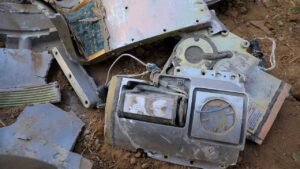
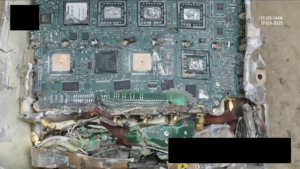
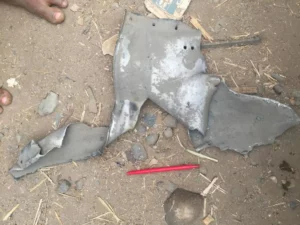
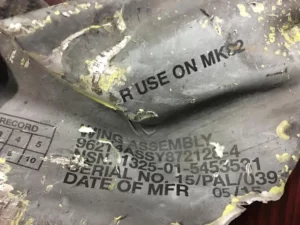
This image shows a fragment of the wing assembly of a Paveway kit, compatible with a MK 82 500-pound-class air-delivered bomb. (“..R USE ON MK82”). The National Stock Number (NSN; “1325-01-5453531”) indicates that this is a Paveway IV bomb guidance kit. There are variants of Paveway guidance kits compatible with all MK 80-series bombs, as well as other bombs such as the 5,000-pound-class BLU-113 penetrator. Paveway bomb guidance kits use laser guidance, and are more precise than JDAM guidance kits. Some variants of the Paveway kit, such as the ‘Enhanced’ series feature GPS and INS guidance in addition to laser guidance. (ARES)
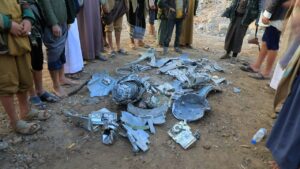
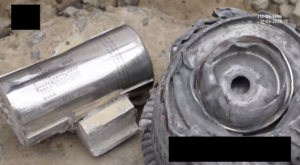
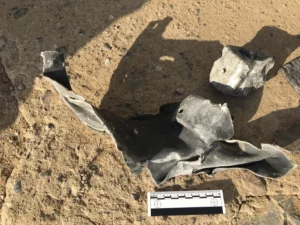
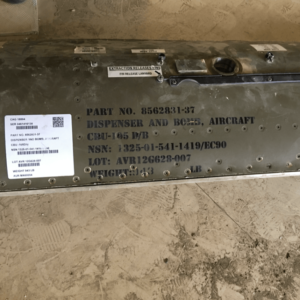
This image shows part of the SUU-66 dispenser (sometimes called a ‘shell’) that forms part of a CBU-105 D/B cluster bomb unit. In U.S. service, a ‘cluster bomb unit’ designation includes both the dispenser or shell, as well as the payload.
The CBU-105 series of cluster munitions consists of CBU-97-series munitions that are modified with a WCMD (Wind Corrected Munitions Dispenser) guidance kit. Both CBU-97 and CBU-105 series munitions are made-up of an SUU-66 dispenser filled with 10 BLU-108 submunitions. Each BLU-108 submunition contains 4 ‘skeet’ warheads that are ejected mid-air and independently seek out targets using an infrared sensor. A single skeet weighs 7.5 lb (3.4 kg) and contains a copper explosively formed penetrator (EFP) for armour penetration that is surrounded by a fragmentation ring offering some anti-personnel effect. (ARES)