



Featured Materials
A curated selection of images, terms and collections to help understand modern conflict.
Iran War 2026
Munition images from the ongoing Middle East conflict
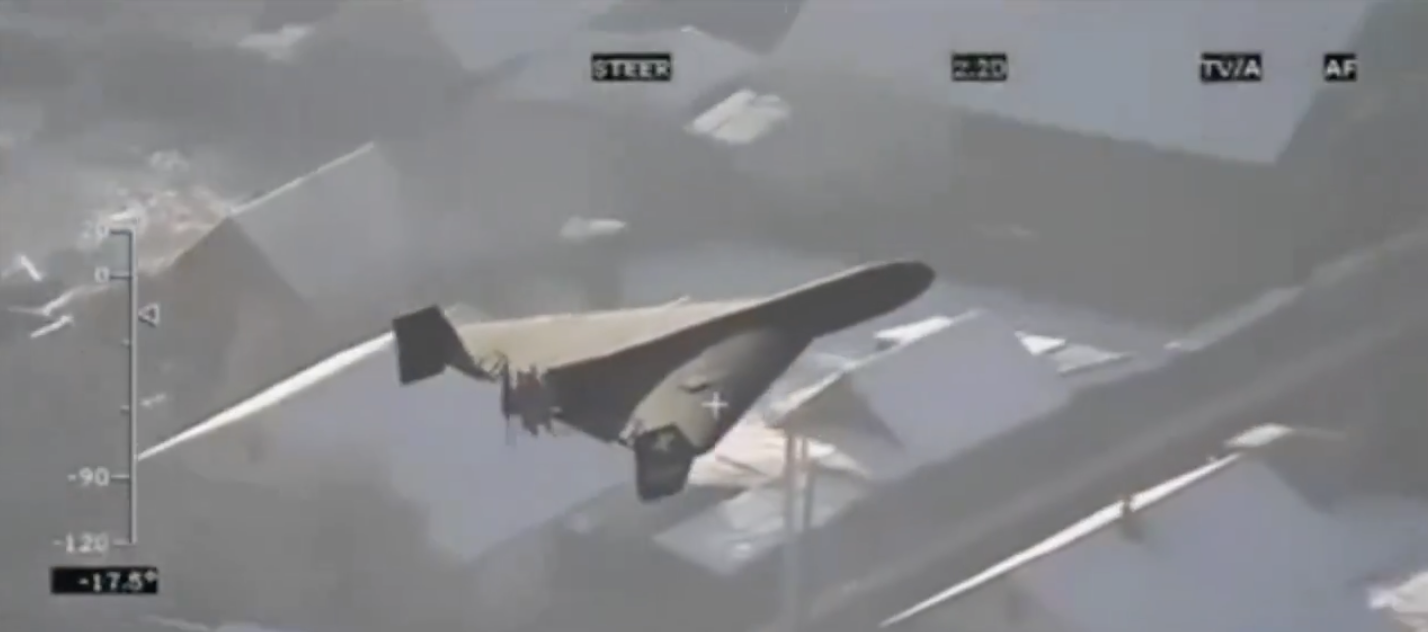
Shahed-131 & -136 UAV
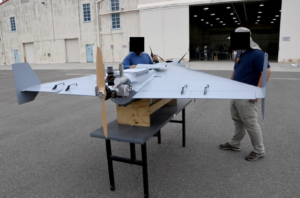
3D models explain the best-known 'kamikaze drones'

Collection
Munition images from the Gaza war

GBU-39 bomb
3D model explaining Israel's 'weapon of choice' in Gaza

Research organisation
Images from the Human Rights Watch archives

Collection
Munition images from the Ukraine war

Follow
Keep up to date with newly added munitions
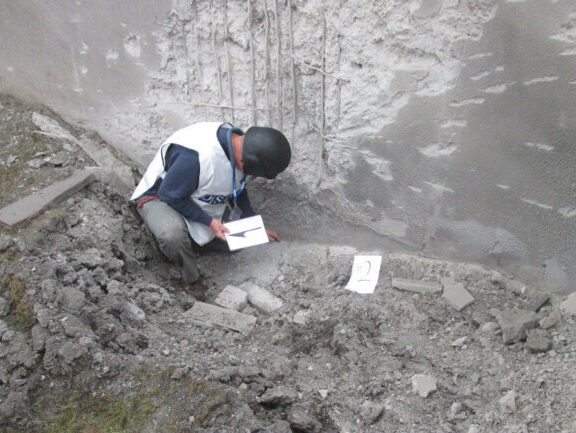
Contribute
Submit images to the OSMP
OSMP referenced in media and research
View all →
BBC uses OSMP to investigate new U.S. missile

NYT uses OSMP to identify Iran school munition

AP highlights images of Iranian submunitions

The Incendiary Bomb Never Seen in Israel Before

UN report highlights OSMP importance

GIJN’s Top Investigative Tools of 2024

How GBU-39 bombs became Israel’s ‘weapon of choice’
1–31 of 31
Analyst Note:
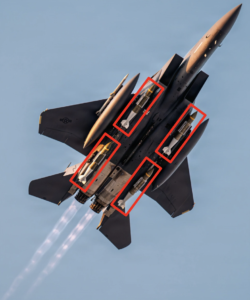
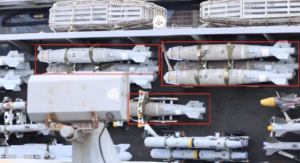
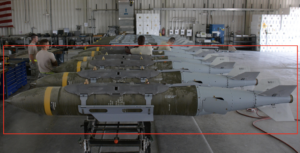
Highlighted are four GBU-31 Joint Direct Attack Munitions (JDAM) guided air-delivered bombs loaded onto the belly of a U.S. F-15E Strike Eagle aircraft. The GBU-31-series consists of a 2,000-pound-class bomb (Mk 84, BLU-109, or BLU-109A/B) and a guidance kit comprising a tail unit with four articulating fins and a guidance control unit with inertial navigation system (INS) and global positioning system (GPS) functions. The GBU-31 munitions seen here are built around the BLU-109, a penetrator munition with a solid nose and a thicker, one-piece body which flares slightly at the base. It has no body welds; the heavy steel base plate is held in place by an equally robust threaded steel closure ring. The BLU-109 is painted olive drab with a single yellow band towards the nose. (ARES)
Analyst Note:
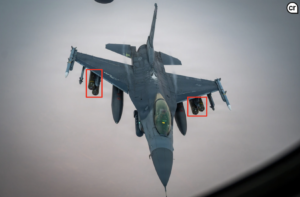
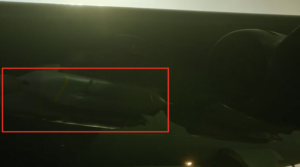
This image of an F-16 Fighting Falcon aircraft operating during the conflict with Iran was released by U.S. Central Command. The munitions indicated are built around the ‘stores suspension and release item unit’ (SUU) series of containers used as the outer casings of several cluster munitions. In this case, the image may be associated with the use of BLU-91/B scatterable anti-tank mines in Iran. These would be delivered by the CBU-78/B or CBU-89/B air-delivered bombs, which can incorporate the Lockheed Martin Wind Corrected Munitions Dispenser (WCMD), although the distinctive tail elements needed to ID the latter are not visible here. (ARES)

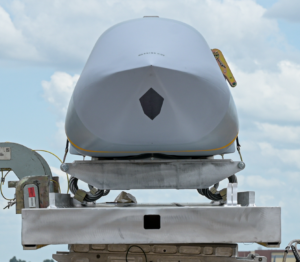
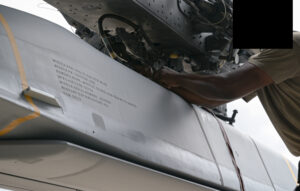
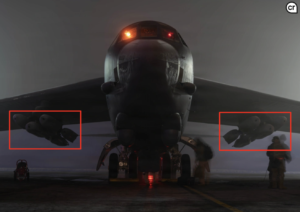
Analyst Note:
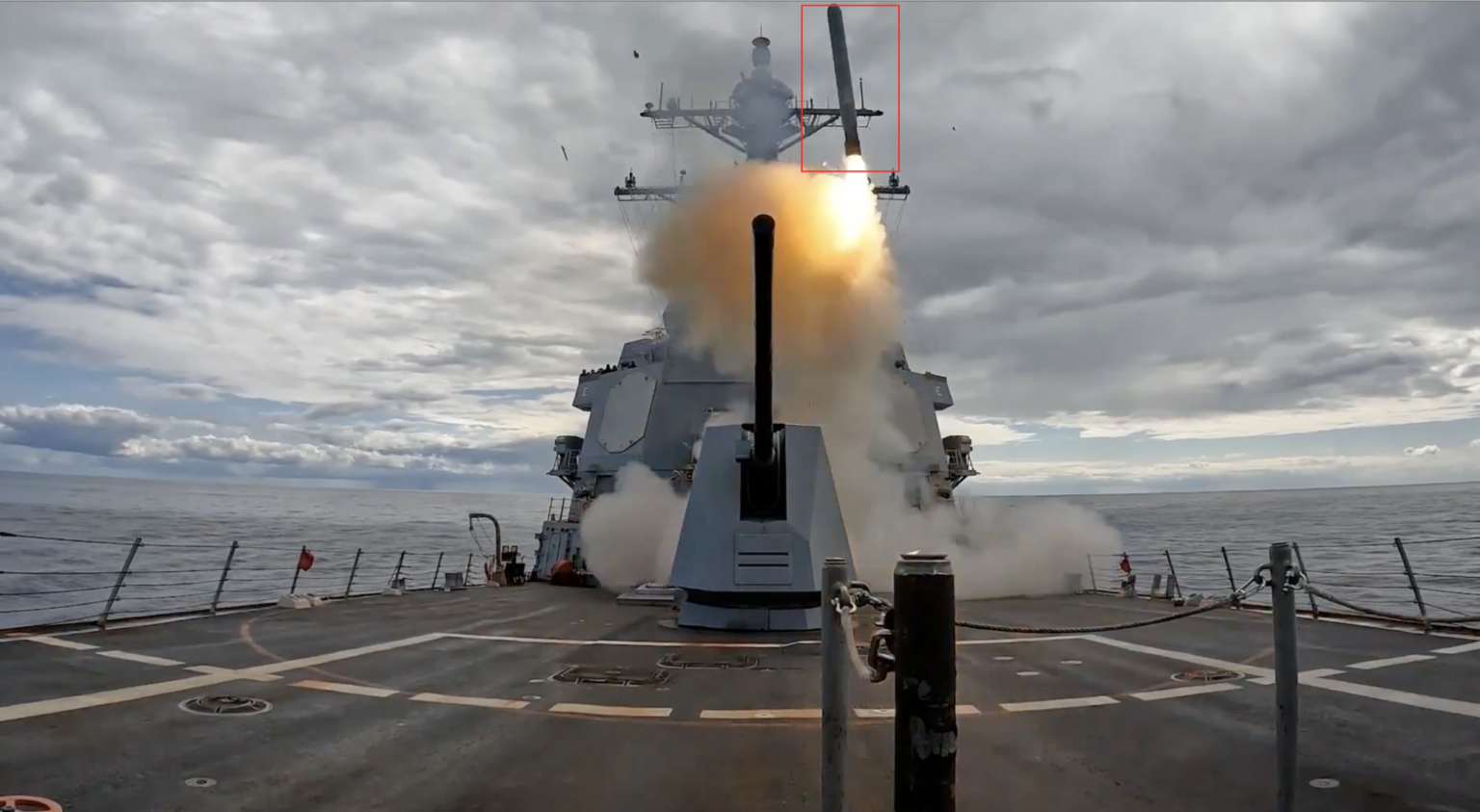
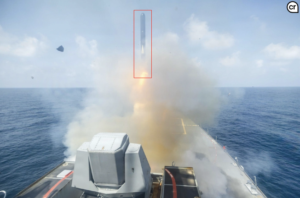
This Tomahawk missile features a distinctive black coating that suggests it is an RGM-109E Block Va variant, also known as the Maritime Strike Tomahawk (MST). A similar coating is seen on the U.S. Navy’s AGM-158C Long-Range Anti-Ship Missile (LRASM). MST incorporates a new multi-mode seeker optimised for the anti-shipping role, but remains capable of striking land-based targets. (ARES)

Analyst Note:
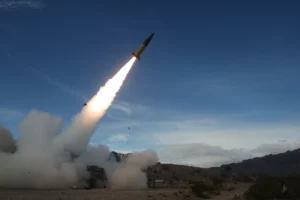
This image shows what is believed to be one of the first combat uses of the Precision Strike Missile (PrSM), following its entry into U.S. Army service in late 2023. PrSM is the successor to the ATACMS short-range ballistic missile that has become well known due to its use in the Russo–Ukrainian War. The Increment One version of PrSM has a range of approximately 500 km. The missile is seen here being fired from an M142 High Mobility Artillery Rocket System (HIMARS). (ARES)
Analyst Note:
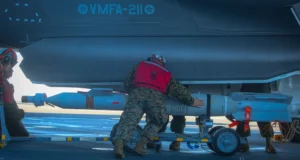
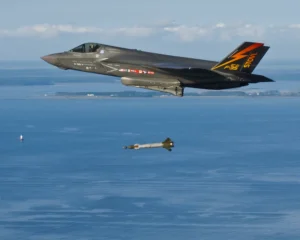
This image shows a GBU-12 series guided bomb being loaded onto a F-35B belonging to Marine Fighter Attack Squadron 211. Two of the control fins have not yet been installed in the Paveway’s guidance control section. (ARES)
Analyst Note:
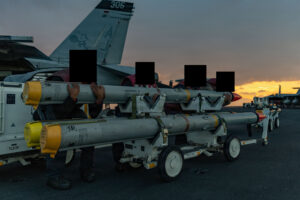
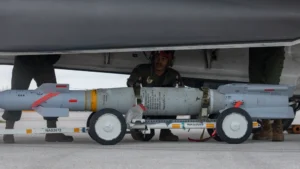
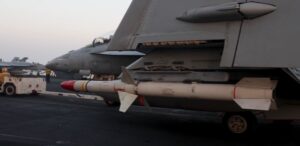
This image shows a BLU-111 500-pound-class bomb paired with a Paveway II guidance kit, and an MXU-650 series airfoil group, or tail kit. This combination is designated the GBU-12 series in U.S. service. (ARES)
Analyst Note:
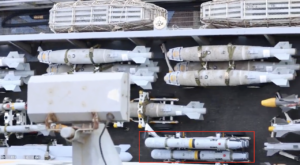
This image shows several GBU-53/B bombs photographed from above while on a munitions transport cart. GBU-53/B bombs are transported and loaded onto the aircraft with the wing assembly on the bottom. When the GBU-53/B is released from the aircraft, the bomb rotates, with the wing assembly side orienting as the top as the bomb glides to its target. (ARES)
Analyst Note:
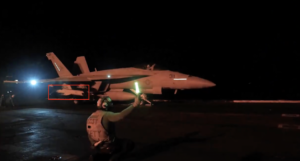
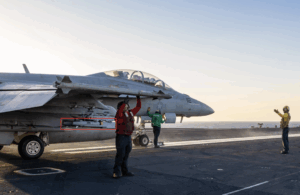
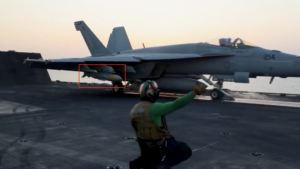
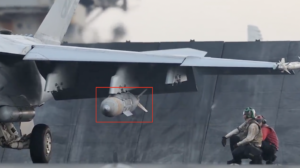
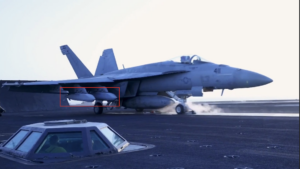
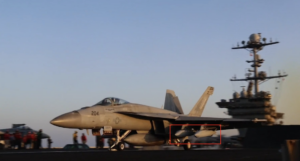
This image shows an American F/A-18 fighter aircraft armed with two AGM-154 Joint Standoff Weapon (JSOW) air-delivered bombs taking off to conduct strikes against Houthi forces in Yemen. The F/A-18 likely has two more AGM-154-series munitions carried on the opposite side of the aircraft, for a total of four bombs. The JSOW has multiple variants which are fitted with different warheads, including a submunition payload (AGM-154A and AGM-154B models), BLU-111 500-pound bomb (AGM-154A-1), and a Bomb Royal Ordnance Augmented Charge (BROACH) multi-stage penetrator warhead (AGM-154C or AGM-154C-1). All variants are externally identical without markings, with the exception that the AGM-154C and C-1 have a small reflective window on the bottom of the nose for the terminal infrared (IR) seeker. The munitions in the image are most likely AGM-154A-1 or AGM-154C-series bombs, due to the lack of reported submunitions following the strikes. (ARES)
Analyst Note:
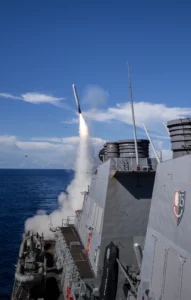
This image shows an RGM-109-series Tomahawk Land Attack Missile (TLAM) being launched from the USS Curtis Wilbur (DDG 54), an Arleigh Burke-class guided missile destroyer. The RGM-/UGM-109 TLAM series are surface-to-surface cruise missiles fired from various platforms. The ‘R’ and ‘U’ in RGM and UGM, respectively, denote the intended launch platform, with ‘R’ denoting surface platforms, such as ships, and ‘U’ denoting subsurface platforms, such as submarines. (ARES)

Analyst Note:
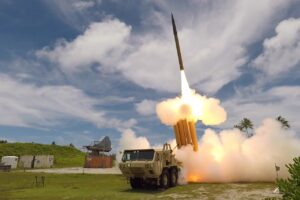
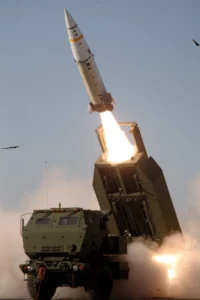
This U.S. Department of Defense file photo shows an M142 High Mobility Artillery Rocket System (HIMARS) launching an MGM-140 Army Tactical Missile System (ATACMS) series tactical ballistic missile. (ARES)