

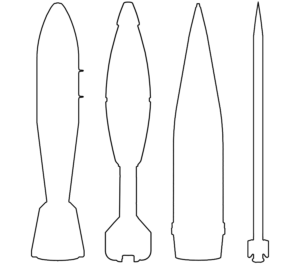



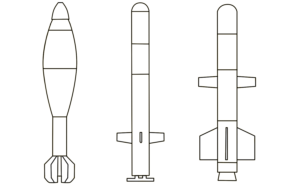

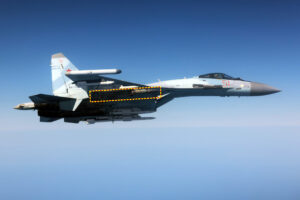
1–40 of 40

Analyst Note
27 April 2026
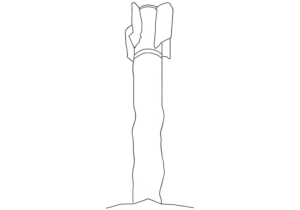
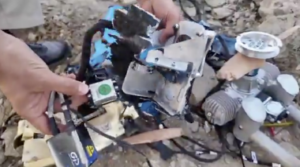
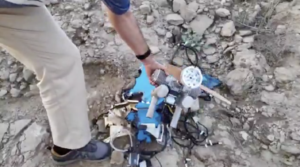
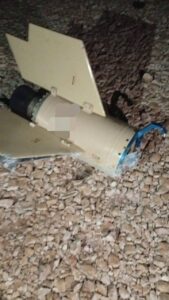
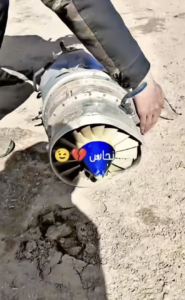
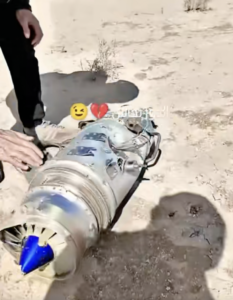
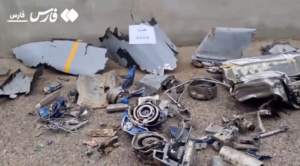
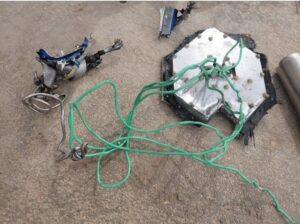
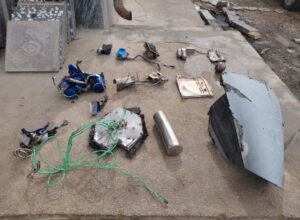
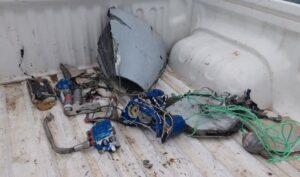
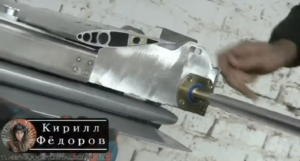
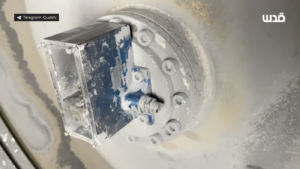
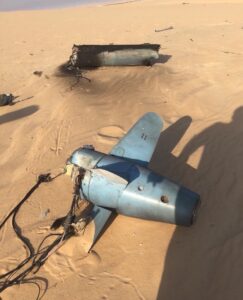
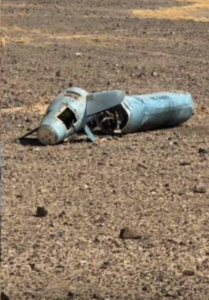
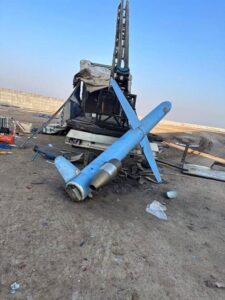
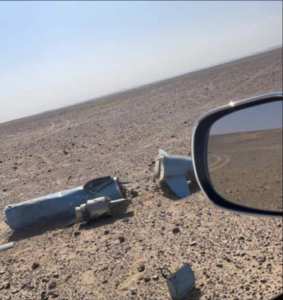
The component pictured here is a small turbofan engine from a Tomahawk missile. Missiles are vertically launched from the Typhon Missile System (named for a monster of Greek mythology), which is also capable of launching the Standard SM-6 guided missile. The Tomahawk missile is ejected from its launch tube under gas pressure, then the solid propellant of the booster motor section (Mk 135 booster produced by L3Harris) propels the missile until the turbofan engine (F107-WR-402 for Block III/IV or F415 for Block IV/V, both produced by Williams International) in the propulsion section is initiated and the booster motor section drops away. The propulsion section also supports the four tail fins, which are released by the two-piece continuity shroud upon launch. (ARES)





Analyst Note
11 March 2026
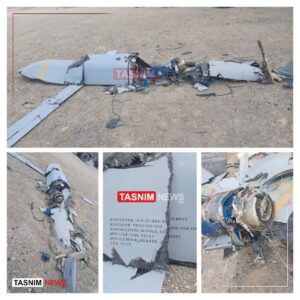
Components matching those seen here have been documented at other sites associated with the detonation of RGM-/UGM-109 Tomahawk cruise missiles. See, for example, OSMP 1199, 1218, 1191, 1193, and 1444. (ARES)

Analyst Note
31 December 2025
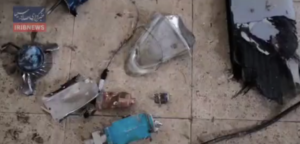
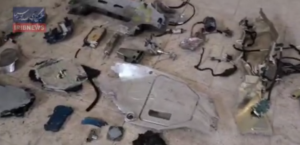
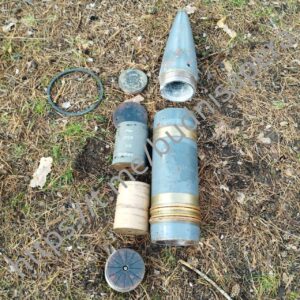
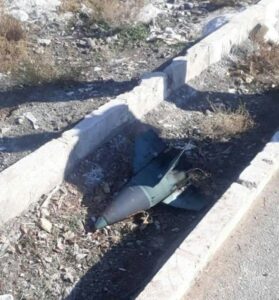
This image shows a North Korean 170 mm artillery projectile, as fired by the M-1978 Koksan self-propelled artillery gun. Very little is known of the M-1978 Koksan due to the secretive nature of North Korean arms development, but both high explosive and rocket-assisted high explosive projectiles are believed to be available. The designations ‘M-1978’ and ‘Koksan’ were applied by American military analysts identified the system in Koksan, North Korea, in 1978. (ARES)


Analyst Note
29 September 2025
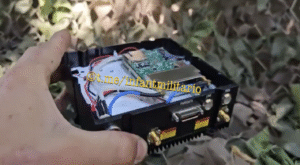
This image shows the front and interior surfaces of a wireless communications module recovered from a downed Gerbera UAV. Although labelled as an HX-50 industrial wireless modem (compatible with WiFi and 5G/4G networks and designed for fixed locations), analysis by Ukrainian military sources indicates that this component is, in fact, an XK-F358 mesh-network module which offers significantly more capabilities. Manufactured and sold by Shenzhen Xingkai Technology Co., Ltd., these modules are designed for, amongst other things, use in robots and unmanned vehicles. Gerbera UAVs have been found operating on a wide variety of frequencies and networks, and this type of module is well-suited to this use. (ARES)
Analyst Note
3 June 2025
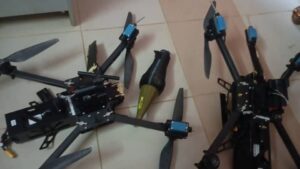
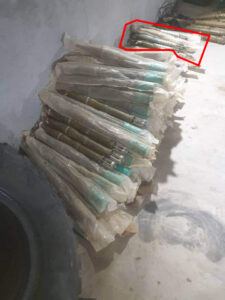
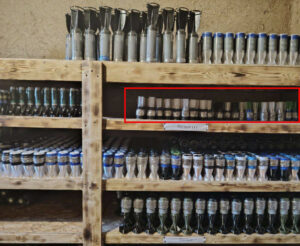
This image shows a variety of small air-delivered munitions that have been developed specifically for deployment via UAV. Some of these appear to be original designs, whilst others have been made by modifying existing munitions. This entry reflects those munitions outlined with the red box, but all of the munitions are generally of similar in size and format, and all have tailfin assemblies intended to orient the munition as it falls, just like more traditional air-delivered bombs. (ARES)
Analyst Note
9 January 2025
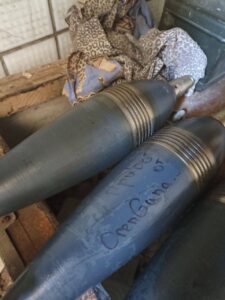
This image shows three North Korean 120 mm high explosive (HE) mortar projectiles. (ARES).
Analyst Note
9 January 2025
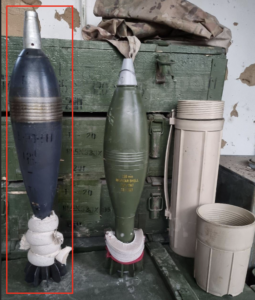
This image shows a North Korean 120 mm high explosive (HE) mortar projectile next to an Iranian 120 mm HE mortar projectile. Despite both being the same calibre, the overall shapes and dimensions of the two projectiles are noticeably different. Factors such as payload weight and range can be affected significantly by projectile shape. (ARES)
Analyst Note
26 November 2024
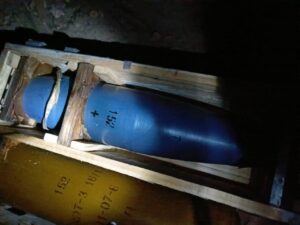
The munition indicated in this image as a 152 mm high explosive (HE) artillery gun projectile manufactured in the Democratic People’s Republic of Korea (DPRK). (ARES)

Analyst Note
30 May 2024
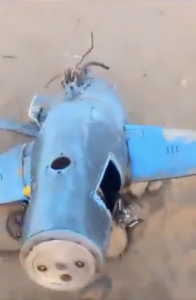
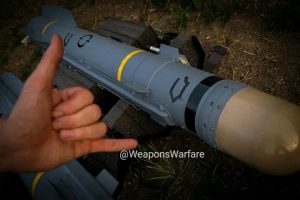
The Brimstone is a series of British-designed guided missiles that can be launched from air, land, or sea platforms. The United Kingdom first provided Ukraine with the Brimstone I missile in 2022 and exports have continued since, more recently believed to include the Brimstone II model. In Ukraine, Brimstone-series missiles have been exclusively launched from ground-based and sea-based platforms as of May 2024. (ARES)