Do not approach munitions
under any circumstances

OSMP Collection

Ірансько-ізраїльський конфлікт. Червень 2025 року

This is a translation of the OSMP collection page into Ukrainian by Bomb Techs Without Borders. You can view the English-language collection page here.

12 червня 2025 року Ізраїль розпочав масштабну військову операцію, спрямовану проти ядерних, балістично-ракетих та інших військових спроможностей Ірану.  Операція, офіційно названа “Operation Rising Lion”, включала масштабні авіаційні удари по цілях по всій території Ірану. Загинули сотні людей, зокрема іранські військові посадовці, ядерні науковці та багато цивільних осіб. У відповідь Іран здійснив серії пусків балістичних ракет та БПЛА по Ізраїлю, внаслідок чого загинули десятки людей. 22 червня Сполучені Штати Америки приєдналися до конфлікту, завдавши ударів по трьох іранських ядерних об’єктах – у Фордо, Натанзі та Ісфахані. 24 червня було оголошено про припинення вогню.

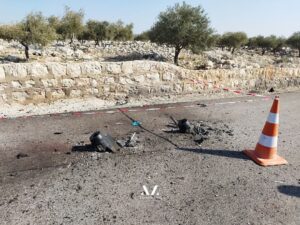
На цій сторінці представлено зображення боєприпасів, використаних Іраном та Ізраїлем під час 12-денного конфлікту, які пройшли перевірку та були додані до архіву OSMP. Колекція містить численні зображення з сусідніх країн, зокрема Сирії – зазвичай це залишки боєприпасів, які були перехоплені на цих територіях, або уламки ракет-перехоплювачів.
38

Images

5

Countries

18

Munition Models

Methodology

Ця колекція містить усі зображення боєприпасів з архіву OSMP, використаних Іраном та Ізраїлем під час конфлікту 2025 року. Вона також включає уламки боєприпасів, виявлених на території Ірану, Ізраїлю, Іраку, Сирії та Йорданії.
Analyst Note:
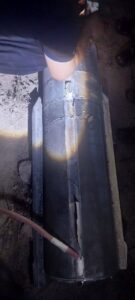
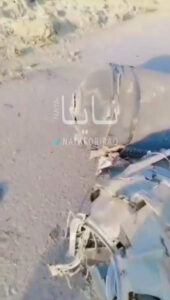
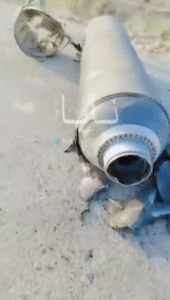
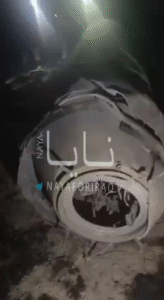
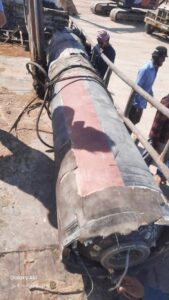
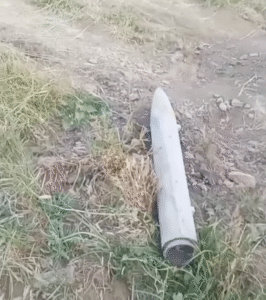
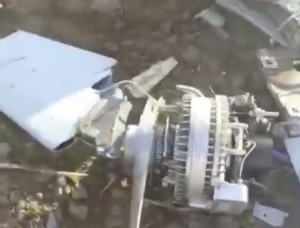
This image shows the MK 136 Third Stage Rocket Motor of a U.S. RIM-161 Standard Missile 3 (SM-3) Blk I interceptor missile. The SM-3 Blk I variants share the same propulsion sections, but have differences in the kill vehicle section. The SM-3 Blk II variants are substantially different, including new, larger-diameter propulsion sections. SM-3 missiles have a booster, dual-thrust rocket motor, third-stage rocket motor, and an altitude control section in the kill vehicle. (ARES)
Analyst Note:
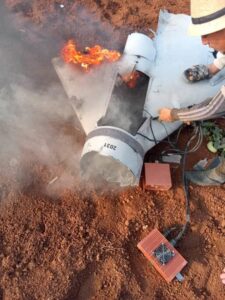
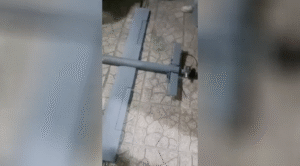
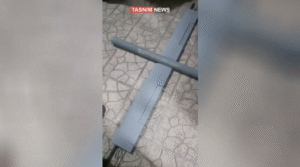
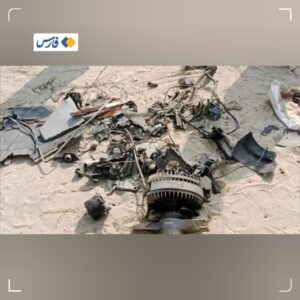
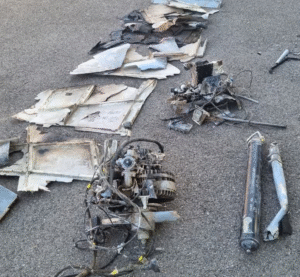
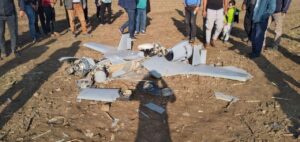
This still taken from a video released by Iranian state media, shows a one-way-attack UAV purportedly manufactured by Israeli forces operating inside Iran. This UAV was found alongside manufacturing equipment, and additional UAV components, strongly suggesting that it was manufactured or assembled inside Iranian borders. (ARES)
Analyst Note:
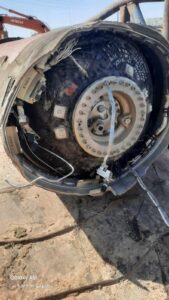
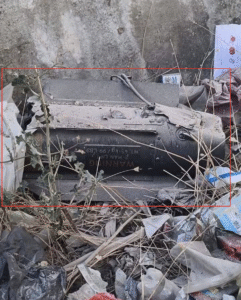
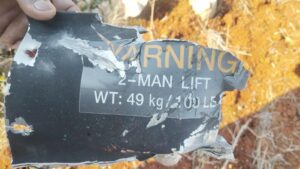
This image shows the top of the booster of an Arrow 3 interceptor missile, where it connects to the kill vehicle. The Arrow 3 was jointly developed by the United States and Israel, and first entered service in 2017. The date of manufacture marking (“DATE OF MFG: 05/2018”) indicates that this booster was produced in the year after the Arrow 3 first entered service. (ARES)
Analyst Note:
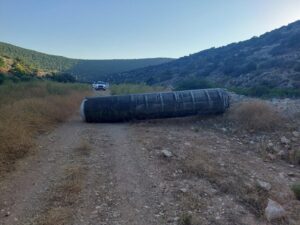
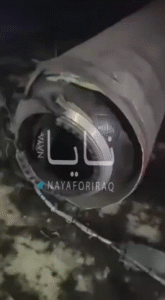
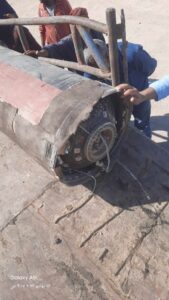
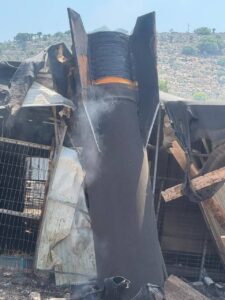
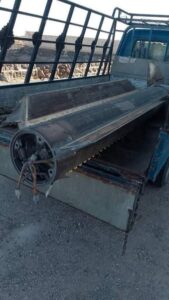
This image shows the booster of an Israeli Arrow 3 interceptor missile. The Arrow 3 is designed to engage ballistic missiles and is capable of exo-atmospheric interceptions. Once the booster is expended, it separates from the ‘kill vehicle’. The kill vehicle has a sustainer motor that propels it towards the incoming ballistic missile, and uses kinetic impact, rather than an explosive warhead, to disable or destroy its target. This is sometimes called the ‘hit-to-kill’ principle. (ARES)
Analyst Note:
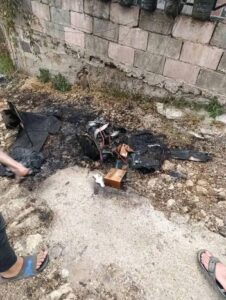
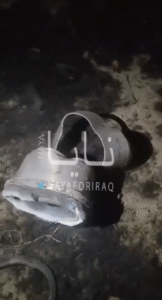
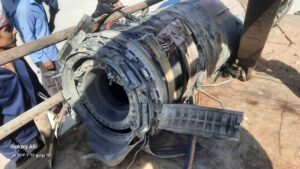
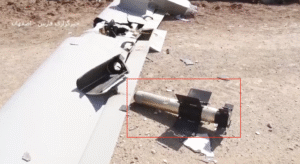
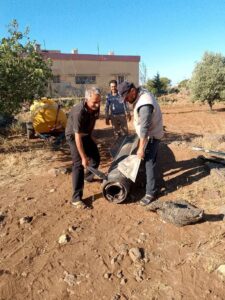
This image shows the rocket motor of an AGM-114 "Hellfire" series guided missile found in Jordan during the 12 day conflict between Israel and Iran. This specific Hellfire missile is likely an air-to-air "C-UAS" variant used to intercept one-way attack drones, such as those launched by Iran towards Israel, rather than the more common air-to-surface Hellfire missile variants. (ARES)
Analyst Note:
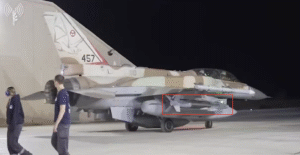
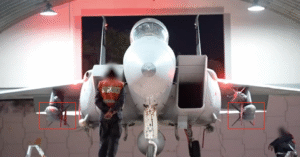
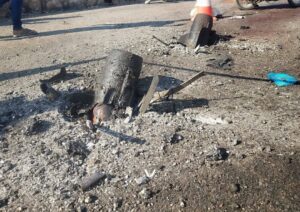
This image shows a Mikholit that was ejected from the weapons pod of an Israeli Hermes 900 drone that was downed in Iran. This Hermes 900 drone had two weapons pod, each capable of carrying 4 Mikholit bombs. (ARES)