Where the munition is launched from and what it targets
Domain (7)
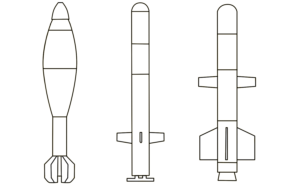
The type of fins visible on the munition
Fins Characteristic (6)
The nominal diameter of a projectile. For most modern munitions, this is expressed in millimetres (e.g. 82 mm mortar projectile), but older artillery gun projectiles may be described in inches.
A munition that contains a rocket motor to maintain its rate of travel. Rocket-assisted munitions are most often artillery gun projectiles or mortar projectiles, but other types are sometimes encountered.
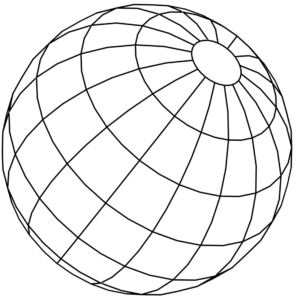
The PF69-40 HEI warhead contains approximately 900 pieces of spherical steel fragmentation (‘ball bearings’) as well as 2,000–3,000 incendiary pellets that scatter over a 15 m radius on detonation. (ARES)
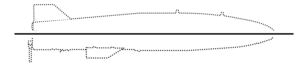
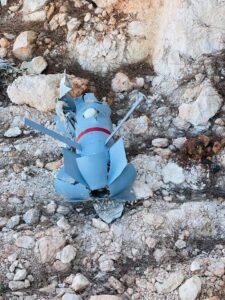
This munition, believed to be of Israeli origin, has been documented at a number of strike sites in Lebanon, Gaza, and Iran. Although distinctive remnants permit its tentative identification, the lack of a confirmed model name means this munition has been assigned a Temporary Munitions Identifier (TMID) by ARES. This appears in the Tentative Model field of the OSMP so that all records of this munition in the database can be linked under one temporary name. (ARES)
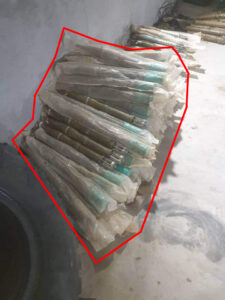
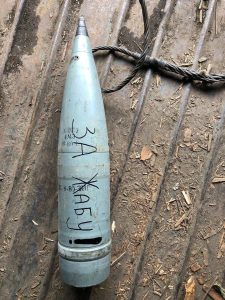
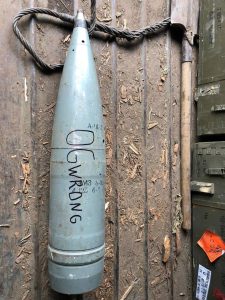
The 3OF39 Krasnopol is a laser-guided, rocket-assisted 152 mm tank gun projectile carrying a high explosive fragmentation (HE-FRAG) warhead. The round is built and shipped with a cover over the optical sensor. This protective cover is fitted with a T-90 mechanical time delay fuze. Once fired, the T-90 fuze will initiate after a pre-selected time and will jettison the protective cover, exposing the optical sensor in the nose. The internal impact fuze, which can be set for immediate or delayed initiation, is then responsible for detonating the projectile. (ARES)
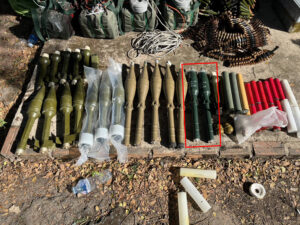
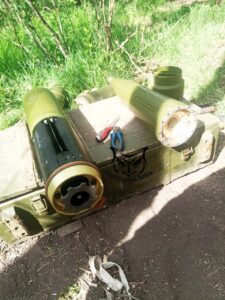
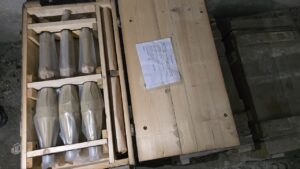
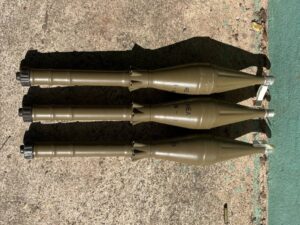
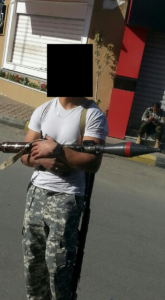
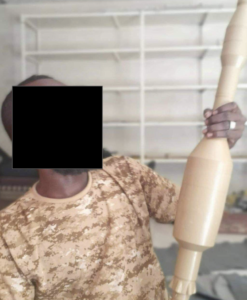
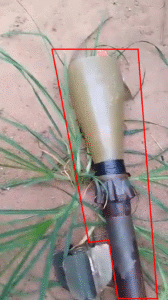
This PG-7VR recoilless gun projectile is painted in a tan colour often associated with Iranian production, but also used by other manufacturers. Iranian munitions have been seen and reported in Sudan with regularity. (ARES)
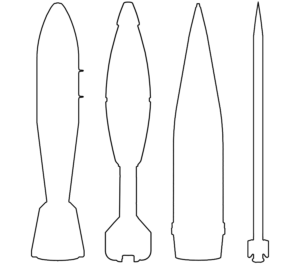
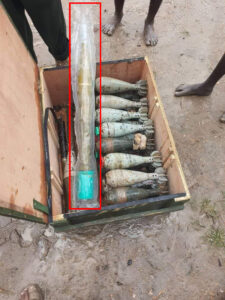
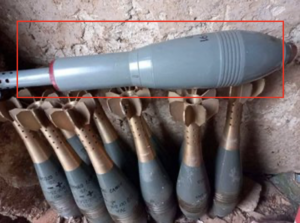
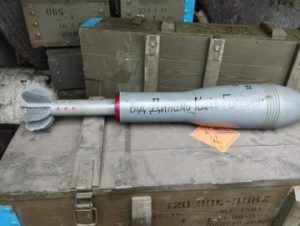
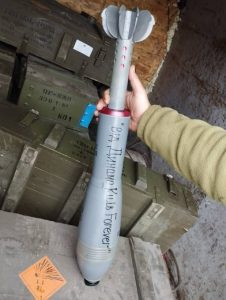
The OF-NMR is a rocket-assisted mortar projectile, which uses a solid-fuel rocket motor located in the cylindrical portion of the body, below the ogive, to extend its range. Rocket-assisted mortar projectiles are rarely encountered. (ARES)