1–13 of 13
Current Filter
Smoke Munition
Munitions that produce a smoke effect in an area, typically to obscure the enemy's vision rather than killing or wounding a target. Smoke munitions can mask forces from enemy view — including from sensors and designators— to provide cover for military movement. They may also be utilised to mark the location of enemy targets or provide signalling to friendly forces. Common smoke-producing chemicals include white phosphorus and hexa-chloroethane, often used in artillery gun projectiles.


Analyst Note
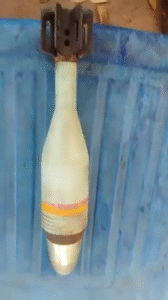
2 November 2024
This image shows what is probably just the body of an Israeli 155 mm smoke artillery projectile. Israel predominantly uses two varieties of 155 mm smoke munition: the M825 white phosphorous (WP) series of munitions, and the M150 hexachloroethane/zinc mixture (HC) munition. These munitions are externally near-identical, save for their markings. In this case, the markings are insufficient to determine whether the image shows an M825-series WP munition or an M150 HC munition. (ARES)
Analyst Note
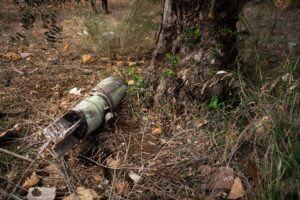
14 October 2024
In this image, part of the distinctive internal 'X-rib' arrangement is visible protruding from the base of an M825-series white phosphorus smoke projectile. This is a useful diagnostic feature that can be used to distinguish remnants of these munitions from those of similar projectiles (such as those using a hexachloroethane/zinc smoke composition) if markings are not visible (ARES)
Analyst Note
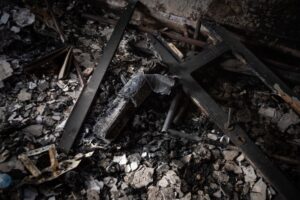
29 July 2024
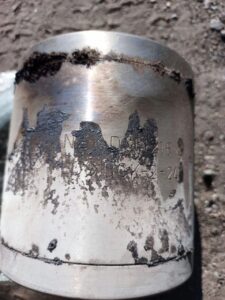
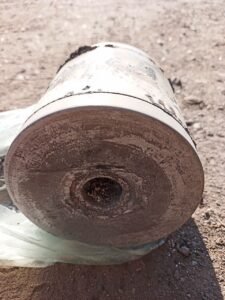
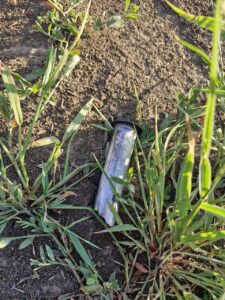
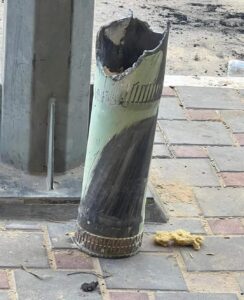
The remnants shown in these linked images have been falsely identified in Russian sources as chemical munitions. This image clearly exhibits the marking “NBK DM 1216”—the ‘NBK’ standing for the German Nebelkörper (‘smoke element’)—identifying this as one of four DM 1216 hexachloroethane/zinc (HC) smoke elements dispensed by the German DM 105 155 mm artillery gun projectile. Video of the incident shows all four elements being ejected from the base of the projectile in flight. (ARES)


Analyst Note
25 June 2024
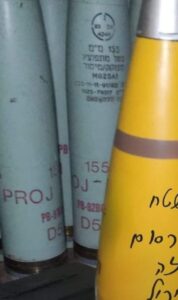
The M825A1 155 mm smoke projectile makes use of white phosphorus (WP) to generate a brilliant white smoke. Whilst WP does have incendiary effects, the method of dispersal in the case of the M825A1 is optimised for screening and marking purposes. (ARES)
Analyst Note
30 May 2024
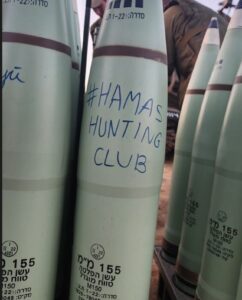
Some artillery projectiles, such as this M150 type, use a hexachloroethane-based composition (HC) to generate smoke for screening or marking purposes. In many armed forces, HC smoke munitions have partially replaced those relying on white phosphorus for similar effects. (ARES)