

1–52 of 52
Current Filter
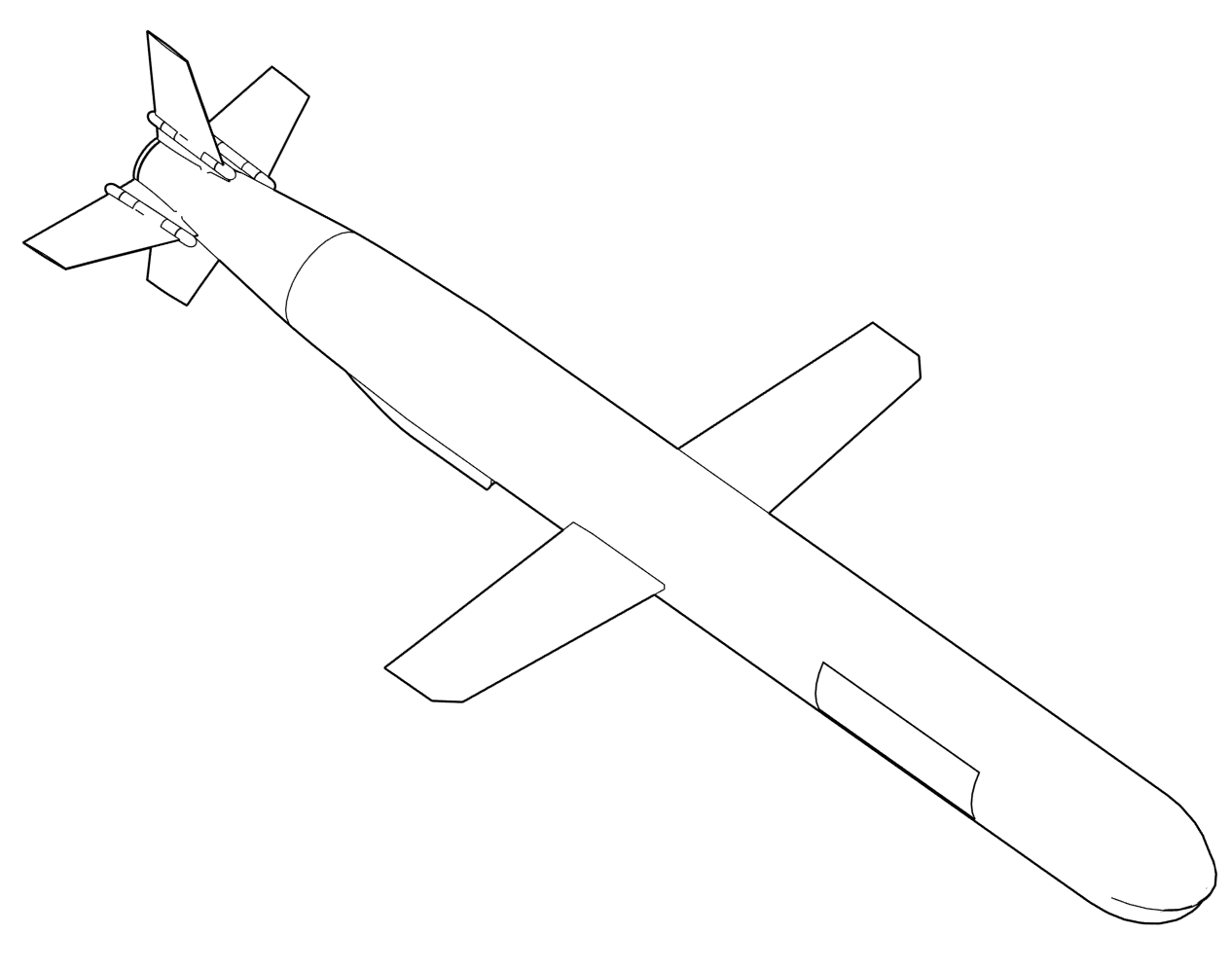
RGM/UGM-109 Tomahawk Land Attack Missile (TLAM) series
An American-designed series of surface-to-surface cruise missiles primarily produced by Raytheon since 1997 and launched from surface ships and submarines. With a maximum effective range of around 2,500 km depending on the variant, the Tomahawk can be fitted with a number of warhead types, including unitary high explosive (blast) and blast-fragmentation, as well as submunitions. Guidance is provided by GPS and inertial navigation alongside Terrain Contour Matching (TERCOM) and Digital Scene Matching Area Correlation (DSMAC) functions. It has seen use in a variety of conflicts including the 1991 Gulf War, 2003 Iraq War, the Libyan and Syrian Civil Wars, and in recent strikes targeting the Houthis in Yemen.
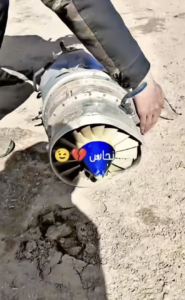
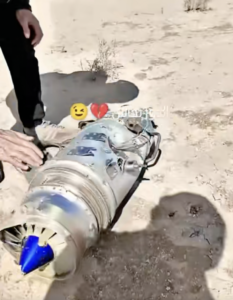
Analyst Note:
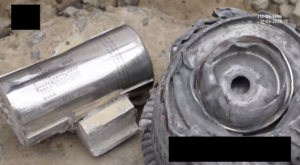
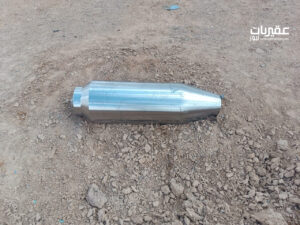
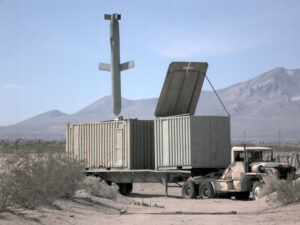
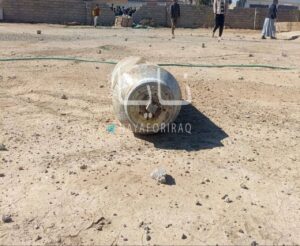
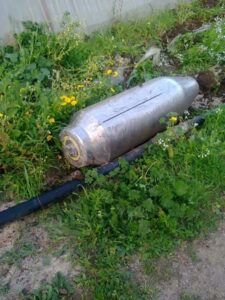
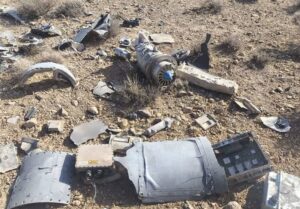
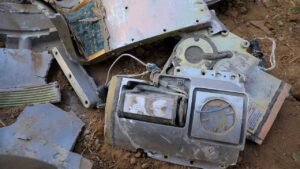
The component pictured here is a small turbofan engine from a Tomahawk missile. Missiles are vertically launched from the Typhon Missile System (named for a monster of Greek mythology), which is also capable of launching the Standard SM-6 guided missile. The Tomahawk missile is ejected from its launch tube under gas pressure, then the solid propellant of the booster motor section (Mk 135 booster produced by L3Harris) propels the missile until the turbofan engine (F107-WR-402 for Block III/IV or F415 for Block IV/V, both produced by Williams International) in the propulsion section is initiated and the booster motor section drops away. The propulsion section also supports the four tail fins, which are released by the two-piece continuity shroud upon launch. (ARES)





9 March 2026
NYT uses OSMP to identify Iran school munition

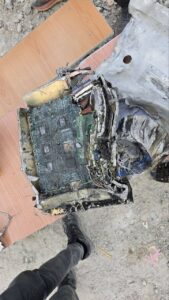
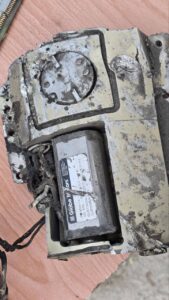
Analyst Note:
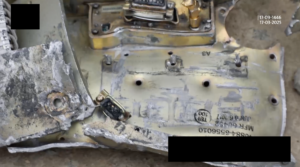
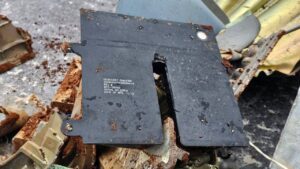
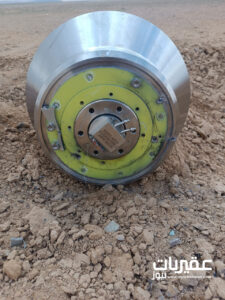
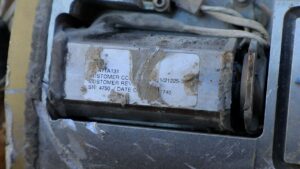
This image shows a DC motor from a Tomahawk missile, manufactured by Globe Motors of Dayton, Ohio, in the United States (part # 471A118 and serial # 7250). Globe Motors was acquired by Allied Motion in August 2013, and has since been renamed Allied Motion at Dayton. This DC motor is used as an actuator to assist in steering the Tomahawk to its target based upon input from the aviation section in the forward body assembly. Such motors often survive detonation and can serve as diagnostic remnants. (ARES)
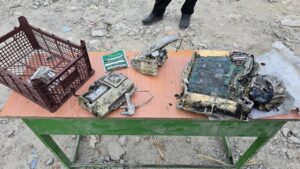
Analyst Note:
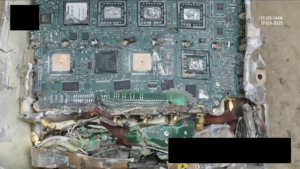
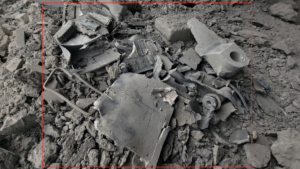
Components matching those seen here have been documented at other sites associated with the detonation of RGM-/UGM-109 Tomahawk cruise missiles. See, for example, OSMP 1199, 1218, 1191, 1193, and 1444. (ARES)
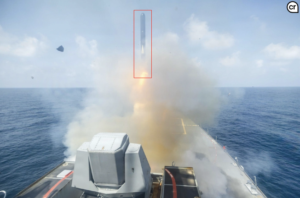
Analyst Note:
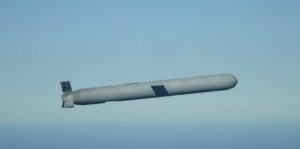
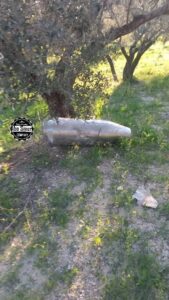
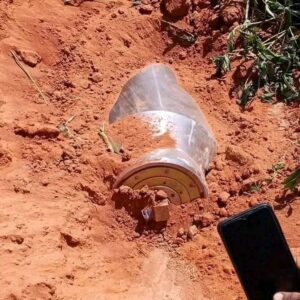
This Tomahawk missile features a distinctive black coating that suggests it is an RGM-109E Block Va variant, also known as the Maritime Strike Tomahawk (MST). A similar coating is seen on the U.S. Navy’s AGM-158C Long-Range Anti-Ship Missile (LRASM). MST incorporates a new multi-mode seeker optimised for the anti-shipping role, but remains capable of striking land-based targets. (ARES)
Collection
The Iran War 2026
Verified munition images from all parties to the regional conflict sparked by U.S. and Israeli strikes on 28 February, 2026

6 February 2026
‘Fragments’ magazine highlights OSMP importance for civilian protection

Collection
Американські боєприпаси використані в Ємені, 2025
Перевірені зображення американських боєприпасів під час бомбардувальної кампанії адміністрації Трампа проти підтримуваної Іраном бойової та політичної групи хуситів



Analyst Note:
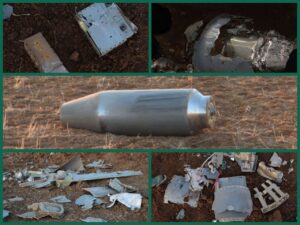
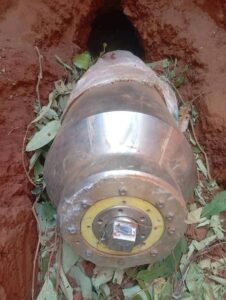
This image shows a WDU-36 series warhead as used in the RGM-/UGM-109 Tomahawk series of cruise missiles. The warhead design suggests this is likely a WDU-36/B from an RGM-/UGM-109E missile. The RGM-/UGM-109E Tomahawk Land Attack Missile (also known as TLAM Block IV) is an improved version of the BGM-109C TLAM-C. In cases where the missile strikes a building but does not function as intended, the dense, comparatively heavy warhead is often projected forwards of the point of impact. (ARES)

Analyst Note:
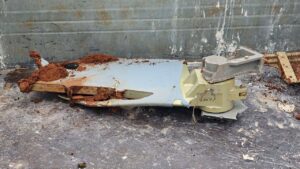
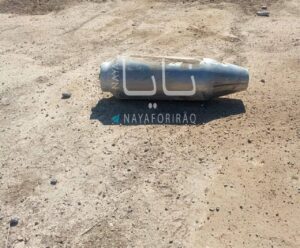
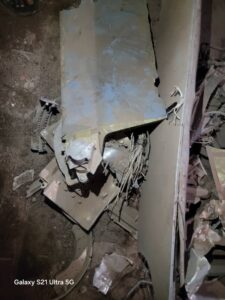
This image shows a WDU-36/B warhead as used in the RGM-/UGM-109 Tomahawk series of missiles. The WDU-36/B is the improved, lighter version of the previous WDU-25/B warhead. It is reported that the titanium-cased WDU-36/B weighs around 310 kg and carries a main charge of approximately 120 kg of PBXN-107 high explosives. (ARES)


Collection
US munitions used in Yemen 2025
Verified images of U.S. munitions during the Trump administration’s bombing campaign against the Iranian-backed Houthi militant and political group
Analyst Note:
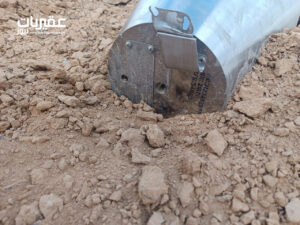
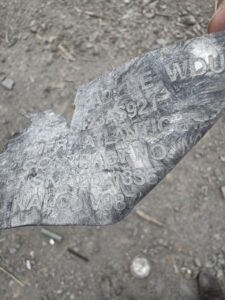
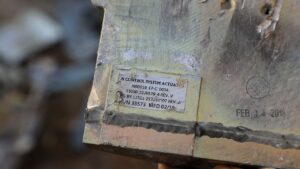
This image shows a fragment of a RGM/UGM-109 Tomahawk Land Attack Missile (TLAM) series missile's WDU-36/B warhead. The WDU-36/B warhead is a penetrator warhead for the TLAM, and is one of several available warhead options for TLAM series missiles. The complete "WDU" designation isn't visible, but the part number (3123AS921) is associated with the WDU-36/B. (ARES)

Analyst Note:
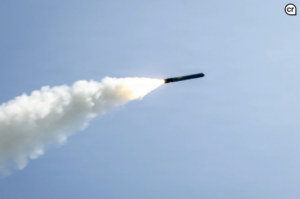
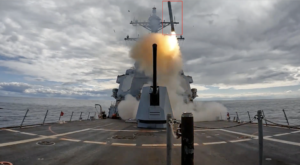
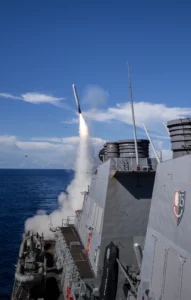
This image shows an RGM-109-series Tomahawk Land Attack Missile (TLAM) being launched from the USS Curtis Wilbur (DDG 54), an Arleigh Burke-class guided missile destroyer. The RGM-/UGM-109 TLAM series are surface-to-surface cruise missiles fired from various platforms. The ‘R’ and ‘U’ in RGM and UGM, respectively, denote the intended launch platform, with ‘R’ denoting surface platforms, such as ships, and ‘U’ denoting subsurface platforms, such as submarines. (ARES)