Do not approach munitions
under any circumstances
Country or territory where the image was reported

Reported Location (52)

A large eastern European country invaded by Russia in February 2022
Ukraine
Year the image is reported to have been taken

Year (22)

2024
Classification groups of key explosive munitions used in conflicts

Munition Category (8)

Two closely related types of powered munitions
Rocket or Missile
The impact or effect the munition is intended to have

Functional use (10)

The specific model of munition pictured

Tentative Model (293)

Search

The external organisation that documented the munition

Research Organisation (6)

Colour of the munition pictured

Base Colour (12)

Colour of all, or some, of the markings on the munition

Marking Colour (11)

Language or script of the marking on a munition

Marking Script (10)

Condition of the munition pictured

Condition (6)

Key features defining the operation mechanisms of a projectile

Mechanical Feature (10)

Whether a munition is guided or unguided

Guidance (2)

Where the munition is launched from and what it targets

Domain (7)

The type of fins visible on the munition

Fins Characteristic (6)

The nominal diameter of a projectile. For most modern munitions, this is expressed in millimetres (e.g. 82 mm mortar projectile), but older artillery gun projectiles may be described in inches.

Calibre (77)

Weight class of the aerial bomb pictured

Weight Class (14)

1–69 of 69

Current Filter

Ukraine
A large eastern European country that faced a full-scale Russian invasion in February 2022. Since then the Ukrainian military has fought a major war with Russian forces, with tens of thousands believed to have been killed.

Current Filter

Rocket or Missile
Rockets and missiles are two closely related types of powered munitions which utilise an internal propulsion method, typically a rocket motor, to maintain their rate of travel after launch. Rockets and missiles are typically relatively long and thin—with lengths ranging from 50 centimetres to 6.5 metres. Rockets are unguided those fitted with guidance systems are usually referred to as missiles. Missiles sometimes use propulsion methods other than rocket motors, such as turbojets. The effective range of rockets varies from as little as one kilometre to more than 40 kilometres, while missiles typically have a longer range — some more than 250 kilometres.
Read more
OSMP1823
Analyst Note 2 March 2026
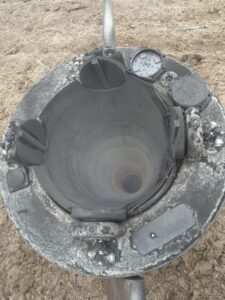
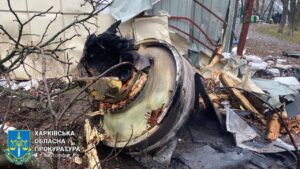
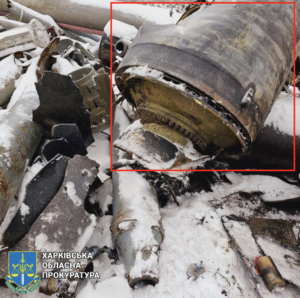
This image shows the remnants of a PAC-3 Cost Reduction Initiative (CRI) missile. The PAC-3 family of missiles are hit-to-kill interceptors that defend against incoming ballistic missiles, cruise missiles, aircraft, and other targets primarily by using kinetic impact. However, it is important to note that these missiles contain a high explosive fragmentation (HE-FRAG) “lethality enhancer” warhead. These warheads are much smaller than what would normally be expected on a surface-to-air missile of this size, but still present a hazard if it fails to function as designed. (ARES)
OSMP1838
Analyst Note 31 December 2025
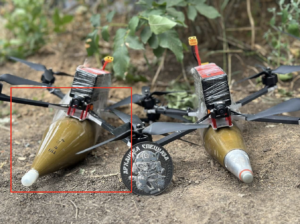
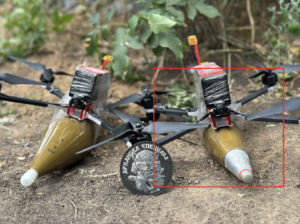
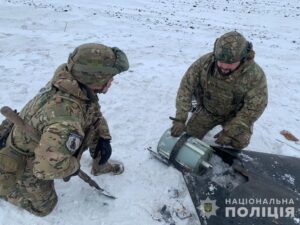
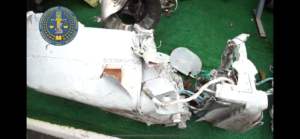
The munition indicated is a one-way-attack (OWA) UAV fitted with a PG-7-series high explosive anti-tank (HEAT) warhead. Not enough of the warhead is visible to provide a positive ID on which model of PG-7-series projectile it was harvested from. (ARES)
OSMP1708
Analyst Note 28 November 2025
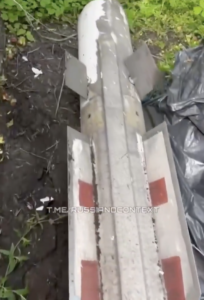
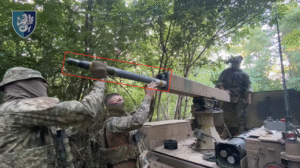
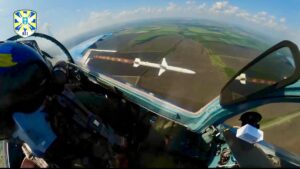
This image shows a Hydra-70 rocket fitted with an Advanced Precision Kill Weapon System (APKWS) guidance kit, converting it into a guided missile. In this case, the missile features an M151 high explosive (HE) warhead fitted with either an M427 or M423 point-detonating (PD) fuze. The rocket motor model cannot be determined from this source alone, but it is most likely to be a MK 66-series motor. The launcher appears to be a LAND-LGR4 model produced by Arnold Defense. (ARES)
OSMP1536
Analyst Note 15 September 2025
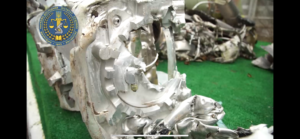
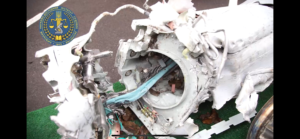
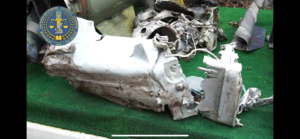
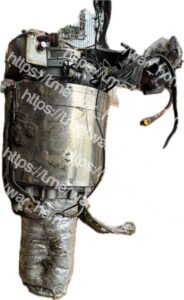
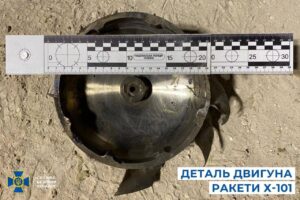
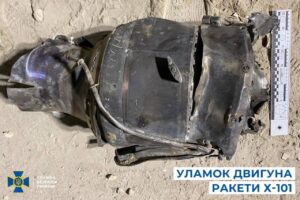
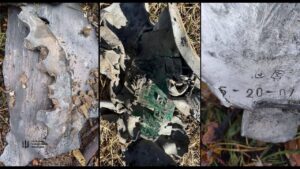
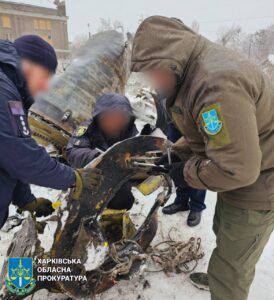
This image shows a remnant of the TRDD-50A(M) (ТРДД-50А(M)) turbojet engine, which powers Kh-101 and Kh-59M missiles. Other models of Russian cruise missiles are known to use other variants of the TRDD-50. (ARES)
OSMP1535
Analyst Note 15 September 2025
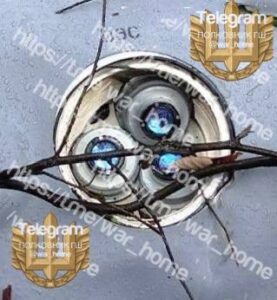
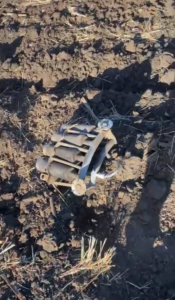
This image shows the three lenses that form the new version of the Kh-101 Digital Scene Matching Area Correlator (DSMAC) system. (The older version only had a single lens.) DSMAC systems take digital images of the ground as the missile passes overhead, and then compare those images to pre-captured images stored in the onboard memory. The DSMAC corrects the flight path as needed based on differences between the two sets of images. (ARES)
OSMP1401
Analyst Note 3 June 2025
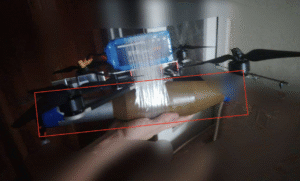
The munition in this image has been integrated into a commercial off-the-shelf (COTS) small UAV. This UAV (‘drone’) adds powered and guided delivery and converts the munition into a guided missile—regardless of the original, intended delivery method. (ARES)
OSMP1403
Analyst Note 21 April 2026
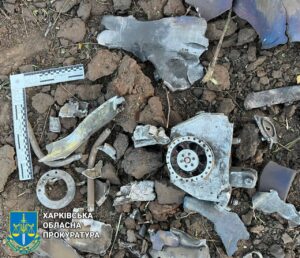
The warhead of the OWA UAV indicated in this image cannot be positively identified from this photograph alone. It appears to be the warhead section of either an OG-9 series or OG-15 series high explosive fragmentation (HE-FRAG) projectile, with a GO-2 or similar impact fuze fitted in the nose. (ARES)
OSMP875
Analyst Note 13 March 2025
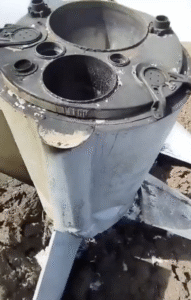
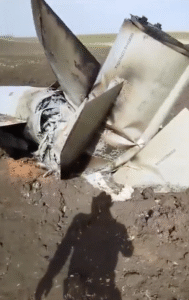
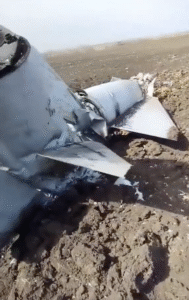
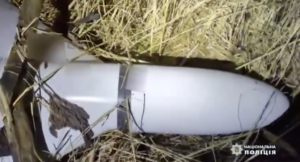
This image shows a remnant of the aft motor section, which includes the venturi nozzle, of a North Korean KN-23/KN-24/Hwasong-11 series missile. The KN-23/KN-24/Hwasong-11 has a generally similar appearance to the Russian 9M7 ‘Iskander’ series of ballistic missiles, but has differences in performance and in some aspects of the construction. (ARES)

OSMP893
2 Analyst Notes 17 December 2024
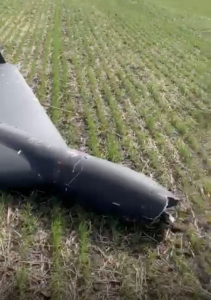
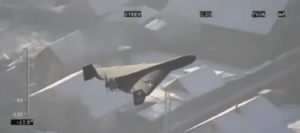
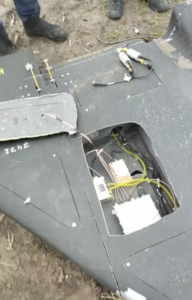
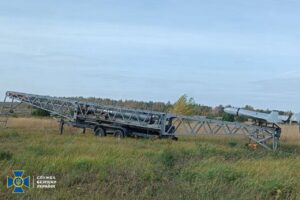
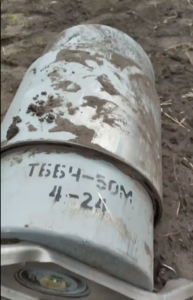
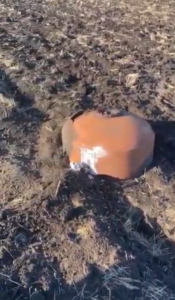
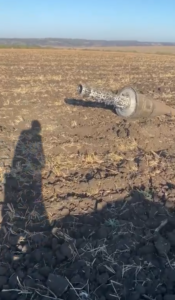
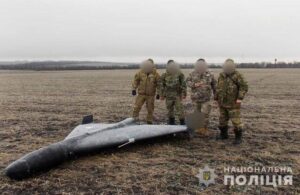
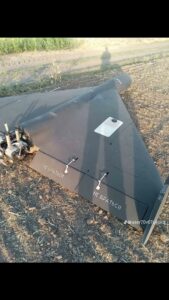
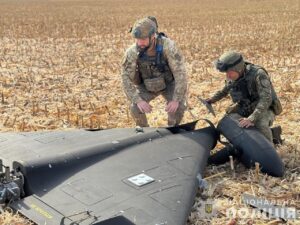
This image shows one of several possible warhead variants that can be carried by the Shahed-136/Geran-2 one-way attack (OWA) UAV. The Shahed-136/Geran-2 (and the smaller Shahed-131/Geran-1) has been documented carrying shaped-charge warheads, penetrator warheads, and multi-function warheads. Due to the various warheads that can be carried by a Shahed/Geran drone, the functional use cannot be determined without the warhead being visible. In this case, the munition was fitted with a TBBCh-50M warhead that contains a thermobaric explosive composition with an additional fragmentation effect. (ARES)
OSMP942
Analyst Note 18 November 2024
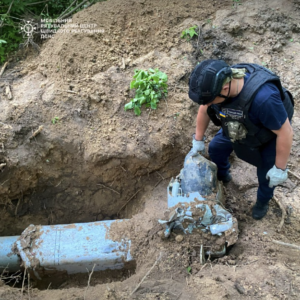
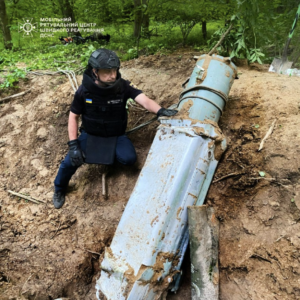
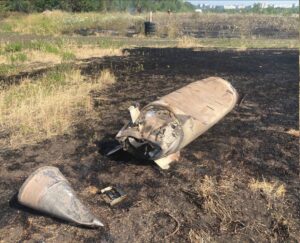
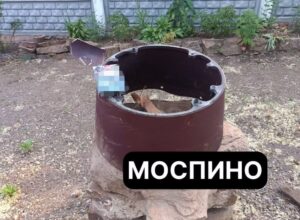
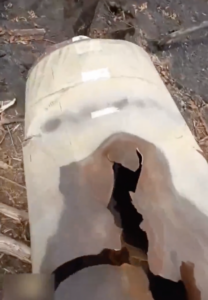
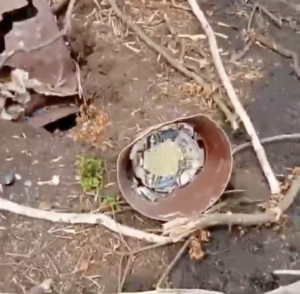
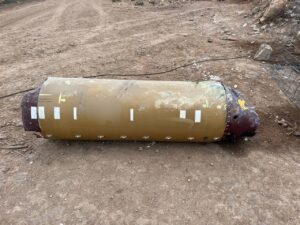
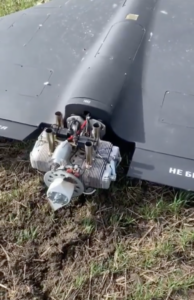
This image shows a rocket motor section from an MGM-140 ATACMS series surface-to-surface ballistic missile. The warhead section of the MGM-140 series missiles separate from the rocket motor before functioning, resulting in the rocket motor often being found relatively intact near the target. The MGM-140 series missiles use the same rocket motor, preventing a positive identification of the variant based off the rocket motor alone, unless the variant markings are visible. (ARES)
OSMP590
Analyst Note 18 November 2024
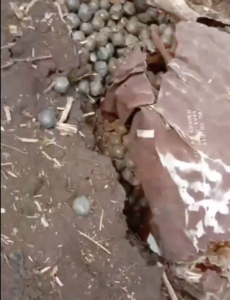
The MGM-140 Army Tactical Missile System (ATACMS) series includes variants with a variety of different payloads, including submunitions and unitary high explosive (HE) warheads. The number of submunitions carried and effective ranges also vary. Ukraine has reportedly received the MGM-140A and MGM-140B variants, which are externally visually identical and must usually be distinguished by markings. The MGM-140A carries 950 M74 submunitions, with an effective range of 165 km, while the MGM-140B carries only 300 M74 submunitions but has a longer effective range of 300 km. (ARES)