Do not approach munitions
under any circumstances

New Open Source Tools and Tips to Investigate Bombing of Civilians

In October 2024, the Global Investigative Journalism Network (GIJN) published an in-depth article introducing the OSMP and explaining how the tool can aid journalists and researchers investigating civilian harm and munitions use. It highlighted many benefits to using the OSMP, including its large database of imagery and its explainers and other resources which aid in developing an understanding of munitions use in conflict zones.

GIJN interviewed a number of journalists who used the portal to aid their investigative reports, including Danwatch reporter Charlotte Aagaard—who said the OSMP provided her with key evidence of Israel’s use of Danish-equipped F-35 fighter aircraft in Gaza.

Co-founder of the OSMP, Joe Dyke, was also interviewed for the piece and explained how the idea behind the project was to increase accessibility of information about munitions for journalists and others—democratising a previously inaccessible and technically complicated area of open-source research.


Analyst Note:
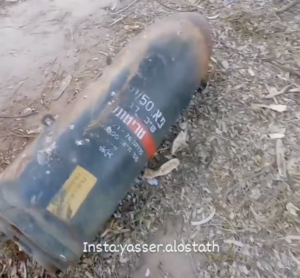
This image depicts an M117-series unguided aerial bomb. Belonging to a class of weapons referred to as ‘demolition bombs’—which use Tritonal or similar explosive compounds to generate a more powerful blast effect than TNT or Composition B—the M117 is an American design which dates to the Korean War era and is rarely seen in service with modern armed forces. (ARES)
Analyst Note:
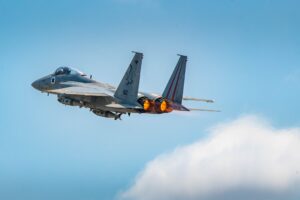
In this image, an F-15C fighter aircraft from 106 Squadron Israeli Air Force is seen carrying two MK 84-series 2,000-pound-class air-delivered bombs fitted with Joint Direct Attack Munition (JDAM) ‘bolt-on’ guidance kits. In U.S. service, this combination is known as the GBU-31. (ARES)
Analyst Note:
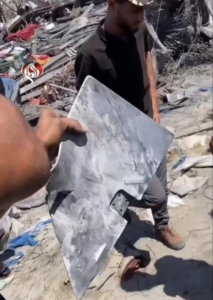
This image shows the nosecone from an Israeli Tamir surface-to-air missile. This component is often found as a remnant after the functioning of the missile. (ARES)