OSMP Collection
Як визначити чи був випущений артилерійський снаряд
This is a translation of the OSMP collection page into Ukrainian by Bomb Techs Without Borders. You can view the English-language collection page here.
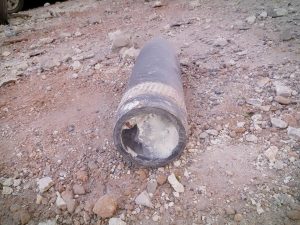
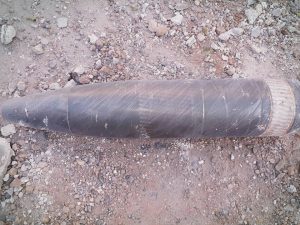
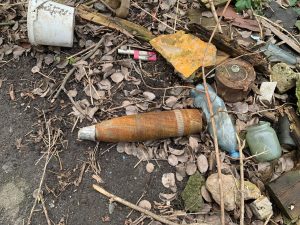
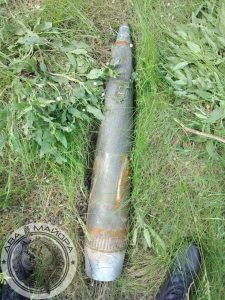
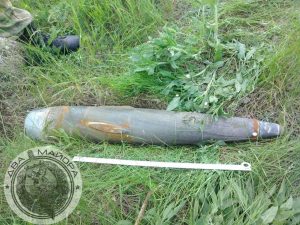
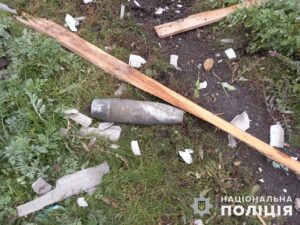
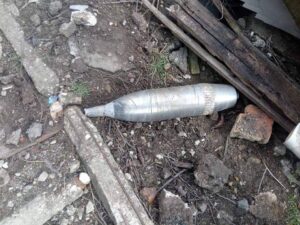
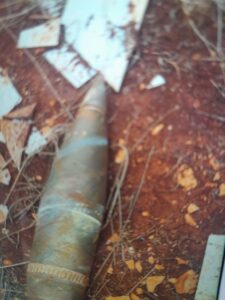
Якщо артилерійський снаряд виглядає ніби не спрацював, то іноді буває складно визначити з першого погляду, чи він був випущений і не спрацював, чи взагалі не був випущений. Загалом, фахівці з боєприпасів шукають такі три характеристики для визначення:
- Напрямні пояски зі слідами нарізів, де м’який матеріал поясків (зазвичай мідь) був деформований полями ствола гармати, під час проходження снаряда по каналу ствола до дула.
- Насічки на корпусі снаряда, зокрема на бурелеті, особливо там, де видно сліди нарізів, які збігаються з нарізами на напрямних поясках.
- Пошкодження від удару, особливо на носовій частині (зазвичай, включно з підривником) снаряда.
Якщо одна або більше з цих ознак присутні на неушкодженому артилерійському снаряді, ймовірно, він був випущений і не спрацював.
Analyst Note:
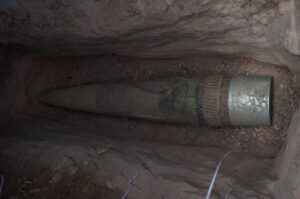
The munition depicted in this image is a type of aerodynamically optimised artillery projectile, in this case 155 mm in calibre, known as an ‘Extended Range Full-Bore (ERFB)’ design. This example is a cargo projectile fitted with a base-bleed (BB) base unit to further extend its range. This configuration is designated NR269, and reportedly contains 56 M46 dual-purpose (anti-personnel/anti-armour) submunitions. (ARES)
Analyst Note:
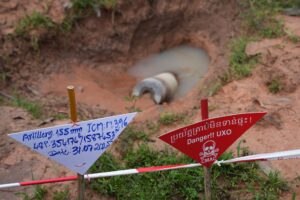
This image shows the base of a 155 mm Extended Range Full-Bore (ERFB) projectile, fitted with either a base-bleed (BB) or a base-bleed, rocket-assisted (BB/RA) base unit. Although munitions of this type are capable of carrying submunitions and this image is associated with an incident about which claims of cluster munitions use have been made, there is not enough of the projectile visible in the source images to determine what type of payload was carried by this particular round. (ARES)

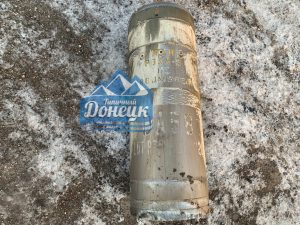
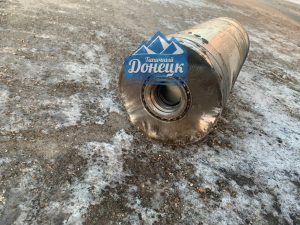

Analyst Note:
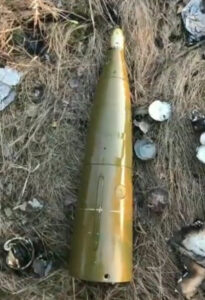
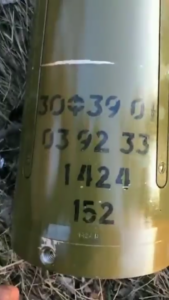
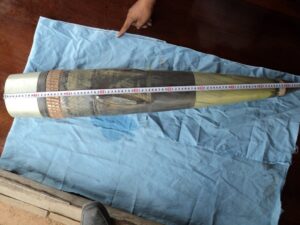
Many guided (or otherwise complex) munitions like this one are marked with additional information on individual assemblies or components. This can include information on sub-contractors that produced or integrated specific parts of a munition. (ARES)